Dwain Northey (Gen X)
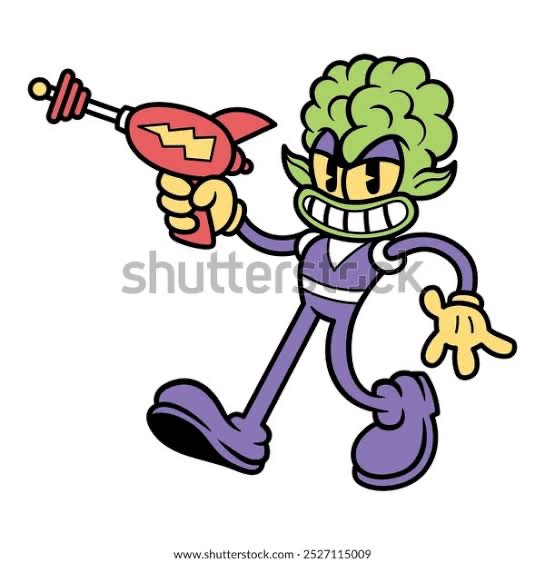
Science fiction has always claimed to be about the future, but when it comes to aliens, it is often more honestly about the past—specifically, our past. Again and again, stories about extraterrestrials arriving on Earth follow a familiar script: they come, they conquer, they extract, they dominate. Whether framed as terrifying invasion or inevitable colonization, the narrative arc feels less like speculation about the unknown and more like a projection of what humanity has already done to itself.
Consider iconic alien invasion stories like The War of the Worlds or films such as Independence Day. In both, technologically superior outsiders arrive with overwhelming force, treating Earth not as a place with intrinsic value, but as a resource to be harvested or an obstacle to be eliminated. These stories resonate because they tap into a deep, historically grounded fear—but that fear is not rooted in alien precedent. It is rooted in human behavior.
History provides the template. The arrival of Spanish conquistadors in the Americas—figures like Hernán Cortés—was not a meeting of equals but a campaign of extraction and domination. Indigenous civilizations were dismantled, populations decimated, and entire cultures subordinated in pursuit of wealth and power. Similarly, the expansion of the United States across the continent involved systematic displacement, violence, and cultural erasure of Native American populations. These were not aberrations; they were expressions of a broader pattern: when humans encounter “new” territory, especially when backed by technological or organizational advantage, the result has often been conquest.
Science fiction internalizes this history and replays it with a cosmic twist. Aliens become stand-ins for empire builders, their spacecraft the modern equivalent of caravels or cavalry. Even when the stories invert the power dynamic—casting humans as the underdogs—they rarely question the underlying assumption that contact between civilizations, especially unequal ones, leads to violence.
But why do we assume this?
Part of the answer lies in psychological projection. Faced with the unknown, humans tend to fill in the gaps with what they know best: themselves. We imagine alien motivations using human frameworks—competition, scarcity, expansion, domination—because those are the patterns we recognize. In doing so, we universalize behaviors that may, in reality, be contingent and culturally specific.
There is also a narrative bias at work. Conflict drives storytelling. Peaceful coexistence, mutual curiosity, or non-interference—while entirely plausible—do not generate the same immediate tension as invasion and resistance. A species that has outgrown violence, or never developed it in the first place, presents a storytelling challenge. What is the plot if no one is trying to conquer anyone else?
Yet some works have tried to break this mold. Films like Arrival imagine extraterrestrials not as conquerors but as communicators, beings whose intentions are complex, non-linear, and fundamentally non-hostile. Similarly, Close Encounters of the Third Kind portrays contact as awe-inspiring rather than apocalyptic. These stories suggest that our default assumptions are not inevitable—they are choices.
If we take seriously the possibility that extraterrestrial life exists, we must also take seriously the possibility that it does not mirror us. Evolution on another planet could produce entirely different social structures, value systems, or modes of interaction. An advanced civilization might prioritize sustainability over expansion, observation over intervention, or cooperation over competition. It might have no concept of “taking” in the way humans historically have.
In that light, the persistent image of hostile aliens begins to look less like a prediction and more like a confession. It reveals our anxieties about what happens when a more powerful force behaves the way we have behaved. The fear is not just that aliens would invade—it is that they would treat us the way we have treated others.
Science fiction, at its best, does more than entertain; it holds up a mirror. When we imagine extraterrestrials as violent colonizers, we are not necessarily describing them—we are remembering ourselves. The challenge, then, is not just to imagine different kinds of aliens, but to imagine different versions of humanity: ones that do not assume conquest is the default outcome of encounter, and that can conceive of the unknown without immediately turning it into an enemy.




 Esoteric Meandering Shouting Into the Void
You must be logged in to post a comment.