Dwain Northey (Gen X)
https://www.cbsnews.com/news/naacp-travel-advisory-florida-says-state-hostile-to-black-americans/
Remember the good old days when there were only travel advisories and or ban for, what some would call, third word countries? Well now because of the vile vitriol of one Governor Ron DeSantis the state of Florida, a vacation destination, has received a travel advisory by the NAACP.
The wannabe future President has made the climate so venomous in Florida the anyone who is a part of any minority group does not feel safe in the state. Black, Brown, LGTBQ+, these are all groups that are under attack in the Sunshine State. The majority Republican legislature and their fearful leader has passed laws that make almost everything a jailable offence and the fact that the state has very loose gun laws and a stand your ground law makes it more dangerous than being a blonde female in central America.
Florida residents are able to carry concealed guns without a permit under a bill signed into law by Republican Gov. Ron DeSantis. The law, which goes into effect on July 1, means that anyone who can legally own a gun in Florida can carry a concealed gun in public without any training or background check. This with their ridiculous stand your ground law, ‘Florida’s “Stand-Your-Ground” law was passed in 2005. The law allows those who feel a reasonable threat of death or bodily injury to “meet force with force” rather than retreat. Similar “Castle Doctrine” laws assert that a person does not need to retreat if their home is attacked.’ Makes it really sketchy to go there.
This in top of the don’t say gay rule and the new trans ruling that just passed.
“Florida lawmakers have no shame. This discriminatory bill is extraordinarily desperate and extreme in a year full of extreme, discriminatory legislation. It is a cruel effort to stigmatize, marginalize and erase the LGBTQ+ community, particularly transgender youth. Let me be clear: gender-affirming care saves lives. Every mainstream American medical and mental health organization – representing millions of providers in the United States – call for age-appropriate, gender-affirming care for transgender and non-binary people.
“These politicians have no place inserting themselves in conversations between doctors, parents, and transgender youth about gender-affirming care. And at the same time that Florida lawmakers crow about protecting parental rights they make an extra-constitutional attempt to strip parents of – you guessed it! – their parental rights. The Human Rights Campaign strongly condemns this bill and will continue to fight for LGBTQ+ youth and their families who deserve better from their elected leaders.”
This law makes it possible for anyone to just accuse someone of gender affirming care to have their child taken from them this would include someone traveling from out of state. This alone justifies a travel ban to the Magic Kingdom for families.
Oh, and I haven’t even mentioned DeSantis holy war with Disney, the largest employer in the state. I really hope the Mouse eats this ass holes lunch.
Well that’s enough bitching, thanks again for suffering though my rant.
-
When will the files become trials?
Dwain Northey(Gen X)

The Epstein files are the political equivalent of a horror movie sequel nobody asked for and nobody can escape. Every time we think the story is finally dead, it sits up in bed, gasps for air, and whispers, “You thought.” Donald, of course, insists it’s all fake news—every word fabricated, every page forged—unless, by some cosmic coincidence, it mentions literally anyone other than him. Then suddenly it’s very real, very important, and probably needs a special press conference, three Truth Social posts, and a sharpie diagram.
Meanwhile, the DOJ is legally required to release the files, but they’re doing it with the urgency and efficiency of a 50-year-old man with an enlarged prostate trying to pee at 3 a.m. Lots of straining, awkward pauses, and assurances that something is happening, even though the rest of us are just standing there wondering why this is taking so long and whether we should call a doctor. Drip. Stop. Drip. Redaction. Stop.
And here’s the real punchline: I will be so happy when we finally have a House and Senate that stop treating the Epstein saga like a spooky campfire story and start treating it like what it should be—actual trials, actual subpoenas, actual consequences. Less breathless talk about “the files,” fewer selectively leaked pages, and more people sworn in under oath. Because I’m exhausted by the endless teasing of truth, the bureaucratic urinary hesitation, and the clown show in the Oval Office. At this point, justice doesn’t need another press release—it needs a courtroom.
-
Continued Search to Validate a Lie
Dwain Northey (Gen X)
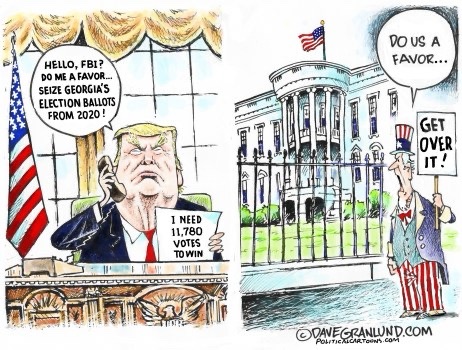
Ballots, Dictators, and the Eternal Scream of “Stolen”
By now, the pattern should be familiar. Somewhere in the world, something dramatic happens—an arrest, a coup, a scandal—and within minutes Donald Trump is staring at ballots in Georgia like they’re connected by red string to a corkboard labeled VINDICATION.
This week’s entry in the ongoing saga: Nicolás Maduro, the longtime strongman president of Venezuela, is now in custody. And if that fact made you immediately think, Wait… wasn’t Venezuela one of the countries Trump accused of manipulating the 2020 U.S. election?—congratulations, you are paying attention.
Trump, of course, never stopped screaming that the 2020 election was stolen from him. Not paused. Not softened. Just full-volume grievance, four years running. Courts rejected it. Audits debunked it. Officials from both parties contradicted it. But facts, as we’ve learned, are no match for a man who treats losing like a clerical error that can be fixed if he just keeps yelling.
Now enter Maduro.
The Convenient Villain Returns
Back in the fever-dream days of post-2020 conspiracy theories, Venezuela was floated as one of the shadowy foreign actors that somehow—through vibes, algorithms, or mystical ballot sorcery—helped rig the U.S. election against Trump. These claims were repeatedly debunked, dismissed in court, and laughed out of serious conversation. But conspiracy theories don’t die; they just wait patiently for a new headline to climb into.
So now that Maduro is in custody, the question practically asks itself: will Trump finally get his long-awaited confession? Will there be a moment—perhaps televised, preferably dramatic—where Maduro sighs and says, “Yes, Donald, we did it. We manipulated the ballots in Georgia. Please forgive us.”
Because if that happens—never mind reality, evidence, or jurisdiction—Trump finally gets what he’s wanted all along: a foreign villain to justify his domestic obsession.
Ballots as Emotional Support Objects
Trump’s fixation on Georgia ballots has taken on an almost spiritual quality. These aren’t pieces of paper anymore; they’re sacred relics. Proof that the universe wronged him. Evidence that democracy malfunctioned, not because voters chose otherwise, but because something unnatural intervened.
And if Maduro can be cast as that unnatural force? Even better.
Never mind that elections are run by states. Never mind that there’s no mechanism—legal or constitutional—that allows a president to “seize ballots” years after the fact. Never mind that confessions extracted from foreign detainees are not admissible proof of anything other than desperation.
What matters is the narrative: I was right all along.
Authoritarian Logic, Imported and Domestic
Here’s where the connection really snaps into focus.
Authoritarians don’t lose elections. They are robbed of them. If the people vote against you, the people are wrong. If the math doesn’t work in your favor, the math is corrupt. If institutions contradict you, the institutions must be captured, purged, or ignored.
That’s not a Venezuelan problem. That’s a strongman problem.
We’re told to recoil in horror at sham elections abroad while casually entertaining the idea that maybe, just maybe, a foreign dictator secretly controlled American ballots—and that exposing this fantasy might somehow justify tighter control over future elections. Including, say, 2026.
Create the crime. Extract the story. Use the story to seize the system.
It’s not subtle. It’s not new. It’s just usually something we pretend only happens “over there.”
The Real Endgame
Let’s be honest. No confession from Maduro is coming that validates Trump’s claims. No evidence exists that Venezuela manipulated the 2020 election. And no amount of yelling at ballots will change that.
But that may not be the point.
The point is keeping the grievance alive. Keeping doubt in circulation. Keeping the idea floating that elections are only legitimate when he wins—and suspicious when he doesn’t. Because once enough people believe that, you don’t need proof anymore. You just need power.
So no, it’s not just you seeing the connection. The connection is the worldview. The belief that democracy is conditional, truth is negotiable, and losing is impossible unless someone else cheated.
Ballots in Georgia. A dictator in custody. A grievance that refuses to die.
Different headlines. Same story.
-
Groundhog Day
Dwain Northey (Gen X)

Every year on Groundhog Day, America gathers—some of us sincerely, most of us ironically—to consult a chubby rodent about the future of the climate. Not a meteorologist with decades of data. Not a climate scientist with models, satellites, and graphs that look like modern art. No. A groundhog. A dirt-loving mammal whose main qualifications include hibernation and an uncanny ability to panic at its own shadow.
This is the same country that scoffs at climate change because “weather changes all the time,” yet will confidently announce, “Welp, Phil saw his shadow—six more weeks of winter,” as if that sentence contains science instead of folklore and vibes. Ice caps melting? Debatable. A rodent blinking in Pennsylvania? Ironclad truth.
Groundhog Day is really a master class in selective belief. Climate data spanning centuries is dismissed as propaganda, but a creature dragged out of a hole at dawn, under camera lights, surrounded by men in top hats, is treated like the Oracle of Delphi. If Punxsutawney Phil had a PowerPoint, Congress might actually listen.
What makes it even better is that Phil is wrong roughly as often as flipping a coin, but no one storms the burrow yelling “fake weather.” There are no angry press conferences accusing the groundhog of having an agenda. We just shrug and say, “Well, that’s nature,” and go back to denying the rest of it.
So here we are: rejecting climate science while trusting a rodent to predict the seasons. Maybe that’s the real tradition—not Groundhog Day itself, but the annual reminder that evidence is optional, as long as the story is cute, familiar, and involves a fuzzy animal doing absolutely nothing.
-
February
Dwain Northey (Gen X)
February arrives like the calendar equivalent of an apology text. It’s short, awkward, and clearly wasn’t thought through. Here’s a month that’s supposed to hold love (Valentine’s Day), history (Black History Month), and somehow the emotional fallout of January—yet it only gets 28 days. Twenty-eight. Unless, every four years, we remember February exists and toss it a bonus day like a pity cookie. “You good now?”
There’s no real logic to it. Other months sprawl out with 30 or 31 days like they earned it, while February feels like the intern of the Gregorian calendar—overworked, underpaid, and constantly reminded it’s replaceable. We crammed romance, remembrance, and resistance into the shortest month and said, “You’ll make it work.”
And just to really underline how unserious we are about February, we kick it off with Groundhog Day. A holiday centered around a rodent making a meteorological guess that means absolutely nothing. Shadow? No shadow? Six more weeks of winter? Buddy, it was already going to be winter anyway. This isn’t forecasting; it’s vibes.
So here we are: a month that feels like an afterthought, pretending to be meaningful while running on borrowed time. Blink and it’s over. Which, honestly, might be the most February thing of all.
-
War in U.S cities
Dwain Northey (Gen X)
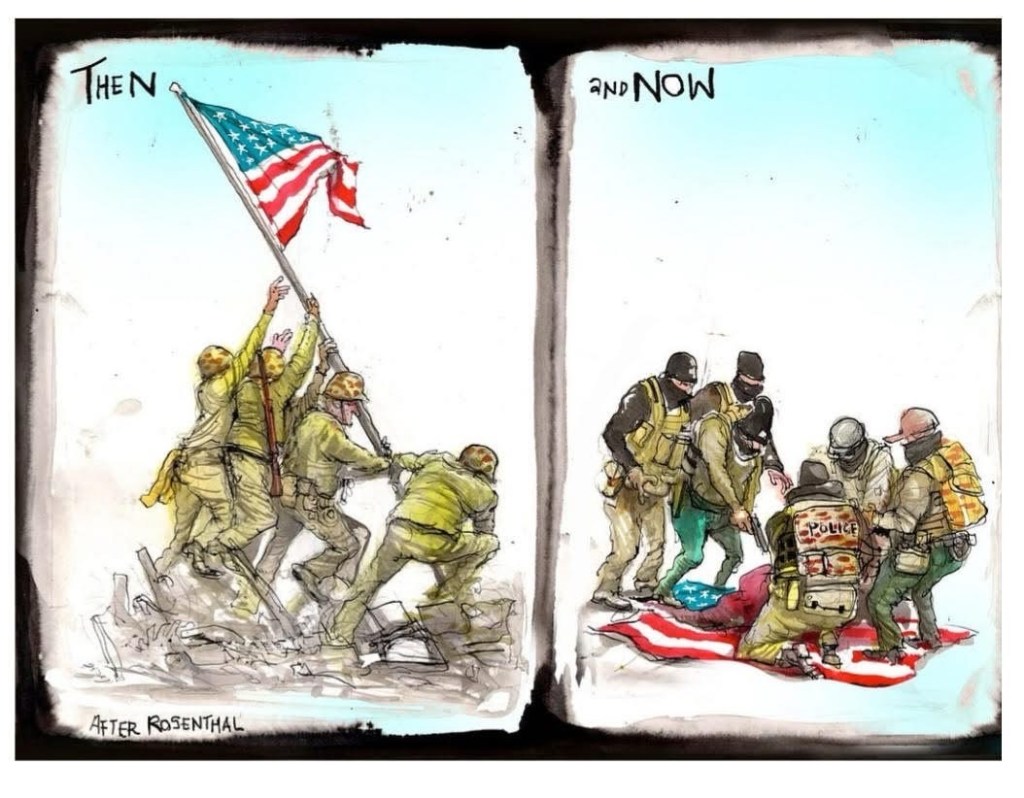
They keep insisting—very earnestly, with straight faces and carefully folded flags behind them—that they are absolutely not at war with America’s cities. Not at war at all. No, no. This is just a light domestic situation. A mild disagreement. A friendly disagreement that, for reasons no one can quite explain, requires “personnel in theater,” “operational zones,” and a “drawdown timetable.”
You know. Normal neighborhood stuff.
Apparently, when you’re not at war with your own country, the first thing you do is stop calling cities “cities” and start calling them “theater.” Chicago isn’t a place where people live, work, and pay taxes—it’s a “theater of operations.” Portland isn’t a city council problem—it’s an “active zone.” New York isn’t a municipality—it’s a “complex environment.” Funny how language works. Once you rename something, you can pretend it’s not what it obviously is.
And they are very clear about one thing: this is not an occupation. Occupations are bad. This is just a “temporary presence.” A presence with armored vehicles, federal forces, chain-of-command briefings, and press releases that sound like they were written in the Pentagon during the early stages of a foreign intervention. But relax—this isn’t war. War has uniforms everyone recognizes. War has enemies that don’t vote. War happens somewhere else.
This is different. This is just “maintaining stability.”
Of course, the cities receiving all this stability tend to share one suspicious characteristic: they’re blue. Very blue. Deep, terrifying shades of democratic blue. Somehow the red cities manage to survive without troops “embedded on the ground,” but the moment a city elects leadership the administration doesn’t like, suddenly it becomes a “hotspot” requiring “force posture adjustments.” Coincidence, surely. Pure coincidence, like rain always falling exactly where the roof is missing.
Listen carefully to the briefings and it’s impossible not to notice how much they sound like updates from an overseas conflict. “We have assets deployed.” “We’re evaluating threat levels.” “We’re drawing down operations once objectives are met.” Objectives like what, exactly? Civic harmony? Better vibes? Or maybe just reminding everyone who has the bigger toys?
And now, as if to really complete the foreign-war aesthetic, they’ve moved on to arresting journalists—for journalism. Not espionage. Not sabotage. Not incitement. Journalism. Standing there with a camera. Asking questions. Documenting what’s happening in these so-called “theaters.” Apparently, once an American city becomes a combat zone in the imagination of the administration, the First Amendment becomes optional—something to be “temporarily suspended for operational reasons.”
Because in a real war, journalists are inconvenient. They show the footage you’re not supposed to see. They record the names, the faces, the badges. They provide evidence. So naturally, the solution isn’t to stop behaving like an occupying force—it’s to treat reporters like enemy assets. Detain them. Handcuff them. Intimidate them. Then insist, with a perfectly calm tone, that the press is still free. Extremely free. Just not free to document this.
And, of course, we’re told not to worry. This isn’t oppression. It’s “crowd control.” It’s “scene security.” It’s “officer safety.” Funny how the language keeps doing the same job: sanding down reality until it fits into a press briefing. Arresting journalists sounds bad. “Neutralizing interference” sounds professional.
The strangest part isn’t even the militarized language—it’s the insistence that we’re imagining it. That we should ignore the jargon, ignore the posture, ignore the tactics, ignore the zip ties on reporters, and trust that this is all perfectly normal democratic governance. Because nothing says “healthy republic” like treating your own cities the way previous administrations treated Fallujah—and treating your own journalists like hostile embeds.
So no, they aren’t at war with America’s cities. They just talk like it. Act like it. Deploy like it. And silence the people documenting it.
But don’t worry. Once the “drawdown” is complete, I’m sure the cities will go back to being cities again—right after they’re done being theaters.
-
Cell phone camera may save us
Dwain Northey (Gen X)

For years, we’ve been told to fear technology. Phones are rotting our brains, social media is destroying democracy, and cameras are apparently the reason no one can enjoy brunch in peace anymore. And yet—surprise twist—we may finally owe technology a thank-you note. Not a full Hallmark card, mind you. Just a cautious nod of appreciation. Because it turns out this administration didn’t plan for one small, glowing rectangle in everyone’s pocket: the cell phone camera.
They planned for fear. They planned for uniforms, masks, badges that say trust me, and guns held with the confidence of people who swear they’re doing “government business.” They planned for secrecy, intimidation, and the age-old assumption that if you say “national security” loudly enough, no one will ask follow-up questions. What they didn’t plan for was millions of concerned citizens quietly hitting “record.”
It’s amazing how much courage dissolves when a camera shows up. Suddenly the tough guys with face coverings don’t want to give names. The people enforcing vaguely defined authority get real shy about explaining which law they’re enforcing and for whom. Accountability, it turns out, is their kryptonite. Not lawyers. Not press conferences. Just a regular person holding a phone, documenting reality in real time.
And here’s the thing: this isn’t radical. This isn’t rebellion. This is the Constitution doing its job with a software update. The First Amendment didn’t anticipate iPhones, but it absolutely anticipated citizens bearing witness. The Fourth Amendment didn’t imagine livestreams, but it did imagine limits on power. Technology didn’t break democracy—it accidentally gave it receipts.
For years, we’ve been lectured about “a good guy with a gun” as the solution to everything. But in this moment, the more effective counterforce has been a good guy with a cell phone camera. No trigger. No escalation. Just documentation. Just truth. Just the unglamorous, undeniable evidence that becomes very inconvenient when someone later claims, “That’s not what happened.”
Because when everything is recorded, lies have a shorter shelf life. When actions are documented, spin becomes harder. And when citizens can show, not just say, what’s being done in their name, power loses its favorite hiding place: plausible deniability.
So yes, maybe we can be grateful—just this once—for technology. Not because it’s perfect, not because it’s neutral, but because it’s made secrecy expensive and abuse visible. In a time when authority expects obedience without questions, the camera quietly asks the most dangerous question of all: Why?
And maybe that’s the real takeaway. What stops a bad guy with a gun? Sometimes it’s not another gun. Sometimes it’s a witness. Sometimes it’s evidence. Sometimes it’s a shaky video shot by a regular person who refuses to look away and refuses to forget.
Turns out the most threatening thing to unchecked power isn’t force. It’s proof.
-
To good not to share
-
Tax season
Dwain Northey (Gen X)
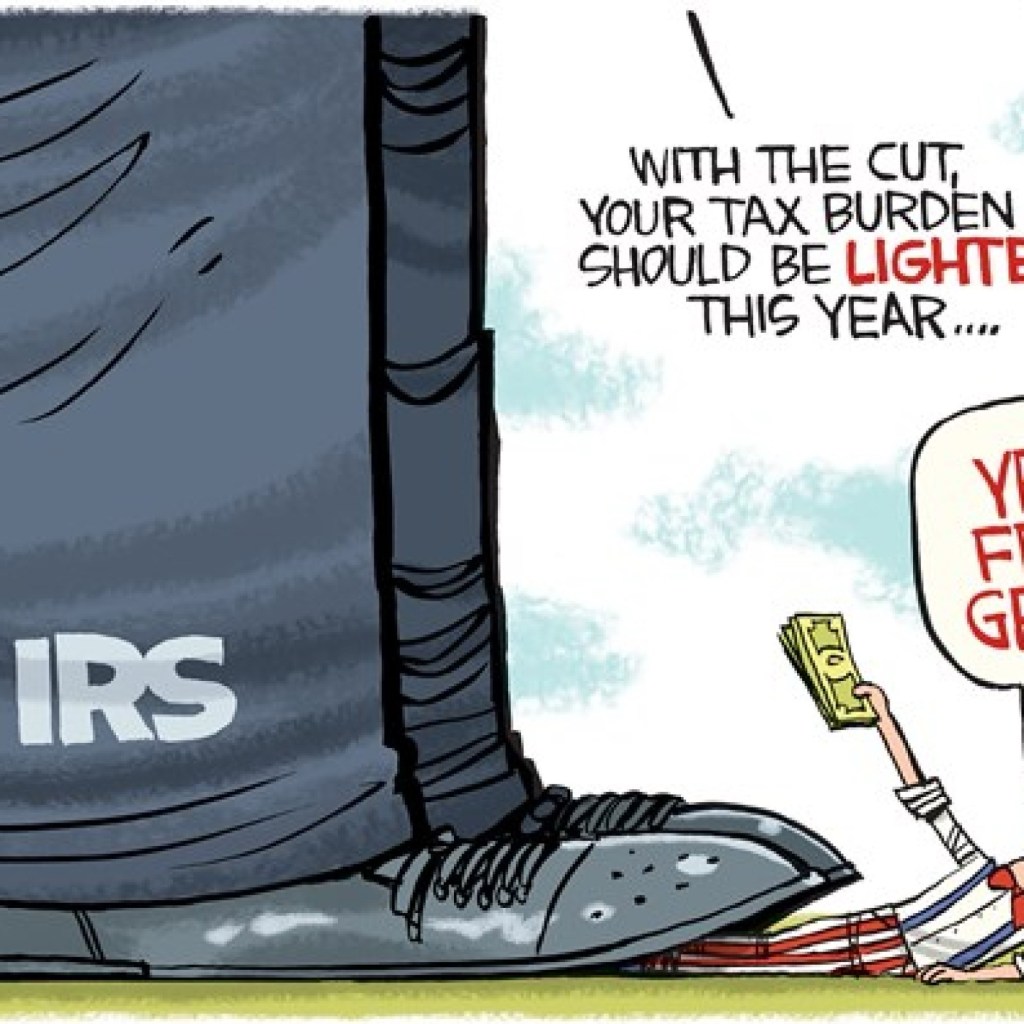
Ah yes, February 1 is creeping up—that magical time of year when Americans gather their receipts, open their tax software, and prepare to be scolded by the government like a disappointed parent who somehow still wants rent money.
Everyone’s supposed to be worried about doing their civic duty. Paying taxes. Funding the nation. But a growing number of us are quietly wondering: why exactly are we paying for this? Is it for roads? Schools? Healthcare? Or is it for militarized agencies, corporate bailouts, and whatever ideological fever dream is currently burning a hole through the federal budget?
Because here’s the fun part: if you’re a gig worker—driving, freelancing, hustling, duct-taping together an income—you’d better not get too creative with those deductions. Took off your internet bill? Audited. Wrote off part of your rent because you work from home? Audited. Tried to deduct mileage, supplies, and the sheer psychological damage of existing? Congratulations, enjoy your audit letter printed in aggressive government font.
Meanwhile, multimillionaires are out here playing Tax Jenga. Deductions stacked on deductions, shell companies inside holding companies inside “family offices” registered in places that technically exist but spiritually don’t. They write off yachts as “mobile meeting spaces” and call private jets “essential travel.” They lose money on paper every year while somehow buying a third vacation home. The IRS looks at them and says, “Wow, very complicated. Anyway, carry on.”
But you? You’re just trying to keep the lights on. Literally. And every deduction you claim has to be justified like you’re on trial for crimes against capitalism. You don’t get accountants, lawyers, or offshore anything. You get a spreadsheet, a prayer, and the constant fear that a $300 write-off will trigger an investigation that costs more than your annual income.
So yes, it’s almost February 1. Everyone’s worried about their taxes. But a lot of us are wondering why the burden of “supporting the country” always seems to land on the people who can least afford it—while the people who’ve hollowed it out get rewarded for knowing which loophole to crawl through.
Pay up, citizen. Democracy isn’t cheap.
Apparently neither is being poor.
-
Who Decided
Dwain Northey (Gen X)

At some point, humanity sat down—probably without a formal meeting—and decided to become a very confident art director for the universe. Angels? Wings. Obviously. Evil? Horns, tail, maybe a little goatee if we’re feeling extra. No vote recorded. No footnotes. Just vibes.
What’s strange is how arbitrary it all is. Wings don’t imply goodness; flies have wings and they are universally despised. Horns are worn by goats, who are mostly just judgmental-looking lawn equipment. Tails belong to dogs, who are morally superior to most of us. Yet somewhere along the line, we decided feathers equal virtue and bone protrusions equal damnation, and then never revisited the decision.
Maybe it was about convenience. Wings let angels hover just above us—close enough to care, far enough to stay clean. Horns and tails make evil visually loud, impossible to miss, like a warning label you can spot from across the room. Subtle evil would’ve been far more troubling. Imagine if villains just looked… normal. That would’ve required introspection, and humanity has historically tried to outsource that whenever possible.
I suspect the real tell is that these symbols say more about us than about good or evil. We associate good with lightness, escape, upward motion. Evil gets stuck with what juts out, drags behind, or threatens to poke you in the eye. It’s less theology and more projection—our fear of what feels heavy, animal, or inconveniently honest.
And maybe that’s the most revealing part: we didn’t design angels and demons to explain morality. We designed them to make ourselves feel a little safer, a little clearer, in a world where good and evil almost never bother to dress according to the rules we gave them.
-
History Lesson
Dwain Northey (Gen X)
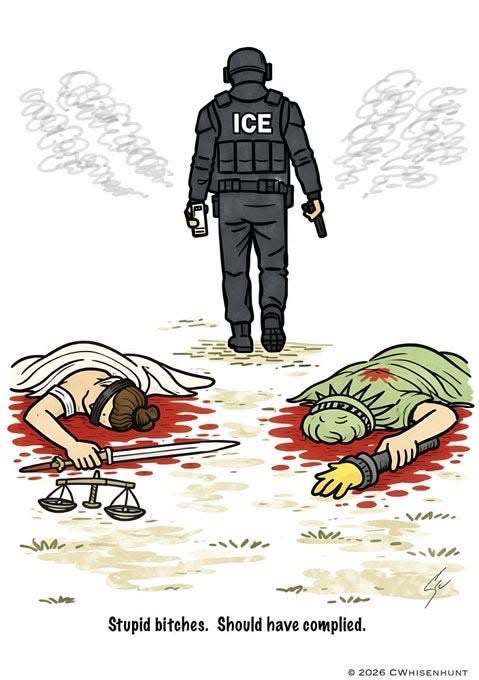
Einsatzgruppen isn’t a word most people know—unless they’re German, a historian, or someone who’s noticed how history loves to recycle its ugliest ideas with a fresh coat of patriotic paint. It sounds foreign, academic, safely locked in black-and-white photos. And that’s the point. When atrocities wear unfamiliar names, they’re easier to dismiss as “over there” and “a long time ago,” not something we’d ever recognize while it’s happening.
The Einsatzgruppen were sold as necessary. Temporary. Patriotic. They were just doing hard things to “save the country.” You know—rounding people up, deciding who belonged, who didn’t, and acting like paperwork turns cruelty into duty. The language was clean. The uniforms were crisp. The results were anything but.
Fast-forward, swap out the German compound nouns for bureaucratic English, and suddenly we’re told this is all about “law and order.” About safety. About protecting “real” Americans. History lesson bonus round: that’s always how it starts. No one ever says, “We’re the bad guys.” They say, “We have no choice.”
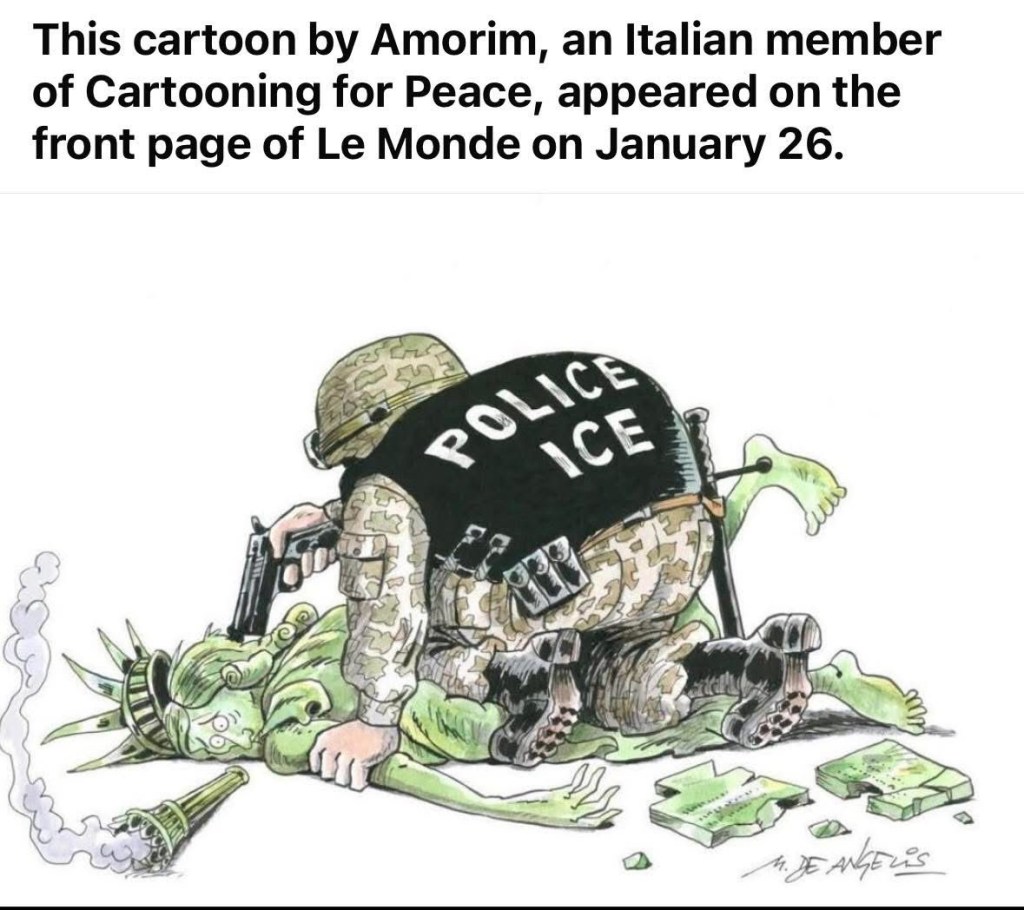
The problem isn’t that people don’t know the word Einsatzgruppen. The problem is that they recognize the playbook and still pretend not to. If “never again” means anything more than a slogan for museums and hashtags, then maybe—just maybe—we stop defending agencies that operate on fear, dehumanization, and the fantasy that brutality somehow equals national strength.
We don’t need a better PR campaign. We need to get rid of ICE. Because history has already shown us where this road goes, even if the vocabulary has changed.
 Esoteric Meandering Shouting Into the Void
You must be logged in to post a comment.