What’s the most underrated movie you’ve ever watched?
I don’t pay enough attention to reviews or awards for films so I couldn’t tell you if there’s one that I had liked more than the critics did because I honestly don’t care
What’s the most underrated movie you’ve ever watched?
I don’t pay enough attention to reviews or awards for films so I couldn’t tell you if there’s one that I had liked more than the critics did because I honestly don’t care
Dwain Northey (Gen X)

We have a peculiar habit of looking at the world around us and seeing everything as a resource. Something to be extracted, harvested, consumed, monetized, and eventually discarded when we’ve gotten everything we can out of it. We do it with oil, coal, natural gas, forests, minerals, and just about anything else we can dig out of the ground or strip from the surface of the planet. We even do it with each other.
But I wonder if we’ve lost sight of the difference between a resource and a source. More importantly, I wonder whether we understand what happens when we treat the sources of our existence as nothing more than resources to be exploited.
Take oil, for example. We know it is a finite resource. It took millions of years for geological processes to create the petroleum we pump out of the ground, and we consume it at a rate that makes those millions of years look like a rounding error. We know it will eventually run out, or at least become increasingly difficult and expensive to extract. Yet we continue to behave as though the supply will always be there, because apparently planning for the future is something we prefer to leave to the future.
Water, however, presents a more interesting problem.
We tend to talk about water as a resource, too. We measure it in acre-feet, gallons, reservoirs, and percentages of capacity. We argue over water rights, agricultural allocations, industrial consumption, and municipal restrictions. We build entire economies around the assumption that water will be available whenever and wherever we need it.
And, to a certain extent, that makes sense. Water is a resource in the practical sense that we use it. But water is also something much more fundamental.
Water is a source of life.
As far as the Earth’s overall supply is concerned, water is continually recycled through the hydrologic cycle. It evaporates, forms clouds, falls as precipitation, flows through rivers, seeps into aquifers, freezes into ice, and eventually finds its way back to the oceans. We aren’t manufacturing new water in any meaningful quantity. The water circulating through our planet today has been here for an extraordinarily long time.
That doesn’t mean every drop is equally available to us. Most of Earth’s water is saltwater, and much of its freshwater is locked away in glaciers, ice sheets, or deep underground. The water we can readily use is only a small fraction of the total.
And here’s where our collective stupidity becomes particularly impressive.
We have a substance essential to virtually every form of life on this planet, and we routinely contaminate it with industrial waste, agricultural runoff, sewage, plastics, and chemicals. We pump groundwater out faster than nature can replenish it. We drain rivers, destroy wetlands, and pave over landscapes that once helped absorb rainfall. Then we act surprised when wells run dry, reservoirs shrink, and communities begin fighting over who gets what’s left.
Apparently, the plan is to poison the thing we need to survive and then charge someone to clean it up.
Brilliant.
The problem isn’t simply that we might run out of water in the absolute sense. The problem is that we can make the water available to us unusable, inaccessible, or prohibitively expensive to treat. Water doesn’t have to disappear from the planet for a civilization to experience a water crisis. It only has to disappear from the places where people need it, or become too contaminated to drink.
And once we understand that distinction, the entire conversation changes.
This is particularly relevant here in Arizona, where water isn’t some abstract environmental talking point. It’s a daily consideration in a desert environment where population growth, agriculture, industry, and increasingly demanding development all compete for limited supplies. We live in a place where every drop matters, yet we continue debating growth as though water were an inconvenience that engineering, money, and optimism will eventually overcome.
We can build bigger data centers. We can develop more housing. We can expand industrial agriculture and manufacture all sorts of things we believe we need. But every one of those decisions has consequences for energy, land, and water. Pretending otherwise doesn’t make those consequences disappear.
Technology can help. Conservation can help. Recycling wastewater, improving irrigation, repairing leaking infrastructure, protecting watersheds, and investing in appropriate desalination projects can all be part of the solution. But technology is not a magic wand, and every solution has costs, energy requirements, and environmental trade-offs.
We cannot simply engineer our way out of every problem while refusing to change the behaviors that created it.
And this is where I think our vocabulary reveals something about our priorities.
When we call something a resource, we tend to think about its usefulness to us. How much can we extract? How much money can we make? How much growth can we support? How quickly can we turn it into something profitable?
When we recognize something as a source, we begin to think about what it sustains. What depends on it? What happens if it is damaged? How do we preserve its ability to continue providing what we need?
The distinction isn’t that a resource cannot also be a source. Water is certainly a resource, just as soil, forests, and the natural systems that regulate our climate can be considered resources. The distinction is whether we see only their immediate economic value or recognize the larger systems that make our lives possible.
A forest is timber, but it is also habitat, a carbon sink, a regulator of water, and part of a living ecosystem. Soil is something we plant crops in, but it is also a complex biological system that takes considerable time to develop and can be destroyed remarkably quickly. The atmosphere is a place to dump emissions only if we are foolish enough to ignore its role in regulating the conditions that allow us to live.
And water? Water is something we drink, but it is also what makes agriculture possible, sustains ecosystems, regulates temperatures, and supports nearly every aspect of the civilization we’ve built.
We keep treating these systems as though their value begins and ends with what we can take from them. Then we wonder why the bills keep coming due.
Perhaps the most frustrating part is that none of this is particularly difficult to understand. We teach children that they need water to live. We teach them that plants need water, animals need water, and crops need water. We understand that a human being can survive for only a limited time without it.
Yet somehow, when we move from the individual to the industrial scale, that simple truth gets buried beneath spreadsheets, quarterly earnings, political arguments, and promises of endless economic growth.
We become very sophisticated about measuring the value of things and remarkably unsophisticated about understanding their importance.
The Earth doesn’t care about our gross domestic product. An aquifer doesn’t replenish itself because a corporation needs another billion dollars in revenue. A river doesn’t become cleaner because a politician gives a speech about American greatness. Nature doesn’t recognize campaign slogans, stock prices, or quarterly projections.
It operates according to physical and biological realities, whether we acknowledge them or not.
And those realities will eventually win every argument.
I’m not suggesting that we stop using the planet’s resources. That’s impossible. Humanity depends on the natural world, and using its materials is part of how civilizations function. What we need is a better understanding of the difference between using something and destroying the system that provides it.
We need to stop confusing abundance with infinity. We need to stop assuming that because something has been available throughout our lives, it will remain available regardless of how we treat it. And we need to recognize that some things are so fundamental to our existence that protecting them should take precedence over extracting the maximum possible profit from them.
Water is one of those things.
We can argue about politics, economics, energy policy, and which version of the future we want to build. We can disagree about how much government intervention is appropriate, which technologies deserve investment, and who should pay for the solutions.
But none of those arguments changes the basic equation: without clean, accessible water, none of our other plans matter very much.
We can replace a source of energy. We can develop alternative materials. We can invent new technologies and find more efficient ways to manufacture the things we need. We cannot simply invent our way out of the biological necessity for water.
Perhaps it’s time we stopped looking at the world exclusively through the lens of what it can provide us and started looking at what must remain intact for life to continue.
Because there is a difference between managing a resource and protecting a source. One is about how much we can take. The other is about ensuring there will still be something left to give.
And if we can’t figure out that difference when it comes to water, the substance that makes our existence possible in the first place, then perhaps the problem isn’t a lack of resources.
Perhaps the problem is that we have mistaken our ability to consume the planet for evidence that we understand how to live on it.
Which, when you think about it, is a spectacularly stupid mistake for an intelligent species to make.
Then again, intelligence and wisdom have never been the same thing.
And apparently, neither have progress and survival.
Dwain Northey (Gen X)

The first five words of Queen’s Who Wants to Live Forever tell us almost everything we need to know about the tragedy at the heart of the song: “There’s no time for us.”
Think about that for a moment. Not there’s no time left, not time is running out, but there’s no time for us. Those five words establish the tone for everything that follows. They suggest that the problem with living forever isn’t necessarily the prospect of endless existence. It’s the realization that time, the very thing immortality supposedly conquers, may still be the one thing you can never have enough of when it comes to the people you love.
Written by Brian May for the 1986 film Highlander, the song explores the heartbreak of loving someone whose life is finite when your own may not be. It turns the fantasy of immortality on its head. What sounds like the ultimate gift becomes a curse, because living forever doesn’t mean the people you love get to live forever with you.
And that’s where the real tragedy begins.
When you’re young, immortality sounds like an extraordinary opportunity. Imagine all the things you could see, all the places you could visit, all the history you could witness. Imagine having centuries to learn, explore, and experience everything the world has to offer. You could watch civilizations rise and fall, witness technological advances that seem impossible today, and see how humanity eventually sorts itself out — assuming, of course, we don’t manage to destroy ourselves first.
Then you get older, you lose people, and you begin to understand the question at the heart of the song.
Who wants to live forever?
The answer, perhaps, depends on what you have to leave behind.
In Highlander, immortality comes with a terrible price. You can live through centuries of human history, but the people you love cannot necessarily come along for the ride. You watch them age while you remain unchanged. You fall in love knowing that, unless something extraordinary happens, you will eventually watch that person die. You make friends knowing that every friendship has an expiration date, even if yours doesn’t. You accumulate memories of people who once occupied your world, until the world itself becomes a museum of things you can never get back.
That is the real horror of immortality. It isn’t necessarily living forever. It’s living forever without the people who made living worthwhile.
We tend to think of death from the perspective of the person who dies. We fear the pain, the uncertainty, the possibility that there is nothing beyond this life. We grieve for those who leave us, and we struggle to imagine a world in which they no longer exist. But there is another side to that equation, one that Who Wants to Live Forever captures beautifully. What happens to the person who stays?
What happens when you are the one left standing?
Imagine being able to watch centuries pass. You see governments rise and fall, cities grow, technology transform the world, and humanity repeat the same mistakes with increasingly sophisticated equipment. You witness extraordinary advances and remarkable achievements. You might even enjoy the novelty of seeing history unfold firsthand.
But every generation of people you know eventually disappears.
Your parents are gone. Your siblings are gone. Your friends, the people who shared your childhood, your jokes, your experiences, and the memories that only the two of you understand, are gone. Eventually, even your children and grandchildren are gone. The people who remember you as you once were become fewer and fewer until nobody alive remembers the same version of you that your oldest friends knew.
And what do you do with that?
You can make new friends, of course. You can fall in love again. You can build another life, and then another. Human beings are remarkably adaptable creatures, and there is no reason to assume an immortal person would spend every waking moment in misery. But there is a difference between making new memories and preserving the people who helped make you who you are.
You cannot replace your mother with another mother, your childhood best friend with a new acquaintance, or the person who stood beside you during the most important moments of your life with someone who simply happens to be there now. Those relationships are not interchangeable parts. They are pieces of your history, and when the people who shared that history are gone, something disappears that no amount of longevity can restore.
You become the keeper of memories that nobody else can verify, the last person who remembers a particular laugh, a familiar voice, or the way someone told a story for the hundredth time and somehow made it funny again.
And eventually, you might even begin to wonder whether remembering is a blessing or another form of punishment.
That is what makes the song’s central question so much more complicated than it first appears. We spend much of our lives trying to hold on to time. We want more time with our parents, more time with our children before they grow up, more time with the people we love, more time to accomplish the things we haven’t done yet. We complain about getting older, about our bodies wearing out, about the calendar moving faster than we would prefer.
Yet the very thing we want more of is the thing that makes loss inevitable.
The longer we live, the more opportunities we have to love people. But we also accumulate more opportunities to lose them.
There is a cruel arithmetic to it. Every relationship we build gives us something meaningful, but it also gives us something we might someday have to grieve. The more people we allow into our lives, the more people we risk losing. That isn’t an argument against loving people. Quite the opposite. It is a reminder that love and loss are inseparable precisely because the people we love matter to us.
And immortality would stretch that arithmetic across an endless horizon.
Perhaps the worst part would not even be the deaths themselves. It would be the gradual erosion of your connection to the world. The places that once felt like home would change. The streets you walked with someone you loved would be rebuilt. The restaurants where you shared meals would close. The songs that once transported you instantly into another time would eventually become unfamiliar to everyone around you.
You would carry an entire world inside your head that no longer existed anywhere else.
For a while, perhaps, you could find comfort in telling stories. You could explain what it was like when the world was different, what people believed, how they lived, and what they dreamed about. But eventually, your stories might become so distant that they would sound less like memories and more like legends. You would become a living historical document, carrying the accumulated experiences of people and places that everyone else knows only from books.
And there would be no one left to tell you that you remembered it wrong, that you had forgotten the best part, or that they had been there too.
Just you.
Of course, none of us is immortal, and we don’t need centuries of life to experience a smaller version of this tragedy. It can happen over the course of an ordinary lifetime. We reach an age when the people who once surrounded us begin disappearing. Parents die. Friends move away or pass on. Families change. Children grow up, build lives of their own, and leave the familiar rooms behind. The world continues moving, often without asking whether we are ready for the changes it brings.
One day, you realize that you are among the few people left who remember a particular time, a particular place, or a particular person. The memories remain vivid, but the people with whom you could share them are no longer there.
And perhaps that is why this song becomes more poignant as we age. When we are young, we tend to measure life by what lies ahead. We think about the places we will go, the people we will meet, the things we will accomplish. We imagine that the future is an enormous open field filled with possibilities.
As we get older, the perspective changes. We begin to measure life by what has already happened, by the people who shaped us, the moments we wish we could revisit, and the conversations we would give almost anything to have one more time.
The past becomes populated with people who are no longer available to us.
We start to understand that the value of a moment is not always apparent while we are living it. The ordinary dinner, the familiar voice on the telephone, the friend who drops by without warning, the family gathering that seems more obligation than occasion — these are often the things we miss most when they are gone. We rarely recognize the full significance of ordinary life until it becomes extraordinary only because we cannot have it back.
And that brings us to the uncomfortable truth hiding inside the fantasy of living forever: time alone is not the same thing as life.
You can have an endless supply of days and still be deprived of the things that give those days meaning. You can witness every sunrise for a thousand years and still miss the person with whom you once watched one. You can see the future unfold in all its technological wonder and still wish you could return to an ordinary afternoon with someone who has been gone for centuries.
Longevity might give you more experiences, but it cannot guarantee that those experiences will be meaningful. Meaning comes from connection, from sharing the world with people who matter to us, from knowing that our experiences are part of something larger than ourselves.
Without that, forever begins to look less like a gift and more like an extraordinarily long sentence.
Perhaps that is why the song is so effective. It doesn’t need to explain every consequence of immortality. It simply places love and eternity beside one another and lets us recognize the contradiction. We want our love to last forever, but we know that we cannot keep every person we love forever. We want more time, but time is precisely what carries us away from the people we wish we could keep.
There is something almost merciful about the fact that our lives have limits. Death is not something I would wish on anyone, and losing people is never made easy by understanding its inevitability. But a finite life gives our choices a certain urgency. It reminds us that the time we have with someone is not an unlimited resource to be spent carelessly and replenished later.
We cannot always choose how much time we get. We can, however, make some choices about how we spend it.
Call the friend. Visit the family member. Tell someone what they mean to you before you find yourself wishing you had. Pay attention to the ordinary moments that are so easy to dismiss because they don’t seem important enough to remember. They may be the very memories you eventually treasure most.
And maybe we should stop treating the passage of time as though it were merely an enemy. Getting older is not simply the accumulation of losses. It is also the accumulation of experiences, lessons, relationships, and opportunities to understand things that once escaped us. We can grieve what has passed without denying the value of what remains.
I don’t know that I would want to live forever. I would like more time, certainly. More time with the people I love, more time to see what happens next, more time to learn a few things and perhaps correct a few mistakes. I suspect most of us would take that deal if it were offered without conditions.
But forever?
Forever means outliving everyone who made your life what it is. It means carrying the weight of every goodbye without ever reaching your own final chapter. It means watching the world replace the people you knew, generation after generation, until the familiar becomes history and history becomes something nobody else remembers firsthand.
At some point, the question stops being whether you want to live forever and becomes whether you want to be the only one left.
Queen’s song, written for a story about immortality, ultimately asks a very human question about mortality. What makes life worth living is not merely the fact that we are alive. It is the people with whom we share it, the connections we build, and the memories we leave with one another.
Perhaps we don’t actually want forever. Perhaps what we want is just a little more time with the people who make this temporary existence feel like something worth holding on to.
And perhaps the tragedy of immortality is that you could have all the time in the universe and still spend it wishing for one more ordinary day with someone you can never see again.
Who wants to live forever?
Not if forever means living long enough to become the last person who remembers what love used to look like.
What’s something you’ve done that you never thought you could?
The thing I’ve am currently doing that. I never wanted to and have been doing now for going on 1415 years is being single and completely alone and completely alone. Only been six months since my son got married but currently doing never wanted to is being alone doesn’t look like it’s gonna end either.
Dwain Northey (Gen X)

I am so tired of the blanket accusations. Apparently, we have reached a point in our public discourse where a person’s religion, ethnicity, political affiliation, or even the color of their skin is all the evidence some people need to decide what that person believes. No questions, no nuance, no independent thought. Just slap a label on someone and pretend we’ve figured out everything there is to know about them.
Support Palestine? Then you must support Hamas. You’re Muslim? Well, clearly, you must support the Muslim Brotherhood. You’re Jewish? Then you must support Netanyahu and whatever the Israeli government happens to be doing today. You’re white, male, and approaching sixty? Congratulations, apparently you’re automatically a Trump-supporting Republican, whether you’ve ever voted Republican in your life or not.
What a wonderfully convenient way to avoid actually thinking.
I recently watched an exchange in which a paid troll tried to bring up the Muslim Brotherhood in an attempt to discredit someone simply because that person was Muslim. The attempt was promptly shut down, and honestly, it was a beautiful thing to see. Someone recognized the logical fallacy for what it was instead of allowing the conversation to be dragged into the usual mud.
But it got me thinking about how easily we apply these same standards to everyone else.
The next time someone tells me that supporting Palestine means supporting Hamas, I want to ask them a simple question.
So, because you’re a Christian, do you support the Ku Klux Klan?
The KKK has invoked Christianity to justify its existence and its hatred. There have been other extremist organizations throughout history that have wrapped themselves in Christian identity while committing atrocities. Does that mean every Christian supports them? Of course not. Most Christians would rightly be offended by the suggestion that their faith automatically makes them responsible for the actions of every extremist who claims it.
And they would be right to be offended.
So why does that logic suddenly disappear when we’re talking about Muslims, Jews, Palestinians, or anyone else whose identity happens to be politically inconvenient?
If I criticize the Israeli government’s actions, that doesn’t mean I hate Jewish people. If I believe Palestinians deserve freedom, dignity, and the right to live without being caught in an endless cycle of violence, that doesn’t mean I support Hamas. If I criticize Hamas for terrorism and the killing of civilians, that doesn’t mean I believe every Palestinian is responsible for its actions.
These things are not mutually exclusive. A person can condemn terrorism and still support Palestinian rights. A person can oppose antisemitism and still criticize the Israeli government. A person can recognize the suffering of one population without dismissing the suffering of another.
Apparently, though, that’s asking too much of people who prefer their arguments prepackaged and their enemies conveniently labeled.
And this isn’t just about the Middle East. It’s a problem with the way we think about people in general.
I’m a white male approaching sixty. By some people’s reasoning, that should tell you everything you need to know about my politics. I must be a Republican. I must support Trump. I must agree with conservative policies, regardless of what those policies are or how they affect other people.
Except I’ve never been a Republican.
My age, sex, and skin color don’t dictate my political beliefs. They don’t determine my values, my sense of right and wrong, or my understanding of the world. I am capable of looking at an issue, examining the evidence, and reaching my own conclusions without consulting a demographic chart to determine what I’m supposed to think.
What a radical concept.
The same principle applies to religion, nationality, ethnicity, and every other category we use to sort people into convenient little boxes. Identity can influence our experiences, but it doesn’t automatically dictate our beliefs. Sharing a religion doesn’t mean sharing an ideology. Sharing an ethnicity doesn’t mean sharing a political platform. Being born in a particular country doesn’t mean endorsing everything its government does.
And yet we keep doing this. We substitute assumptions for understanding and stereotypes for evidence. Then, when someone challenges our assumptions, we accuse them of being the problem.
It’s intellectually lazy, morally questionable, and extraordinarily frustrating.
The real danger is that these blanket accusations make it impossible to have an honest conversation. If supporting Palestinian civilians automatically makes me a Hamas sympathizer, why would I bother explaining my position? If criticizing the Israeli government automatically makes me antisemitic, why would anyone engage with the substance of my criticism? If being Muslim means I must answer for the Muslim Brotherhood, why should anyone bother asking what I actually believe?
The accusation becomes a weapon designed to end the conversation rather than an argument intended to advance it.
And perhaps that’s the point.
It’s much easier to discredit someone by associating them with an organization everyone already despises than it is to address what they’re actually saying. It’s easier to paint an entire population with the same brush than to acknowledge that millions of individual human beings have different experiences, beliefs, priorities, and moral convictions.
But if we’re going to play that game, let’s at least be consistent.
If every Muslim is responsible for every Muslim extremist, then every Christian should be responsible for every Christian extremist. If every Jew is responsible for every action taken by the Israeli government, then every American should be responsible for every action taken by the United States government. If every white man approaching sixty is responsible for Trump, then perhaps every person who shares your demographic characteristics should be held accountable for your opinions, too.
I’m sure that would go over wonderfully.
Of course, none of those arguments makes sense. That’s precisely the point.
We are individuals, not walking endorsements of every organization, government, religion, or political movement that happens to share some part of our identity.
There is a difference between supporting a people and supporting a government. There is a difference between practicing a religion and endorsing every group that claims to represent it. There is a difference between understanding someone’s suffering and agreeing with every action taken in response to it.
Those distinctions aren’t complicated. They simply require us to acknowledge that human beings are more complicated than the labels we assign them.
I don’t expect everyone to agree with me. I don’t even expect everyone to like me. What I do expect is that people will judge my beliefs by what I actually say and do, rather than by what someone who looks like me, shares my religion, or belongs to the same demographic group happens to believe.
Judge my arguments. Challenge my reasoning. Show me where I’m wrong. I’ll gladly have that conversation.
But don’t tell me what I believe because you’ve decided what people like me are supposed to believe.
Just because I’m white, male, and almost sixty doesn’t make me a Republican. Just because someone is Muslim doesn’t make them a member of the Muslim Brotherhood. Just because someone is Jewish doesn’t mean they support Netanyahu. And just because someone supports Palestinian rights doesn’t mean they support Hamas.
Just because X does not automatically mean Y.
It’s a remarkably simple concept, really. We teach children not to judge a book by its cover, yet somehow, as adults, we’ve turned judging entire populations by their covers into a political strategy.
Maybe it’s time we grew up.
Or, at the very least, started thinking for ourselves.
Dwain Northey (Gen X)

There’s an old saying that goes, “Those who can, do; those who can’t, teach.” For most of my life, I thought it was a joke. A cheap shot at teachers, a little cynical humor suggesting that people who couldn’t cut it in the real world had found a safe place to explain to everyone else how it was supposed to work.
Lately, though, I’ve started to wonder whether I gave that saying too much credit as a joke and not enough consideration as a description of how we actually operate in the United States.
Somewhere along the way, we seem to have taken that old expression, expanded it, and turned it into an unofficial qualification for leadership. If you can’t do the job, teach it. If you can’t teach it, manage the people who do it. And if you can’t manage them, apparently, there’s always a government appointment waiting for you.
After all, if you obviously struggle with public speaking, why not become Secretary of Defense? If you have never demonstrated the ability to perform the work you’re overseeing, why not become the executive responsible for making sure everyone else performs it? And if you have no practical experience with the consequences of your decisions, congratulations! You may be exactly what somebody is looking for to run an entire department.
Welcome to the American leadership model, where demonstrated competence is apparently an optional accessory.
Now, before the teachers reading this start sharpening their pencils to correct me, let me clarify something. Teaching is a skill. A demanding one. Being able to do something and being able to explain it to someone else are two entirely different abilities. Some outstanding teachers are not necessarily the most accomplished practitioners in their fields, and some brilliant practitioners couldn’t teach a goldfish to swim.
Teaching requires patience, communication, knowledge, and the ability to recognize that other people don’t automatically understand something just because you do. Good teachers deserve respect, not a punchline.
The problem isn’t teaching. The problem is the assumption that leadership somehow requires even less competence than teaching.
I learned a very different lesson during my time in the military, particularly as a junior noncommissioned officer. The principle was simple: Never ask your troops to do something you aren’t willing and able to do yourself.
That didn’t mean I had to be the best at every task. It didn’t mean I had to know everything or pretend I was incapable of learning from someone with more experience. It meant that I needed to understand the work, appreciate its demands, and be willing to share the burden when necessary.
If I expected someone to carry the load, I had better understand what carrying that load involved. If I expected someone to perform under difficult conditions, I had better understand those conditions myself. And if I was going to hold someone accountable for a failure, I needed to understand the task well enough to distinguish between a lack of effort, a lack of training, and an impossible set of expectations.
Rank didn’t exempt me from the work. It increased my responsibility for the people doing it.
That was the point.
Leadership wasn’t about sitting somewhere comfortable, issuing orders, and then acting surprised when reality failed to cooperate with the plan. It was about setting an example, providing direction, accepting responsibility, and making sure the people under your command had what they needed to succeed.
Apparently, that lesson didn’t make it into every corporate boardroom or government office.
Look around the modern workplace. How many employees have a manager who couldn’t perform their jobs if their lives depended on it? Managers who impose deadlines without understanding the work involved, establish procedures without understanding why the existing ones exist, and demand productivity improvements without knowing what their employees actually do all day.
They measure performance using spreadsheets and dashboards while the people doing the work spend half their day entering data into the systems designed to measure how much work they’re doing.
It’s a beautiful little circle of administrative achievement. Nobody produces anything, but everybody has a report proving that productivity is up.
And when the system fails? The manager calls a meeting.
Naturally.
The people who actually understand the problem are then required to explain it to someone who doesn’t understand the work, so that person can develop an action plan to address the problem, which will eventually be implemented by the same people who understood the problem in the first place.
Three meetings, two presentations, and a dozen emails later, somebody gets promoted for demonstrating leadership.
The employees get another mandatory training module.
Government doesn’t seem immune to this phenomenon, either. In fact, it sometimes appears to have perfected it. Positions of enormous responsibility can become rewards for loyalty, political favors, or personal connections rather than opportunities to place experienced, qualified people where their knowledge matters most.
And the consequences aren’t limited to missed corporate targets or another pointless performance review. Government decisions affect national security, public health, education, infrastructure, and the everyday lives of millions of people.
These aren’t theoretical exercises. The people affected by those decisions don’t get to submit a performance evaluation of their own and ask for a different management team.
We should expect more from the people entrusted with that kind of responsibility.
I don’t expect every government official to have personally served in every branch of the military, worked in every hospital, taught in every classroom, or built every bridge. That’s ridiculous. No individual can possess all the experience required to oversee a modern government.
But I do expect leaders to understand the responsibilities they’re accepting, listen to qualified professionals, respect the people who actually do the work, and recognize the difference between confidence and competence.
Most importantly, I expect them to understand that authority doesn’t magically create expertise.
A title doesn’t make you knowledgeable. A corner office doesn’t make you a leader. And being the person who signs somebody else’s paycheck doesn’t mean you know how to do their job.
Sometimes the most intelligent thing a leader can say is, “I don’t know. Explain it to me.”
Unfortunately, admitting ignorance seems to have become a sign of weakness in a culture that rewards people for projecting absolute certainty. We have elevated the ability to sound authoritative above the willingness to learn. We celebrate people who can dominate a conversation rather than those who can demonstrate an understanding of the subject.
We confuse the ability to give orders with the ability to lead, and the ability to demand accountability with the willingness to accept it.
Which brings me back to that old saying.
Perhaps it was never really about teachers at all. Perhaps it was about our habit of making assumptions regarding who should be doing what. We assume the person who can do the work should do it, the person who can explain the work should teach it, and the person who can coordinate the work should manage it.
Those are three different skill sets, and the best leaders often possess some combination of all three.
But somewhere along the way, we began treating management as the natural destination for anyone who wanted more authority, regardless of whether they had the experience, judgment, or temperament to deserve it.
We created a system in which people can rise so far above the work that they eventually forget what the work looks like. Then they make decisions affecting the people below them without understanding the consequences of those decisions.
And when those decisions fail, they blame the people who had the least power to influence them.
Maybe it’s time to reconsider our standards.
Instead of asking whether someone looks like a leader, speaks like a leader, or has the right connections to become a leader, perhaps we should ask a few simpler questions.
Have they demonstrated competence? Do they understand the responsibilities they’re accepting? Can they listen to people who know more than they do? Are they willing to share the burden? And when things go wrong, will they accept responsibility or immediately start looking for someone beneath them to blame?
Those seem like reasonable expectations. Almost old-fashioned, really.
Then again, I’m a product of a generation that was occasionally taught that responsibility meant something, that experience counted for something, and that you shouldn’t ask someone else to do a job you weren’t willing to do yourself.
Maybe that makes me a little old-fashioned.
But I’d rather work for someone who understands the job and respects the people doing it than someone who has mastered the art of looking important while delegating everything that might expose their ignorance.
So here’s my revised version of the old saying:
Those who can, do. Those who understand, teach. Those who can lead, take responsibility. And those who can do none of the above? Apparently, they get a corner office, a government appointment, or a seat at the executive table.
And then they hire somebody competent to explain why everything went wrong.
I used to think that was a joke.
I’m beginning to think it was a job description.
If you could switch lives with a famous person for a week, who would it be and why?
Switching places with the famous person for a week is assuming that their lives are all rainbows and butterflies and there’s nothing going on. Do you just wanna step into their shoes and live a life of luxury that you assume that they live we all have our problems with your famous or not so the question is presumptive.
Dwain Northey (Gen X)
There is something almost impressive about the Republican Party’s ability to discover a moral crisis wherever it can find one, provided that crisis doesn’t involve holding its own people accountable.
Take transgender athletes. Apparently, this is one of the greatest threats facing America. Forget inflation, healthcare, the national debt, crumbling infrastructure, or the fact that we have a government that increasingly resembles a poorly managed circus. No, we must protect women’s sports from transgender athletes, a statistically tiny population that Republicans have somehow elevated to the status of an existential threat to Western civilization.
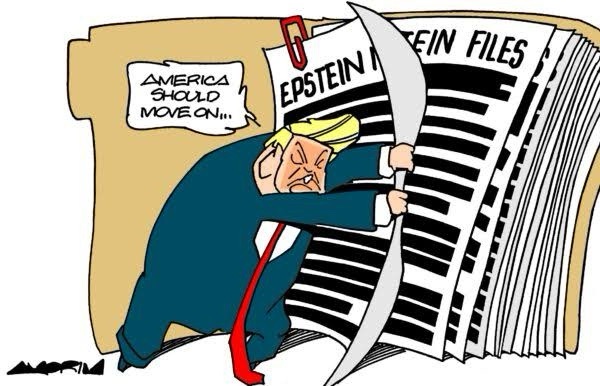
Meanwhile, we have the Epstein files.
Remember those? The files Donald Trump and his allies spent years promising would expose the truth, reveal the names, and finally deliver some measure of accountability for the victims of Jeffrey Epstein’s sex-trafficking operation? Trump campaigned on transparency and suggested that the public deserved answers. His supporters ate it up. Finally, they told us, the truth would come out, the powerful would be exposed, and justice would be served.
And yet, here we are.
The victims are still waiting for the transparency and accountability they were promised. The public is still asking questions. And the political enthusiasm for exposing the truth seems to have developed a remarkable case of stage fright now that the people in power have an opportunity to do something about it.
Funny how that works.
Republicans can spend endless hours debating transgender athletes, demanding restrictions, holding hearings, and treating the participation of a handful of people in sports as though the republic itself depends on it. But when it comes to the victims of sexual abuse and exploitation, suddenly everything gets complicated. There are procedures to consider, legal concerns to navigate, privacy issues to respect, and an assortment of reasons why the public apparently shouldn’t expect the straightforward transparency it was promised.
To be clear, protecting victims’ identities and privacy is absolutely essential. Releasing information responsibly is not the same as dumping unverified accusations into the public square. But protecting victims is not an excuse to protect powerful people from legitimate scrutiny, either. Those are two entirely different things, and pretending otherwise insults everyone’s intelligence.
And that brings us to the hypocrisy.
Republicans have made protecting women and children a political rallying cry. They tell us that safeguarding women’s spaces is so important that extraordinary political attention and legislative action are justified. They insist that protecting children is a moral imperative that supersedes practically everything else.
Wonderful. Let’s apply that same enthusiasm consistently.
Where is that urgency for the people who were victimized by Epstein and his network? Where is the relentless determination to get answers, establish accountability, and ensure that wealth, influence, and political connections don’t place anyone beyond the reach of justice?
Where are the rallies? Where are the endless press conferences? Where is the outrage machine operating at full capacity?
Apparently, the moral imperative has some rather specific terms and conditions.
If a transgender athlete is competing in a school sporting event, Republicans can find the time, the microphones, and the political will to make it a national controversy. If victims of sexual exploitation are asking for answers involving a case connected to some of the wealthiest and most influential people in the world, well, suddenly we need to be patient.
One group becomes a convenient political target. The other becomes an inconvenient political problem.
And the difference is not difficult to understand. One issue offers an easy way to manufacture outrage against a politically vulnerable minority. The other potentially demands uncomfortable questions about powerful people, political alliances, and promises made to voters.
One generates campaign advertisements. The other might generate accountability.
Guess which one gets the attention?
The statistical comparison makes the priorities even harder to defend. The number of transgender athletes participating in school sports is very small, although exact counts vary depending on the definition and the jurisdiction. The number of people victimized by Epstein’s trafficking and abuse was substantial, involving numerous survivors over many years. These are not equivalent situations, and the comparison is not intended to diminish the rights or experiences of either group. It is intended to expose the absurdity of assigning vastly different levels of political urgency to issues involving human beings.
If protecting people is genuinely the objective, why does the level of outrage seem to depend so heavily on whether the people needing protection are useful to a political campaign?
I know. I know. Expecting consistency from politicians is apparently asking too much. We have spent years watching elected officials discover principles only when those principles happen to align with their immediate political interests. They campaign on accountability and then discover procedural obstacles. They promise transparency and then discover reasons for secrecy. They proclaim themselves defenders of children while directing the public’s attention toward a tiny minority whose existence can be turned into a convenient talking point.
And their supporters are expected to applaud the performance.
This is not an argument that transgender athletes should never be discussed, or that legitimate questions about fairness in sports cannot be debated. Reasonable people can disagree about specific policies. But if the people making those arguments claim that protecting women and children is their highest moral priority, they ought to be willing to demonstrate that commitment when doing so is politically inconvenient.
Otherwise, it isn’t a principle. It’s a slogan.
The Epstein victims deserve better than to become footnotes in a political argument about who gets to compete in a track meet. They deserve dignity, privacy, answers, and justice. They deserve a government that takes their experiences seriously regardless of whose reputation might be damaged in the process.
And the public deserves politicians who understand that transparency is not something you promise only when you’re campaigning, then quietly abandon when you win.
Perhaps the most infuriating part is that none of this is particularly surprising. We have watched this routine for years. Find a vulnerable group. Inflate the threat they supposedly pose. Wrap the campaign in the language of morality and protection. Then ignore the much larger, messier problems that might require confronting people with money, power, and political connections.
Rinse. Repeat. Sell another campaign hat.
The hypocrisy is astonishing, but the pattern is familiar. Republicans have demonstrated that they can manufacture unlimited outrage when it serves their political interests. What remains in question is whether they can summon even a fraction of that outrage when the victims are real, the questions are uncomfortable, and the answers might implicate people they would rather not discuss.
Donald Trump and his allies made promises about the Epstein files. Those promises created expectations among voters and, more importantly, among people who have already endured far too much. Whether every promised disclosure will happen is a separate question from whether meaningful accountability will follow. But the longer the public waits for credible answers, the more those promises look like another campaign prop.
So here’s a modest suggestion for the next Republican politician preparing to lecture America about protecting women and children: before delivering another speech about transgender athletes, perhaps take a moment to explain what you are doing for the victims whose suffering has already been documented and whose demands for accountability remain unresolved.
No slogans. No manufactured panic. No convenient change of subject.
Just answers.
I realize that’s an ambitious request. But if a political party wants credit for defending the vulnerable, it should probably start by defending the vulnerable people whose cases are politically inconvenient.
Otherwise, spare us the pearl-clutching.
We’ve seen the performance. We’re just waiting for someone to care enough to end it.
Dwain Northey (Gen X)
We have a little more than two weeks left in this election cycle, and apparently some Republicans have decided that the best way to convince voters they deserve another term in office is to avoid talking to the voters. Brilliant strategy. Truly, the kind of political genius that makes you wonder whether anyone in the room has ever actually run for office before.
Republican candidates are refusing to debate their Democratic challengers. You know, those little events where candidates stand on a stage, explain their positions, defend their records, and answer questions from the people who are supposed to vote for them. Nothing too complicated. Unless, of course, you have no defensible positions, a record you would rather not discuss, or a party platform that sounds considerably better in a carefully edited campaign advertisement than it does under five minutes of actual scrutiny.
Then there’s Vice President JD Vance, apparently finding time to make accusations about Texas Senate candidate James Talarico’s sexuality. Because when you’re trying to win an election, naturally the first thing voters want to know is whether a candidate is gay. Except Talarico isn’t, and more importantly, who the hell cares?
Apparently, when you can’t win an argument about healthcare, the economy, education, or the general condition of the country, you can always rummage through the political dumpster and pull out somebody’s sexuality. It’s the Republican equivalent of showing up to a gunfight with a water pistol and insisting the other guy is cheating because his water pistol has better aim.
But the really interesting part of this political circus isn’t what the Republicans are doing. It’s what the Democrats are doing in response.
Democratic candidates are still showing up.
They’re holding town halls. They’re taking questions. They’re standing in front of audiences that include Republican voters and answering their concerns, even when those questions are uncomfortable or the people asking them have no intention of voting Democratic. They’re engaging with people who disagree with them rather than hiding behind a campaign manager, a carefully curated social media feed, or a press release written by somebody who probably couldn’t identify the candidate’s actual policy positions without consulting a binder.
And sometimes, those Republican voters walk away satisfied with the answers they receive.
Imagine that. A politician answering a question instead of calling the questioner a name, changing the subject, or claiming that the question is part of some elaborate conspiracy designed to make them look bad.
It turns out that voters, even Republican voters, are capable of listening to an answer and deciding whether it makes sense. Who knew?
This is what campaigning is supposed to look like. You present your ideas, explain your record, answer questions, and trust the voters to make their own decisions. You don’t have to agree with everyone, and you certainly won’t win everyone over. But at least you demonstrate that you respect the people whose votes you are asking for.
Refusing to debate your opponent doesn’t make you look strong. It makes you look afraid. And when you spend an entire campaign telling voters how terrible your opponent is but won’t stand on a stage and explain why, people are eventually going to wonder whether your opponent is actually the problem.
Or whether you are.
The irony is that Republicans have spent years portraying Democrats as weak, incompetent, out of touch, and incapable of governing. Yet here we are, watching Democratic candidates walk into rooms full of skeptical voters while Republican candidates apparently need a safe space from questions.
For a party that loves to talk about courage, strength, and personal responsibility, there seems to be an awful lot of hiding going on.
And then there’s Donald Trump.
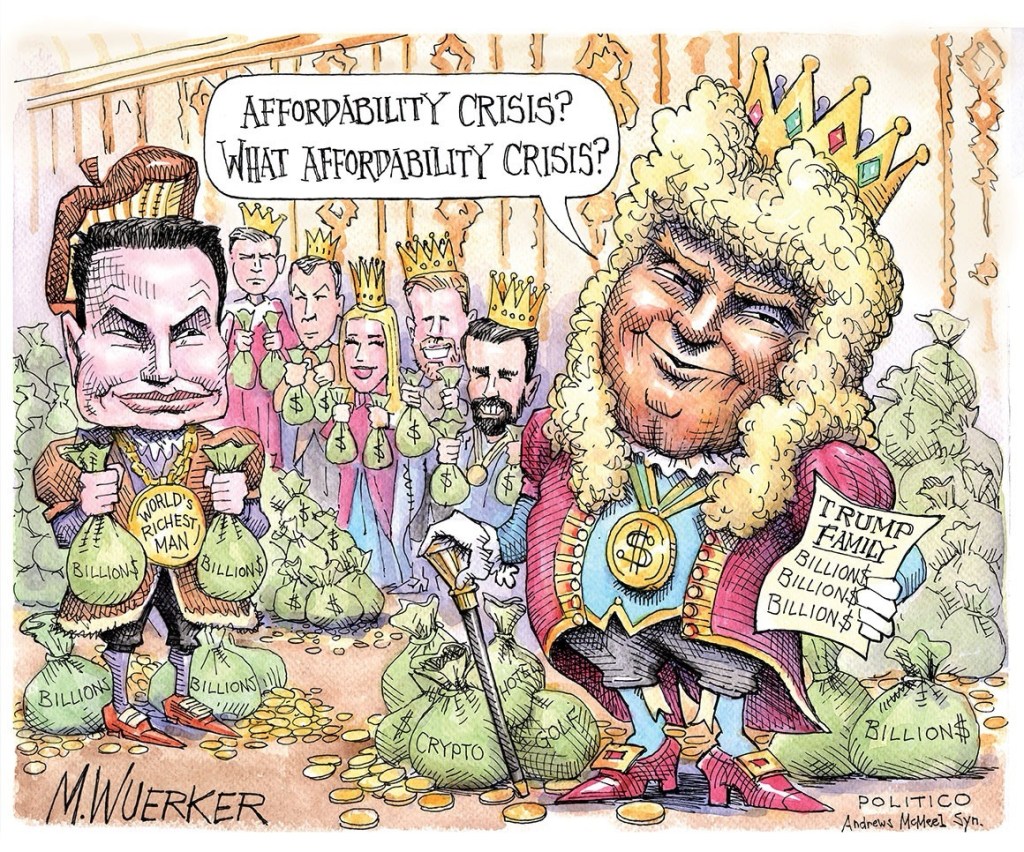
Whatever your opinion of the man, his second term has given Democrats an extraordinary amount of material to work with. The economic uncertainty, the constant chaos, the attacks on democratic institutions, the international embarrassments, the endless self-promotion, and the apparent belief that the presidency is less a public service than a personal branding opportunity have all contributed to a political environment in which Republicans have to answer for a great deal more than their own individual records.
Unfortunately for them, the president doesn’t seem particularly interested in making that task easier.
And now Republicans are discovering that running on outrage, fear, and accusations doesn’t necessarily work forever. Eventually, people want to know what you’re actually going to do for them. Eventually, the price of groceries matters more than the latest manufactured culture-war emergency. Eventually, voters get tired of being told to fear their neighbors while watching their elected officials accomplish very little that improves their daily lives.
Apparently, some Republican candidates would rather avoid that conversation altogether.
I am not going to declare victory before the votes are counted. I’ve been around long enough to know better than to start celebrating because the scoreboard looks promising in the third quarter. Polls can be wrong, voters can surprise us, and complacency is one of the Democratic Party’s most reliable traditions.
But I will say this: I think the Republicans could be in for a political bloodbath in this election.
And if that happens, I hope Democrats understand what it means.
It won’t simply be a rejection of individual candidates. It could be a rejection of the entire governing philosophy that has dominated the Republican Party under Trump: loyalty over competence, spectacle over substance, grievance over solutions, and personal power over public responsibility.
That would be an opportunity, not a blank check.
Democrats need to remember what happened after Barack Obama won. They need to remember how quickly the enthusiasm faded, how easily victories were taken for granted, and how Republicans regrouped while Democrats argued among themselves about who was sufficiently pure to deserve the party’s support.
Winning an election is not the same thing as earning a mandate to do nothing.
If Democrats take control of Congress, they need to govern. They need to protect voting rights, strengthen healthcare, address the cost of living, invest in education and infrastructure, defend democratic institutions, and demonstrate that government can actually improve people’s lives. They need to investigate wrongdoing where evidence warrants it, hold powerful people accountable, and stop assuming that simply being the alternative to Trump is enough to keep voters in their corner.
Because it isn’t.
And if the results are as lopsided as I suspect they might be, Democrats should be thinking about 2028 immediately. Not because the next presidential election is already decided, but because the work of rebuilding public trust takes more than one election cycle.
What I would love to see is a sustained Democratic majority, one that lasts long enough to accomplish something meaningful rather than spending every other election trying to undo whatever the previous administration broke.
Franklin D. Roosevelt’s political coalition offers a historical example of what that kind of durability can look like. Following his 1932 election, Democrats built a dominant national coalition that helped sustain their congressional majorities through much of the New Deal era and beyond. It wasn’t permanent, and it wasn’t without its contradictions, but it demonstrated what happens when a political party connects its electoral success to tangible changes in people’s lives.
That’s the kind of political staying power Democrats should aspire to. Not simply winning because Republicans have made themselves unbearable, but winning because voters can point to what Democrats accomplished and say, That made my life better.
Of course, that requires something more difficult than winning a news cycle. It requires consistency, discipline, and the willingness to govern for people who didn’t vote for you.
It also requires showing up.
Which brings us back to these Republican candidates who apparently believe the best way to win an election is to avoid the very people who will decide it.
With a little more than two weeks remaining, they still have time to change course. They could debate. They could answer questions. They could explain their policies and make their case to the electorate.
But if they choose not to, that’s their decision.
And if voters decide that a candidate who won’t even show up to defend their own record doesn’t deserve another term, that’s democracy doing exactly what it’s supposed to do.
I won’t get happy just yet. I’ll wait until the ballots are counted, the results are certified, and the winners actually take office.
But I am cautiously optimistic that November could deliver a message Republicans desperately need to hear and Democrats desperately need to understand.
You cannot govern by grievance forever. You cannot substitute insults for answers indefinitely. And you cannot ask people to trust you while demonstrating, every single day, that you don’t trust yourself to defend what you’ve done.
So show up. Answer the questions. Debate your opponent.
Or don’t.
Just don’t act surprised when the voters decide that the party that wouldn’t show up for them doesn’t deserve to show up in Washington, either.
How do you manage stress?
I have two heart and fast rules about stress if I can’t take action to make it better right now I have to let it go and if my life won’t be different tomorrow, if it doesn’t start the way, I hope I have to let it go so that’s how I made it stress


You must be logged in to post a comment.