Dwain Northey (Gen X)
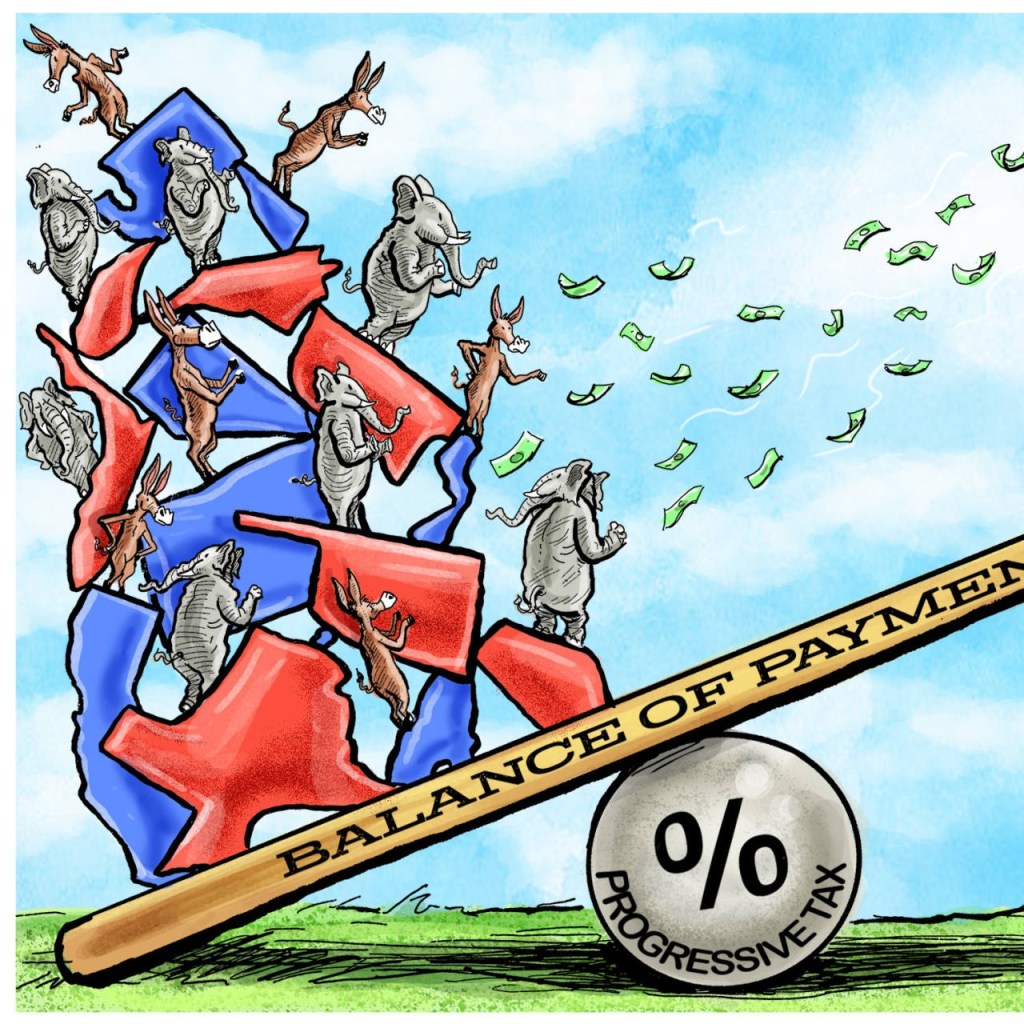
There’s this mythology in America that the middle class just somehow failed itself. That regular people stopped working hard enough, stopped grinding enough, stopped pulling themselves up by whatever patriotic footwear metaphor politicians are selling this week. And somehow, according to the people sitting in boardrooms making eight figures a year, the reason a family can’t afford groceries, rent, healthcare, and college simultaneously is because they bought Starbucks twice this month.
Sure. That must be it.
But if you actually look backward instead of just yelling “socialism” every time someone mentions fairness, there’s a pretty direct line between the destruction of the middle class and the dismantling of the progressive tax structure that built the middle class in the first place.
Back during the Eisenhower administration — yes, Republican Eisenhower, not Karl Marx hiding under the Resolute Desk — the top marginal tax rate on the ultra wealthy was over 90%. Corporations and the richest Americans actually paid substantial taxes. And somehow, strangely enough, civilization didn’t collapse. Rich people still existed. Businesses still operated. America somehow managed to survive despite millionaires not being allowed to hoard every nickel like anxious dragons sitting on a pile of gold bullion.
And what happened during that era?
The middle class exploded.
One income could buy a house. One income could raise children. One income could support a family, buy a car, take a vacation once in a while, and maybe even retire without having to choose between medication and electricity. Workers were paid enough to actually participate in the economy they were helping create.
Then Kennedy lowered the top rate to around 70%. Still high by today’s standards, but the middle class kept growing because the system still fundamentally understood something we seem to have forgotten: when wealth circulates, economies thrive. When workers have money, they spend it. When they spend it, businesses grow. When businesses grow, jobs grow. It’s almost like consumers matter more than stock buybacks.
Then came the Reagan era, where “trickle-down economics” was sold to America like some kind of financial gospel. Taxes on the wealthy were slashed dramatically under the promise that if rich people kept more money, prosperity would somehow rain down on everyone else like magical economic confetti.
And forty years later, we’re still standing outside waiting for the trickle.
What actually happened was predictable to literally anyone not being paid to go on television and pretend otherwise. Wealth consolidated upward. Corporations became obsessed with shareholder value over worker value. Wages stagnated while productivity soared. CEOs started making 300 times what their workers make while simultaneously explaining that nobody wants to work anymore.
No, people want to work. They just don’t want to work forty hours a week and still need three roommates and a GoFundMe for insulin.
The tax structure changed from “those who benefit the most from society should contribute the most back into society” into “how do we create as many loopholes as possible for billionaires while auditing waitresses over undeclared tip money?”
And now everybody’s fighting over scraps.
The working class blames the poor. The poor blame immigrants. The middle class blames itself. Meanwhile the ultra wealthy sit comfortably above the chaos explaining that universal healthcare is somehow too expensive while they launch themselves into space for fun.
That’s the part that feels insane.
We’ve normalized levels of wealth inequality that would’ve horrified previous generations. A handful of people possess more wealth than entire populations, and we’re somehow told the real problem is a single mother using food assistance or a teacher asking for classroom supplies.
The middle class didn’t collapse because ordinary Americans became lazy. It collapsed because policy changed. Deliberately. Systematically. Over decades.
When tax rates on the ultra wealthy were high, corporations reinvested profits into workers, pensions, infrastructure, and growth because hoarding money wasn’t as advantageous. Once those guardrails disappeared, the incentive became extraction. Squeeze labor. Cut benefits. Automate everything possible. Consolidate wealth upward endlessly.
And now here we are.
Two-income households struggling harder than one-income households did fifty years ago. People working multiple jobs and still drowning. Entire generations unable to buy homes while hedge funds purchase neighborhoods like Monopoly pieces.
But every election cycle we’re still told the billionaire class desperately needs another tax break or civilization itself may crumble.
At some point you have to stop calling that economics and start calling it what it really is: organized upward wealth transfer disguised as patriotism.
And maybe the cruelest irony of all is that the same people suffering most from these policies are often convinced to defend them. Because if there’s one thing America perfected, it’s convincing struggling people that someday they too might be billionaires — and therefore should protect billionaire interests now just in case.
Meanwhile, the potholes get bigger, healthcare gets more expensive, schools get worse, retirement disappears, and everybody wonders why life feels harder despite supposedly living in the richest country on Earth.
Turns out when the people at the top stop paying their share, everybody underneath feels the holes.

