Dwain Northey (Gen X)
https://www.cbsnews.com/news/naacp-travel-advisory-florida-says-state-hostile-to-black-americans/
Remember the good old days when there were only travel advisories and or ban for, what some would call, third word countries? Well now because of the vile vitriol of one Governor Ron DeSantis the state of Florida, a vacation destination, has received a travel advisory by the NAACP.
The wannabe future President has made the climate so venomous in Florida the anyone who is a part of any minority group does not feel safe in the state. Black, Brown, LGTBQ+, these are all groups that are under attack in the Sunshine State. The majority Republican legislature and their fearful leader has passed laws that make almost everything a jailable offence and the fact that the state has very loose gun laws and a stand your ground law makes it more dangerous than being a blonde female in central America.
Florida residents are able to carry concealed guns without a permit under a bill signed into law by Republican Gov. Ron DeSantis. The law, which goes into effect on July 1, means that anyone who can legally own a gun in Florida can carry a concealed gun in public without any training or background check. This with their ridiculous stand your ground law, ‘Florida’s “Stand-Your-Ground” law was passed in 2005. The law allows those who feel a reasonable threat of death or bodily injury to “meet force with force” rather than retreat. Similar “Castle Doctrine” laws assert that a person does not need to retreat if their home is attacked.’ Makes it really sketchy to go there.
This in top of the don’t say gay rule and the new trans ruling that just passed.
“Florida lawmakers have no shame. This discriminatory bill is extraordinarily desperate and extreme in a year full of extreme, discriminatory legislation. It is a cruel effort to stigmatize, marginalize and erase the LGBTQ+ community, particularly transgender youth. Let me be clear: gender-affirming care saves lives. Every mainstream American medical and mental health organization – representing millions of providers in the United States – call for age-appropriate, gender-affirming care for transgender and non-binary people.
“These politicians have no place inserting themselves in conversations between doctors, parents, and transgender youth about gender-affirming care. And at the same time that Florida lawmakers crow about protecting parental rights they make an extra-constitutional attempt to strip parents of – you guessed it! – their parental rights. The Human Rights Campaign strongly condemns this bill and will continue to fight for LGBTQ+ youth and their families who deserve better from their elected leaders.”
This law makes it possible for anyone to just accuse someone of gender affirming care to have their child taken from them this would include someone traveling from out of state. This alone justifies a travel ban to the Magic Kingdom for families.
Oh, and I haven’t even mentioned DeSantis holy war with Disney, the largest employer in the state. I really hope the Mouse eats this ass holes lunch.
Well that’s enough bitching, thanks again for suffering though my rant.
-
Last Week, OK People!
Dwain Northey (Gen X)
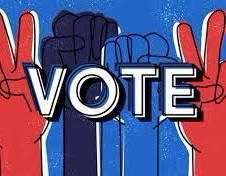
OK, people. This is it. The last week to vote in this midterm election. If you care about your rights, your children’s rights, your neighbors’ rights, or the direction this country is heading, then get off your ass and vote.
I don’t care if you vote Democrat, Republican, Independent, or write in the name of your neighbor’s cat. That’s your choice. That’s the whole damn point. Your vote is yours, and nobody else gets to make that decision for you.
There are very few things this country actually asks you to do as a citizen. Voting is one of them. It’s your opportunity to have a say in who makes the decisions that affect your life, your paycheck, your healthcare, your freedoms, and your future. You don’t get to complain that nobody listens to you if you won’t even take the time to make your voice heard.
And yes, I’m looking at all of you who say, “My vote doesn’t matter.” That’s a convenient excuse, isn’t it? Funny how the people who want to hold onto power seem to spend an awful lot of time making it harder for certain people to vote. If individual votes didn’t matter, why bother making it difficult to cast them?
Your vote matters precisely because power depends on people choosing to exercise it.
So, vote. Vote because you believe in something. Vote because you’re angry about something. Vote because you want things to change, or because you think things should stay the way they are. Vote because you want your children to inherit a country with rights and freedoms worth protecting. Vote because you’re tired of politicians treating public office like a personal investment portfolio.
And if you’re a Republican, go vote. If you’re a Democrat, go vote. If you’re an Independent who thinks both parties could use a good kick in the ass, go vote. I may disagree with your choices, but I will defend your right to make them.
That’s how democracy is supposed to work. We don’t all have to agree. We just have to agree that the people get to decide.
Now, a practical reminder: If you have a mail-in ballot, don’t assume dropping it in a mailbox this late will get it counted in time. Check your state’s election rules and deadlines. If you can, take it to an official ballot drop box or an authorized election office. Make sure it gets where it needs to go before the deadline. Don’t let procrastination turn your right to vote into a piece of paper that arrives too late to matter.
We’re down to the final week. There’s no more “I’ll do it tomorrow.” There’s no more assuming someone else will take care of it. There’s no more complaining about the direction of the country while sitting on the sidelines.
Democracy isn’t a spectator sport. You don’t get to sit in the stands for two years, ignore the game, and then act surprised when you don’t like the final score.
So, please, please, PLEASE GET OUT AND VOTE!
Your rights. Your kids’ rights. Your neighbors’ rights. Your future.
One ballot at a time.
And if you’re still wondering whether your one vote makes a difference, remember this: elections are decided by the votes that are actually cast, not by the people who meant to vote but never got around to it.
LAST WEEK, PEOPLE. GET IT DONE. VOTE!
-
Things That Go Bump in the Night
Dwain Northey (Gen X)

With Halloween a week away, I find myself doing what apparently passes for seasonal entertainment: watching television shows about ghosts, haunted houses, paranormal investigators, and people who willingly spend the night in buildings where something supposedly wants them dead. Apparently, nothing says festive autumn entertainment quite like watching grown adults scare the living hell out of themselves in an abandoned asylum.
But as I watch these shows, I keep coming back to the same question: Why is it that the spirit world apparently operates almost exclusively after dark?
Seriously. Have you ever watched Ghost Hunters or any of the countless other paranormal investigation shows and noticed that nobody seems interested in investigating a haunting at two o’clock on a sunny Tuesday afternoon? No, they have to wait until midnight, turn off every light in the building, grab their flashlights, and start whispering into the darkness like they’re afraid of waking up the very things they’re supposedly there to find.
Apparently, the dead have office hours, and those hours begin after sunset.
I understand the entertainment value. A shadow moving across a dark hallway is considerably more dramatic than a shadow moving across a brightly lit room. A mysterious noise in the middle of the night makes for compelling television, while the same noise at lunchtime probably gets blamed on the plumbing. And let’s be honest, watching someone scream because a door creaked in a dark basement is considerably more entertaining than watching them investigate the same basement with the lights on and a sandwich in their hand.
But if we’re going to entertain the possibility that some form of consciousness survives physical death, why would it be restricted to the nighttime shift?
Does sunlight interfere with the afterlife? Are spirits allergic to daylight? Is there some supernatural equivalent of a union contract that prohibits paranormal activity before dusk?
And if ghosts can supposedly walk through walls, move objects, and communicate with the living, why should the position of the sun have any bearing on their ability to do so? We’re talking about entities that have allegedly escaped the fundamental rules of biology, yet apparently remain subject to the lighting preferences of a theatrical production.
Maybe the dead simply understand atmosphere better than the living.
My son once made a comment while we were watching one of these shows that has stuck with me because it was both hilarious and entirely reasonable. The investigators were exploring an allegedly haunted orphanage, supposedly inhabited by the spirits of children who had died there.
My son’s question was simple: “Why are they doing it at night? Are these kids supposed to be in bed?”
I laughed, but the more I thought about it, the more I appreciated the logic.
Apparently, even in death, children are expected to observe a bedtime. Maybe the paranormal investigators should come back during recess. Bring a few toys, leave the lights on, and see whether anyone wants to play. It might be a more productive investigation than wandering around a dark hallway asking, “Is there anybody here who wants to communicate with us?”
And if a ghostly child actually answers, perhaps the next question should be whether they have finished their homework.
The same ridiculous logic applies when these shows investigate battlefields and places associated with mass casualties. Take Gettysburg, for example. One of the bloodiest battles in American history, fought primarily during daylight hours over several days in July 1863. Thousands of men were killed in the fields, woods, and surrounding countryside.
Yet when paranormal investigators visit these historic battlefields, they inevitably seem to prefer the middle of the night.
Why?
If the theory is that people who die under traumatic circumstances leave behind some kind of spiritual imprint, why would that imprint be more active at midnight than at noon? The men who died at Gettysburg were fighting in the daylight. They weren’t stumbling around in the dark, wondering where the battle had gone. They were dealing with musket fire, artillery, smoke, and the general unpleasantness of nineteenth-century warfare while the sun was shining.
The same question applies to Lexington and Concord, Antietam, Waterloo, and countless other battlefields. Before modern warfare made nighttime operations more practical and sophisticated, many major battles were fought primarily during daylight because commanders needed to see what the hell they were doing.
So, if the spirits of fallen soldiers are still wandering those fields, are they waiting until dark to resume their duties? Does a ghostly Union soldier punch out at sunset and return to his position after midnight? Does a Confederate soldier have to wait until the paranormal investigators arrive before he can reenact the battle?
And what happens when daylight saving time begins? Do the ghosts adjust their schedules, or is that another one of those things nobody thought to ask during the investigation?
I realize that the usual explanation is that darkness makes paranormal activity easier to detect, or that spirits are more active when the environment is quiet. But those explanations seem to confuse the conditions under which people believe they experience something with the conditions under which something supernatural would actually have to exist.
Maybe people hear more unexplained noises at night because there are fewer ordinary noises competing for their attention. Maybe a dark hallway makes an ordinary shadow look sinister. Maybe our brains, which are remarkably good at recognizing patterns, occasionally find faces, figures, and movement where none exist.
And maybe, just maybe, television producers have figured out that a dark building, a night-vision camera, and someone whispering, “Did you hear that?” are more likely to hold an audience than six hours of paranormal investigators walking around a perfectly ordinary building in broad daylight.
I’m not claiming to know what happens after death. I don’t have any secret knowledge of the afterlife, and I’m not going to pretend I can definitively rule out every possibility simply because I haven’t personally encountered a ghost. The universe is a remarkably strange place, and human understanding of it remains incomplete.
But there’s a difference between acknowledging that we don’t know everything and accepting every bit of supernatural mythology without asking a few obvious questions.
If there’s another side, why should it be dark? If spirits can communicate with us, why do they apparently prefer abandoned buildings at midnight? And if a battlefield is haunted because of the violence that occurred there, why should the hour of the haunting matter?
Perhaps the dead aren’t any more active at night. Perhaps the living are simply more frightened of the dark.
Which brings us back to Halloween, the one time of year when we collectively decorate our houses with skeletons, buy miniature candy bars, and celebrate our fascination with things that go bump in the night.
I suspect the real mystery isn’t whether ghosts exist. It’s why, in a world full of unanswered questions, we’ve decided that the supernatural apparently needs a dramatic lighting department.
If I ever find myself on one of these paranormal investigations, I’m making one request: let’s go during the day.
Open the curtains. Turn on the lights. Maybe bring a picnic lunch.
And if we encounter a spirit, I have a few questions I’d like answered.
First, why do you only show up at night?
Second, if you died on a battlefield in broad daylight, what exactly have you been doing all afternoon?
And third, if you’re going to spend eternity wandering around an abandoned building, wouldn’t you eventually get bored?
After all, eternity is a pretty long time to spend waiting for somebody to turn off the lights.
Happy Halloween. Keep the porch light on. Apparently, the dead are waiting for us to turn it off.
-
Video Arcade
What was your first ever videogame?
As a Gen X generation kid the first ever video games were in arcade where you had a pocket full of quarters and you met your friends never had one in my room never had one since so my first experience with video games was going to an arcade or a skating rink and being with people.
-
Goal setting
Do you set personal goals for yourself?
In the past, I’ve set goals or stepping stones you know every day you have your goal list of things you want to get done but the older I get it’s more of just putting 1 foot in front of the other and just get through the day so the lofty goals of your youth seemed to go by the wayside, especially one year alone and don’t have a spouse or kids to deal with so a goal of setting for a vacation or a big event, go out the window so the answer to the you said goals for yourself is yes or no sometimes yes usually no
-
Do You Believe?
Dwain Northey (Gen X)
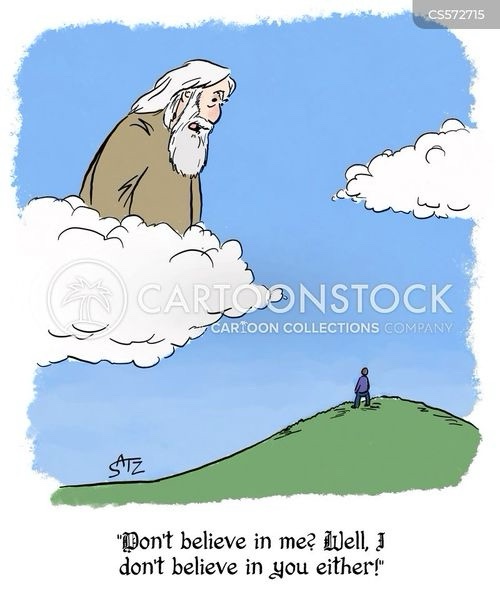
Because of some of my past posts, someone recently asked me a fairly straightforward question: Do I believe that Jesus was, or is, the Savior? Do I believe in the mythology surrounding his birth, his purpose, his death, and his resurrection? It was a reasonable question, and I gave what I believe was an honest answer. Not necessarily the answer they were hoping to hear, but an honest one nonetheless.
I believe Jesus was a prophet, much as Moses was considered a prophet, along with the many other prophets described throughout religious history. I believe he was a man whose teachings, influence, and legacy helped shape the world we live in today. But do I believe that an omnipresent, omnipotent being created everything, sent his only begotten son to Earth, and sacrificed him to atone for the sins of humanity? Honestly, I can’t say that I do.
And before anyone starts clutching their pearls, sharpening their theological knives, or preparing a sermon about my eternal destination, let me explain.
Human beings have always been storytellers. We have looked at the world around us and tried to explain things we didn’t understand. Lightning, eclipses, disease, the changing seasons, the movement of the stars, and the very existence of life itself have all inspired stories about gods, spirits, and supernatural forces. When we didn’t have an explanation, we often created one. Sometimes those explanations became traditions, those traditions became religions, and those religions became the unquestionable truths by which entire civilizations lived.
But here’s the thing about humanity: we learn.
Things once attributed to magic, witchcraft, curses, or the wrath of the gods have, in many cases, found explanations through science. Diseases that people once associated with demonic possession can now be understood through medicine. Natural phenomena once considered supernatural are now explained by physics, astronomy, and chemistry. We have gone from fearing the unknown to investigating it, testing it, and occasionally discovering that the universe is considerably more complicated than our ancestors imagined.
That doesn’t mean our ancestors were foolish. They were working with the knowledge available to them. They saw something extraordinary and tried to make sense of it. We do the same thing today, although we have better tools and considerably more information. The difference is that we now have methods for testing our explanations rather than simply accepting them because someone important declared them true.
And yet, when the conversation turns to religion, that willingness to question sometimes seems to disappear.
We can challenge scientific theories, revise historical accounts, and discard explanations that no longer hold up under scrutiny. But question a religious doctrine, and suddenly you’ve committed an offense against the Almighty Himself. Apparently, some subjects are open to investigation while others come with a spiritual equivalent of a Do Not Disturb sign.
Why?
I understand the appeal of faith. I understand wanting to believe that someone is watching over us, that suffering has a purpose, that death isn’t the end, and that somewhere beyond the confusion and cruelty of this world, there is a greater plan. Those are comforting ideas, especially when life gives us more questions than answers.
But the fact that an idea is comforting doesn’t automatically make it true. Nor does the fact that something is difficult to explain mean that a supernatural explanation must be correct.
There is a difference between acknowledging that we don’t know everything and deciding that what we don’t know must be evidence of God. Humanity has filled countless gaps in its understanding with supernatural explanations, only to discover later that some of those gaps could be filled by observation, experimentation, and reason.
Perhaps there are still things we cannot explain. I would argue there certainly are. But I am comfortable admitting that I don’t know everything. I don’t need to invent an answer simply because the absence of one makes me uncomfortable.
That brings me back to Jesus.
Do I believe he existed? I think there are reasonable historical grounds for believing that Jesus of Nazareth was a real person, although the details of his life are debated by historians. Do I believe he was a teacher whose message influenced millions of people? Absolutely. Do I believe that compassion, generosity, forgiveness, and caring for others are worthwhile principles? Without question.
But do I believe he was literally the only begotten son of an omnipotent God, sent to Earth as a divine sacrifice to redeem humanity from original sin? I cannot honestly say that I do.
The story itself raises questions for me. If God is omnipotent, why is a sacrifice necessary to forgive humanity? If God created humanity knowing exactly what we would become, why create a system in which our salvation depends on the suffering and death of his own son? And if forgiveness is a virtue we are expected to practice, why would an all-powerful, all-knowing being require such an elaborate arrangement to accomplish it?
I’m not suggesting that believers have never considered these questions. They have, and theology offers plenty of answers. I’m simply saying those answers haven’t persuaded me.
Perhaps that makes me a skeptic. Perhaps it makes me an agnostic. I’m comfortable with either description, although I don’t particularly feel the need to put a label on every question I haven’t resolved.
What I find more interesting is the distinction between believing in the teachings attributed to Jesus and believing every supernatural claim attached to his identity.
If someone tells me to feed the hungry, care for the sick, show compassion to the vulnerable, forgive others, and treat my neighbors as I would want to be treated, I don’t need a promise of eternal paradise to understand the value of those principles. Nor do I need the threat of eternal damnation to understand why cruelty, greed, and indifference are destructive.
Shouldn’t those things matter on their own merits?
If the only reason someone behaves compassionately is the promise of a heavenly reward, or the only reason they refrain from harming others is the fear of eternal punishment, I think that raises a question worth considering. Is that morality, or is it simply a transaction with the universe?
I would like to think that kindness matters because another human being matters. That helping someone in need is worthwhile because their suffering is real. That we should leave the world a little better than we found it because other people have to live here, too.
No supernatural instruction manual should be necessary for us to recognize that.
And perhaps that is where religion and I part company. I don’t necessarily reject the wisdom that can be found in religious teachings. I question the insistence that their value depends on accepting every supernatural claim surrounding them.
Humanity has evolved, physically and intellectually, over an extraordinary span of time. Our understanding of ourselves and the universe has changed repeatedly. Our ancestors told stories to explain the world, and some of those stories became the foundations of civilizations. They gave people community, identity, hope, and a way to confront the frightening realities of existence.
Those stories have mattered. They continue to matter to billions of people. But importance and literal truth are not necessarily the same thing.
So, do I believe?
I believe there is a great deal about existence that we still don’t understand. I believe human beings are capable of remarkable compassion and equally remarkable cruelty. I believe our choices matter, our actions have consequences, and the way we treat one another makes a tangible difference in the lives we share.
I believe we should remain curious, question what we are told, and be willing to reconsider our conclusions when new information comes along. I believe admitting that we don’t know something is not a weakness. Sometimes, it’s the most intellectually honest answer available.
And I believe people should be free to find meaning in faith without demanding that everyone else arrive at the same conclusions.
But do I believe there is one divine Savior who came to Earth to rescue humanity from the consequences of its own sins?
I can’t honestly say that I do.
Maybe I’m wrong. I’m willing to acknowledge that possibility. The trouble is, acknowledging that I might be wrong doesn’t require me to pretend I’m convinced.
Faith, by its nature, asks us to believe in things we cannot fully prove. Skepticism asks us to examine the reasons we believe them in the first place. I don’t think those two positions have to be enemies, although I suspect some people would prefer that they were.
I’m not trying to take anyone’s faith away from them. I’m simply explaining why I cannot claim a faith that I don’t possess.
And if there is a God who gave us the ability to reason, question, observe, and learn, I would hope that using those abilities honestly wouldn’t be considered an unforgivable offense.
After all, if the truth is truly the truth, shouldn’t it be able to withstand a few questions?
So, do you believe?
I suppose the more important question is whether you believe because you’ve examined what you were taught, or because you’ve been told that questioning it is dangerous.
Those are two very different things.
-
From Caves to Climate Control: Humanity’s Comfortable Little Explosion
Dwain Northey (Gen X)
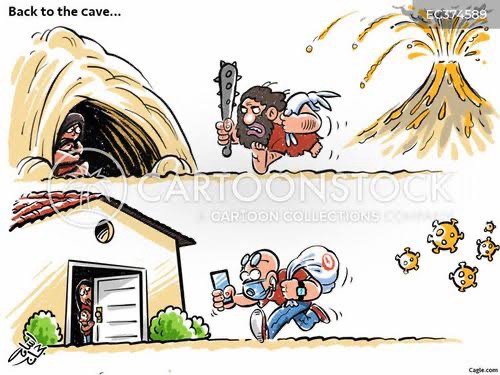
There is something interesting about the history of humanity that I don’t think we spend enough time contemplating. The more comfortable we make our lives, the more of us there seem to be. We have spent thousands of years figuring out how to escape the inconveniences of nature, and now we have reached a point where we can live in climate-controlled buildings, order food without leaving the couch, and complain when the internet takes three seconds longer than expected. Meanwhile, the human population has exploded to the point where we measure our communities in millions rather than thousands.
At some point, I have to wonder whether our success as a species is becoming a problem of its own.
For most of human history, survival was a full-time occupation. Finding food, locating clean water, avoiding predators, surviving disease, and staying warm during winter required considerable effort. Nature didn’t offer customer service, a return policy, or an indoor thermostat. You either adapted to your environment or became a cautionary tale for the next generation.
Early settlements were relatively small by modern standards. Even communities numbering a few thousand people could represent substantial population centers. Machu Picchu, for example, is estimated to have housed roughly a few thousand residents at its peak, although estimates vary. Ancient Egyptian cities and settlements also varied considerably in size, with some major urban centers reaching populations in the tens of thousands or more.
Today, we have metropolitan areas containing millions of people, with entire regions merging into continuous urban landscapes. We have gone from gathering around a fire to gathering in traffic, from hunting for dinner to arguing over which delivery app has the lowest service fee.
Progress, apparently, comes with a side of congestion.
But the real change isn’t simply that our communities have grown. It’s that we have steadily removed the environmental pressures that once limited our ability to grow.
Agriculture gave us dependable food supplies. Irrigation allowed civilizations to flourish in places that would otherwise have been difficult to inhabit. Sanitation and clean water reduced the spread of disease. Modern medicine allowed more children to survive and more adults to live longer. Industrialization increased food production, transportation connected distant markets, and refrigeration made it possible to preserve food rather than eat everything before it spoiled.
Then came air conditioning, central heating, supermarkets, antibiotics, and the modern infrastructure that allows millions of people to live together without spending every waking moment worrying about their next meal.
We have become extraordinarily good at making the world more accommodating to us.
And that is where the irony begins.
The human population grew from roughly one billion around 1800 to eight billion in 2022. That growth wasn’t simply the result of people becoming more comfortable or having more children. It was also the result of falling death rates, improved food production, better sanitation, and longer life expectancy. In many countries, birth rates have actually declined as education, urbanization, economic security, and access to contraception have increased.
So perhaps we aren’t exactly reproducing like bacteria in a warm petri dish. The metaphor still has a point, though: when the conditions for survival improve, populations can expand rapidly, particularly when those improvements arrive faster than the systems governing population growth can adjust.
We have essentially spent centuries building a better petri dish.
And now we’re surprised that it’s getting crowded.
The difference between humanity and bacteria, of course, is that we have the capacity to recognize the limits of our environment and change our behavior. Bacteria don’t convene international conferences about resource management. They don’t build desalination plants, develop renewable energy, or debate whether their consumption habits are sustainable. They simply respond to available conditions.
Human beings can do something different. We can anticipate consequences.
The question is whether we will.
Because our comfort has never been entirely free. Every new level of convenience requires resources, energy, infrastructure, and space. Our cities need water. Our farms need soil and irrigation. Our homes need electricity. Our transportation systems require enormous networks of roads, railways, and fuel or alternative energy. Even the digital world, which sometimes feels as though it exists somewhere in the clouds, depends on physical data centers, electrical grids, cooling systems, and materials extracted from the Earth.
We have become so accustomed to technology that we often mistake its invisibility for a lack of environmental cost.
Turn on a light, and the room illuminates. Turn up the air conditioning, and the temperature drops. Open the refrigerator, and food appears preserved. Tap a screen, and something arrives at the door.
We rarely think about the chain of resources, labor, energy, and infrastructure required to make those things happen.
Civilization has become a remarkably effective machine for separating us from the consequences of our own existence.
And yet, we continue to expand our expectations. We want bigger homes, faster transportation, more powerful computers, more entertainment, and greater convenience. We want to live longer, travel farther, and spend less time doing the unpleasant things that survival once demanded.
None of those desires is inherently wrong. I enjoy indoor plumbing as much as the next person. I’m not suggesting we abandon modern medicine and return to living in caves simply to give the planet a population break.
But perhaps we should recognize the distinction between improving the quality of life and endlessly increasing the quantity of consumption.
Those are not necessarily the same thing.
There is also a curious historical twist to this story. For much of human history, increasing the food supply and reducing mortality generally meant more people survived and populations grew. Today, many developed societies face the opposite concern: aging populations and declining birth rates. Greater security and prosperity often lead people to have fewer children, not more. Meanwhile, the world’s population growth rate has slowed, even as the total population continues to increase.
We may eventually discover that our species doesn’t need an external force to limit its expansion. Economics, education, urban living, changing cultural expectations, and personal choices are already reshaping family sizes around the world.
But population is only one part of the equation. Eight billion people living within sustainable limits would pose a different challenge from eight billion people consuming resources as though the planet were an inexhaustible warehouse.
The problem isn’t merely how many of us exist. It is how we live, what we consume, how we distribute resources, and whether our technology helps us live within ecological limits or simply allows us to postpone confronting them.
That brings us to the future.
We are approaching a point where technology may allow us to manufacture more of the conditions we need to survive. We can generate electricity from the sun and wind, extract fresh water from seawater, grow food in controlled environments, recycle materials, and develop systems that use fewer resources per person. Artificial intelligence may help optimize energy grids, improve agriculture, and manage complicated infrastructure.
We might even establish permanent settlements beyond Earth someday.
But I find the prospect of escaping our environmental limitations somewhat amusing. We struggle to manage the only planet we know can support us, yet we entertain visions of moving to Mars, building lunar outposts, and expanding into the solar system.
Apparently, the human response to a crowded house is to start shopping for another planet rather than reconsider how much junk we’ve accumulated in the first one.
And Mars, for all its science-fiction appeal, isn’t exactly an attractive alternative. It offers no breathable atmosphere, no convenient oceans of liquid water, and no comfortable outdoor environment. Establishing a self-sustaining civilization there would be an extraordinary technological achievement, but it would not be an inexpensive substitute for responsible stewardship of Earth.
Still, I don’t believe humanity’s future has to be a choice between technological progress and environmental collapse. We have the ability to use technology to improve lives without assuming that every improvement must be accompanied by endless expansion.
Perhaps the next great achievement of civilization won’t be learning how to support more people in increasingly artificial environments. Perhaps it will be learning how to make a good life possible without consuming more than the planet can reasonably provide.
That would require a change in how we measure success. We would need to value resilience over sheer size, sustainability over constant expansion, and quality of life over the endless accumulation of conveniences.
It might even require us to question the assumption that every problem can be solved by inventing something that allows us to continue doing exactly what caused the problem in the first place.
Humanity has traveled an extraordinary distance from its earliest settlements. We have transformed our environment, extended our lifespans, connected continents, and developed technologies our ancestors could barely have imagined. Our ability to cooperate, innovate, and adapt is remarkable.
But there is a difference between being capable of doing something and being wise enough to understand whether we should.
We have spent thousands of years learning how to make ourselves comfortable in the world. Perhaps the next stage of our evolution requires learning how to remain comfortable without overwhelming the systems that make our existence possible.
Because if we keep treating every new technological breakthrough as permission to expand indefinitely, we may eventually discover that we have built the most sophisticated civilization in history inside a very finite container.
And unlike a petri dish, Earth doesn’t come with a replacement waiting on the shelf.
We are intelligent enough to recognize the problem. We are technologically capable of addressing much of it. What remains uncertain is whether we are collectively wise enough to do so before necessity makes the decision for us.
For a species that prides itself on being the most intelligent life on the planet, that seems like a fairly reasonable test.
Let’s hope we pass it before we run out of room in the parking lot.
-
AI
What do you think is the future of AI?
AI, if that’s what you wanna call it has a lot of potential to do a lot of good things at this point I don’t think it should be called AI. I think it should be called automated intelligence because it’s not thinking for itself. It’s just compiling data at a way more rapid rate than man can so saying it’s intelligence isn’t accurate at this point cause I don’t think it’s thinking for itself but regulated I think that it can solve a lot of problems with formulations of vaccines and things of that nature I don’t think it’s gonna turn into Skynet and kill us all, but you know we’ve never been anything it’s not potentially deadly
-
Sleeping With Someone
Dwain Northey (Gen X)

Language is a funny thing. We use phrases every day without giving much thought to where they came from or whether they make any damn sense in the first place. Take the phrase “sleeping with someone.”
Somewhere along the way, we decided that sleeping with someone meant having sex with them. Not actually sleeping, mind you. Not sharing a bed, enjoying a little pillow talk, or waking up wondering why someone else is hogging all the blankets. No, apparently, it means you met someone, things got a little interesting, perhaps alcohol was involved, and you engaged in a brief moment of drunken fornication before going your separate ways.
So, naturally, your friends ask, “Did you sleep with them?”
Well, technically, no. You were both awake for the important part, and if everything went according to plan, you probably weren’t sticking around for the sleeping portion either.
How did we get here? The expression likely grew out of the older, more literal idea of sharing a bed with someone, which became a euphemism for sexual intimacy. Somewhere along the way, the euphemism outlived the original meaning, and now we use it to describe an act that might have lasted twenty minutes without anyone ever closing their eyes.
Perhaps fornication would be a more accurate word, although it does sound like something you’d find in a dusty religious text or hear from a disappointed medieval priest. Maybe that’s why it never caught on in everyday conversation.
But that’s the thing about language. Words and phrases don’t always evolve because they make sense. Sometimes they survive because everyone understands what they mean, even when the literal interpretation is complete nonsense.
We do this constantly. We inherit expressions from generations past, repeat them without question, and rarely stop to examine the absurdity hiding in plain sight.
So the next time someone asks whether you slept with somebody, perhaps ask for clarification. Did you actually sleep together, or are we discussing an entirely different activity?
Because apparently, in the English language, you can sleep with someone without sleeping, spend the night without spending the entire night, and have a one-night stand without necessarily standing at any point.
And we wonder why English is difficult to learn.
-
What Happened to a Government of the People?
Dwain Northey (Gen X)

Every election year, we get to participate in that grand American tradition of pretending that our government belongs to us. We get campaign ads, yard signs, endless promises, and politicians assuring us that they understand the struggles of ordinary Americans. Then we look at the people actually running for office and start asking a rather uncomfortable question: When did government service become the preferred retirement hobby of billionaires and the playground of the obscenely wealthy?
Seriously, what happened to a government of the people, by the people, and for the people? Did we misplace that somewhere between the founding of the republic and the latest billionaire deciding that having more money than God wasn’t quite enough?
With the midterm elections approaching, I’ve been thinking about the growing number of multimillionaires and billionaires who seem determined to get their hands on the levers of government. Elon Musk has demonstrated that extraordinary wealth can buy extraordinary access to political power. Vivek Ramaswamy has pursued political office. Donald Trump, himself a wealthy businessman long before entering the White House, has turned the presidency into something that often feels less like public service and more like a personal brand extension.
And it makes me wonder: Is this about ego, power, money, or some combination of all three?
Perhaps the answer is that some people simply cannot imagine a world in which they aren’t in charge. They have accumulated fortunes, acquired businesses, purchased properties, and surrounded themselves with people who say yes to everything they suggest. Eventually, perhaps, they look at the government and think, Well, I’ve conquered the business world. Why shouldn’t I run the country, too?
Because apparently having a private jet, multiple mansions, and enough money to purchase a small nation isn’t sufficient. Now they want the job that comes with the nuclear codes and the ability to influence the lives of hundreds of millions of people.
What could possibly go wrong?
Of course, this isn’t an entirely new phenomenon. The wealthy have been influencing American politics since the country’s earliest days. The Gilded Age gave us industrialists such as Andrew Carnegie, the Mellons, and Henry Ford, men whose business empires generated enormous fortunes and whose influence extended far beyond their factories and financial institutions. Their legacies were complicated, and some eventually engaged in philanthropy, but we shouldn’t confuse charitable donations with a fundamental commitment to economic equality.
A person can donate millions to a library and still preside over a business model that concentrates wealth and power in the hands of a few.
And let’s be honest: philanthropy can be a wonderful thing, but it isn’t a substitute for a functioning government. We shouldn’t have to hope that a billionaire wakes up feeling generous before ordinary people can access education, healthcare, safe working conditions, or a reasonable opportunity to get ahead.
That’s what taxes and public institutions are supposed to help accomplish. It’s the idea that we contribute to a common society and that society, through its elected representatives, works for the common good.
Imagine that.
The real question isn’t whether wealthy people should be allowed to run for office. Of course they should. The Constitution doesn’t require candidates to have a certain bank balance, and being wealthy doesn’t automatically make someone corrupt or incapable of serving the public.
But wealth doesn’t automatically make someone qualified to govern, either.
Being able to build a company is not the same thing as understanding how to run a government. A business exists, in large part, to generate returns for its owners and shareholders. A government is supposed to serve the public, including the people who cannot afford lobbyists, political donations, or a private meeting with the president.
Those are fundamentally different responsibilities.
In business, a CEO might decide to close a factory because it improves the bottom line. In government, that same decision might mean an entire community loses its economic foundation. A business owner might consider healthcare a cost to be reduced. A public servant should recognize that access to healthcare affects the well-being, productivity, and dignity of the people they’re supposed to represent.
The problem begins when politicians treat the country like a corporation, citizens like employees who can be dismissed, and public resources like assets waiting to be acquired by the right people.
And if the people making those decisions have spent their lives surrounded by extraordinary privilege, do they even understand what ordinary Americans are dealing with?
Do they know what it’s like to choose between paying the electric bill and buying groceries? To worry about the cost of a prescription? To work full-time and still wonder whether the next unexpected expense will send the household budget into a tailspin?
Maybe some do. But having once struggled doesn’t guarantee that someone remembers what struggling feels like after decades of wealth and influence.
And that’s precisely why representative government matters. We need people who understand the experiences of the population, not just the concerns of wealthy donors and corporate executives.
Which brings me to another uncomfortable question: Why does getting into government seem to have become such an effective way to protect or expand personal wealth?
History offers plenty of examples of people using public office to reward allies, protect business interests, secure favorable policies, and enrich themselves. We have laws intended to prevent corruption, but laws are only as effective as the people willing to enforce them. When political loyalty becomes more important than accountability, those safeguards start looking less like guardrails and more like decorative suggestions.
Wealthy individuals also have advantages that ordinary candidates simply don’t possess. They can finance campaigns, attract media attention, hire armies of consultants, and gain access to people who shape public policy. Their wealth can give them a louder voice before a single vote is cast.
And once they acquire political power, the potential conflicts of interest multiply.
Who benefits from a tax policy that favors the wealthiest households? Who benefits when environmental regulations are weakened? Who benefits when public contracts are awarded to politically connected businesses? Who benefits when labor protections are reduced while corporate profits climb?
It certainly isn’t always the person working two jobs to make rent.
Perhaps this is where the distinction between public servants and servants of the wealthy becomes painfully clear. A public servant is supposed to use the authority entrusted to them to protect the public interest. A servant of money uses that authority to protect the interests of those who possess it.
And sometimes, inconveniently, those two interests are in direct conflict.
I once heard the sentiment attributed to Harry Truman that if you want to know whether a politician is corrupt, look at whether they use public office to enrich themselves. I wouldn’t confidently assign that exact wording to Truman without a reliable source, but the underlying principle is sound: public office should never be a private revenue stream.
The point isn’t that every wealthy politician is corrupt. The point is that a system that allows enormous wealth to purchase disproportionate political influence creates a corruption risk, even when nobody is caught breaking the law.
Sometimes corruption isn’t a suitcase full of cash exchanged in a dark parking garage. Sometimes it’s a perfectly legal arrangement in which the people writing the rules are also the people best positioned to profit from them.
How convenient.
And what makes this especially frustrating is that the people who need government protection the most are often the people with the least influence over it. Workers, veterans, retirees, people with disabilities, struggling families, and small business owners don’t generally have lobbyists waiting outside congressional offices. They don’t have billions to spend on campaign contributions or the ability to threaten an elected official with withdrawing a fortune from the next election.
They have a vote.
One vote.
And every two years, politicians remind them how important that vote is. They tell us that our voices matter, that our participation is essential, and that democracy depends on us.
Then, after the election, we watch to see whose phone calls get returned.
Is it the teacher worried about classroom funding? The veteran waiting for assistance? The family struggling with healthcare costs? Or the billionaire who can threaten to move an investment, finance a primary challenger, or make life politically uncomfortable for anyone who refuses to cooperate?
We know the answer often enough to understand why public trust has eroded.
A government that consistently responds more quickly to wealth than to need eventually stops looking like a representative democracy and starts looking like an exclusive club. The members may have different political affiliations, but the people outside the club keep getting the same message: your concerns are important, right up until they conflict with somebody else’s money.
So what do we do about it?
We demand transparency. We strengthen conflict-of-interest rules. We enforce restrictions on self-dealing and insider trading. We reduce the outsized influence of corporate money in elections. We protect independent oversight, support competitive elections, and insist that elected officials answer questions from their constituents rather than simply appearing at carefully staged campaign events.
Most importantly, we stop confusing wealth with wisdom, celebrity with leadership, and business success with public-service qualifications.
Government isn’t supposed to be a prize awarded to whoever has accumulated the most money. It isn’t a trophy for someone whose ego requires another challenge. And it certainly isn’t supposed to be a mechanism for turning political influence into an even larger personal fortune.
The United States was founded on the radical idea that legitimate political authority comes from the people. Not from a king. Not from a hereditary aristocracy. Not from a handful of industrialists or technology executives who happen to possess more wealth than entire nations.
The people.
That principle doesn’t guarantee good government. It never has. But it establishes who government is supposed to serve and where its authority comes from.
Which brings us back to the question in the title: What happened to a government of the people?
Perhaps nothing happened to the idea itself. Perhaps we simply became complacent about defending it. We allowed money to acquire more influence, treated political fundraising as an unavoidable feature of democracy, and grew accustomed to candidates who seemed more interested in winning power than explaining how they intended to use it responsibly.
We began accepting the idea that government was something wealthy people could purchase their way into, rather than something ordinary citizens could participate in and hold accountable.
And now we find ourselves wondering why so many politicians appear to serve the people who finance their campaigns rather than the people who cast the ballots.
Well, there’s a surprise.
Here’s the thing: Public office is supposed to be a public trust, not a private investment. The salary is compensation for doing the job. The authority is entrusted to you by the people. The power belongs to the office, not the individual occupying it.
You aren’t elected to become richer, more famous, or more powerful. You’re elected to do a job on behalf of the people who hired you.
And yes, that’s what an election is. We are the employers. They are the employees. We pay their salaries, provide their offices, and entrust them with authority to make decisions that affect our lives.
Maybe it’s time we started acting like it.
As the midterms approach, we should be asking candidates a few simple questions. Whose interests will you represent? Who will benefit from your policies? What conflicts of interest will you have to manage? And when the interests of your wealthy donors conflict with the needs of your constituents, whose side will you take?
Don’t just ask what they promise to do. Ask who stands to profit when they do it.
Because if we continue electing people who see government as an opportunity to serve themselves, we shouldn’t be terribly surprised when that’s exactly what they do.
A government of the people, by the people, and for the people cannot survive indefinitely as a government of the wealthy, by the wealthy, and for the wealthy.
At some point, we have to decide whether we want representatives who understand that public service is a responsibility—or politicians who believe the public exists to serve them.
And if the answer is the former, then perhaps we should start reminding our elected officials of a rather basic principle they seem to have forgotten.
We didn’t elect them to own the government. We elected them to work for us.
It’s time they remembered who the boss is.
-
George Orwell
Which book’s world would be the absolute worst to live in?
1984, or animal farm would be terrible world to live in, but I feel like we already are living in them. The dystopian future that are well predicted in the 50s is now here and it’s crazy.


You must be logged in to post a comment.