Dwain Northey (Gen X)
https://www.cbsnews.com/news/naacp-travel-advisory-florida-says-state-hostile-to-black-americans/
Remember the good old days when there were only travel advisories and or ban for, what some would call, third word countries? Well now because of the vile vitriol of one Governor Ron DeSantis the state of Florida, a vacation destination, has received a travel advisory by the NAACP.
The wannabe future President has made the climate so venomous in Florida the anyone who is a part of any minority group does not feel safe in the state. Black, Brown, LGTBQ+, these are all groups that are under attack in the Sunshine State. The majority Republican legislature and their fearful leader has passed laws that make almost everything a jailable offence and the fact that the state has very loose gun laws and a stand your ground law makes it more dangerous than being a blonde female in central America.
Florida residents are able to carry concealed guns without a permit under a bill signed into law by Republican Gov. Ron DeSantis. The law, which goes into effect on July 1, means that anyone who can legally own a gun in Florida can carry a concealed gun in public without any training or background check. This with their ridiculous stand your ground law, ‘Florida’s “Stand-Your-Ground” law was passed in 2005. The law allows those who feel a reasonable threat of death or bodily injury to “meet force with force” rather than retreat. Similar “Castle Doctrine” laws assert that a person does not need to retreat if their home is attacked.’ Makes it really sketchy to go there.
This in top of the don’t say gay rule and the new trans ruling that just passed.
“Florida lawmakers have no shame. This discriminatory bill is extraordinarily desperate and extreme in a year full of extreme, discriminatory legislation. It is a cruel effort to stigmatize, marginalize and erase the LGBTQ+ community, particularly transgender youth. Let me be clear: gender-affirming care saves lives. Every mainstream American medical and mental health organization – representing millions of providers in the United States – call for age-appropriate, gender-affirming care for transgender and non-binary people.
“These politicians have no place inserting themselves in conversations between doctors, parents, and transgender youth about gender-affirming care. And at the same time that Florida lawmakers crow about protecting parental rights they make an extra-constitutional attempt to strip parents of – you guessed it! – their parental rights. The Human Rights Campaign strongly condemns this bill and will continue to fight for LGBTQ+ youth and their families who deserve better from their elected leaders.”
This law makes it possible for anyone to just accuse someone of gender affirming care to have their child taken from them this would include someone traveling from out of state. This alone justifies a travel ban to the Magic Kingdom for families.
Oh, and I haven’t even mentioned DeSantis holy war with Disney, the largest employer in the state. I really hope the Mouse eats this ass holes lunch.
Well that’s enough bitching, thanks again for suffering though my rant.
-
Black Sheep
Dwain Northey (Gen X)
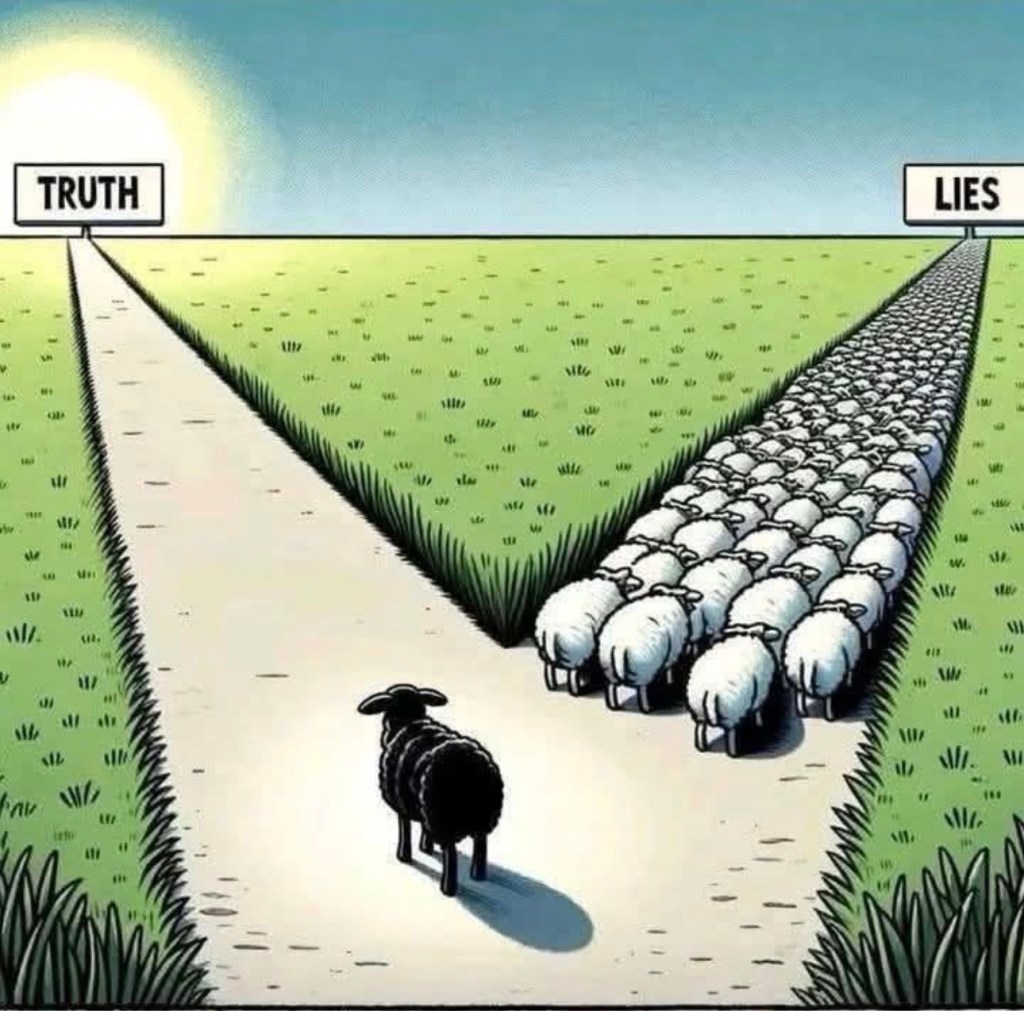
The Black Sheep Might Be Onto Something
We have a funny habit as human beings of assuming that the person who doesn’t fit in must be the problem.
We call them the black sheep.
The outlier.
The oddball.
The troublemaker.
The person who just can’t seem to get with the program.
And sometimes, sure, they really are just being difficult. Every family, office, classroom, and group of friends has at least one person who seems to have been issued a completely different instruction manual.
But here’s the thing:
Being different isn’t automatically being wrong.
Sometimes the black sheep is simply the person who looked at the herd and thought, “Um…where exactly are we going?”
And that person might actually have a point.
Progress has never been particularly kind to people who refuse to follow the crowd.
At one point, the crowd believed the Earth was the center of the universe. The crowd thought slavery was perfectly acceptable. The crowd thought women shouldn’t vote. The crowd thought segregation was normal. The crowd has repeatedly demonstrated throughout human history that being part of the majority is not necessarily evidence of being correct.
Sometimes it is just evidence that a whole bunch of people happen to believe the same thing.
There is a difference.
We teach children to conform almost from the moment they can walk. Sit here. Stand there. Do it this way. Don’t question the teacher. Don’t rock the boat. Follow the rules. Everybody else is doing it.
And eventually we grow into adults who are remarkably uncomfortable when somebody asks, “Why?”
Not “What are we doing?”
Not “Who decided this?”
Just “Why?”
That little word has probably caused more trouble throughout human history than almost any other word in the English language.
Because “why” requires us to examine assumptions.
And assumptions are comfortable.
If everybody has always done something a certain way, changing it means admitting that perhaps everybody has always done it the wrong way.
Nobody particularly enjoys that conversation.
So we ostracize the person who keeps asking questions.
We call them difficult.
We tell them they’re overthinking it.
We tell them they’re being unrealistic.
We tell them, “That’s just how things are.”
Which is possibly one of the dumbest sentences humanity has ever invented.
Because almost everything we now consider normal was once something that wasn’t normal.
Somebody had to be the first person to imagine it differently.
The black sheep might be that person.
Maybe they’re not trying to destroy the system. Maybe they’re trying to figure out why the system has a giant “DO NOT QUESTION” sign hanging over it.
Maybe they aren’t refusing to cooperate.
Maybe they simply see something the rest of us haven’t noticed yet.
Maybe their vision is different.
And different vision can be incredibly valuable.
The outlier sees the things the average person may overlook because the outlier isn’t standing in exactly the same place.
That’s why diversity of thought matters.
You don’t need everyone in the room thinking alike. In fact, if everyone in the room immediately agrees, somebody probably forgot to invite the person who asks uncomfortable questions.
The goal shouldn’t be to eliminate the black sheep.
It should be to listen to them.
That doesn’t mean they’re automatically right. Being different isn’t some magical certification of wisdom. Sometimes the black sheep is simply wrong.
But that’s the point.
We should evaluate the idea, not exile the person for having it.
Because occasionally the person standing outside the circle isn’t lost.
They’re standing there because they can see the circle.
And sometimes they’re the only person asking whether we should be drawing a circle at all.
So maybe we should stop treating the black sheep as something that needs to be fixed.
Maybe sometimes the black sheep is exactly what the flock needs.
Because conformity can keep a group moving in the same direction.
But somebody has to occasionally look up and ask whether we’re actually going anywhere worth going.
And if that person happens to be the oddball standing at the back saying, “Guys…this seems like a really bad idea,” maybe don’t ostracize them.
Maybe, just for a minute, listen.
They might be wrong.
But they might also be the one person in the room who sees the answer nobody else has considered yet.
And wouldn’t it be a little embarrassing to discover that the black sheep wasn’t the problem?
Maybe we were just following the wrong herd.
-
Feels like home
What’s a place you visited that felt like home?
That’s an interesting question because that would mean either. You felt a familiarity or it was welcoming or something that you’ve been there before I’ve been a lot of places and I can be honest that nothing has ever felt like home because I’m kind of a wanderer.
-
Pegasus
If you could pick any fictional animal to be your lifelong companion (like a Pokémon or fantasy pet), what would it be?
If you could have a fictional pet or like lung companion, that’s an animal I would pick Pegasus a flying horse because who wouldn’t want to see the world from the back of a magnificent animal that can carry you through the air.
-
When the Oppressed Became the Oppressors
Dwain Northey (Gen X)

There is something almost breathtaking about watching Christianity go from a movement built around a man who preached love, compassion, forgiveness, and care for the least among us to an institution that has, at various points in history, been responsible for some of the most spectacular examples of human cruelty ever committed in the name of God.
That is quite a transformation. Somewhere along the way, somebody apparently decided that turning the other cheek was less practical than turning the other guy over to the authorities.
The first-century followers of Jesus were not exactly operating from a position of power. They were a small religious movement living under Roman occupation, gathering in homes, sharing what they had, caring for the poor, and attempting to live according to the teachings of a Jewish Messiah who had some rather inconvenient things to say about wealth, power, forgiveness, and how we treat people who have absolutely nothing to offer us in return.
Love your enemies. Feed the hungry. Care for the sick. Welcome the stranger. Do unto others.
Pretty radical stuff, especially when your neighbors are living under an empire that has perfected the art of making examples out of people.
And then came Constantine.
In the fourth century, Christianity went from being a persecuted religion to an officially favored one under the Roman Empire. Eventually, the religion that had spent centuries surviving the attention of Roman authorities became entangled with the very machinery of imperial power.
The oppressed had been invited into the palace.
And apparently, they liked the furniture.
Now, to be fair, Constantine did not single-handedly invent every terrible thing Christianity would ever do. The early church was already a complicated collection of communities, arguments, and competing interpretations. And Christianity did not become a single unified institution overnight. History, inconveniently, is rarely as tidy as a Sunday school coloring book.
But Constantine’s embrace of Christianity marked a profound change in the relationship between the religion and political power. The faith that had once existed largely outside the structures of empire was now becoming part of those structures.
And once religion and government discover they can be useful to each other, well, good luck getting them to leave the party.
The religion of the persecuted could now help legitimize the power of the emperor. The message of a Messiah who said that his kingdom was not of this world became entangled with an empire that very much believed in this world, its borders, its armies, and its ability to make you disappear if you became inconvenient.
Eventually, Christianity became associated with crusades, inquisitions, forced conversions, religious persecution, and colonial conquest. People were tortured, executed, dispossessed, and enslaved while men claiming to represent the teachings of Jesus explained why all of it was necessary.
Which is a remarkable theological achievement when your central religious figure specifically told people to love their enemies.
Imagine standing before Jesus and explaining that you had just authorized the torture of somebody because they disagreed with your interpretation of his teachings.
“Well, Lord, technically, we did it for you.”
I suspect the conversation would be brief.
The uncomfortable truth is that Christianity, like virtually every major religion, has been used both to inspire extraordinary compassion and to justify extraordinary cruelty. There have been Christians who devoted their lives to caring for the poor, defending the vulnerable, and challenging injustice. There have also been Christians who used the authority of their religion to build systems of oppression.
The difference is not always the words printed in the book. Sometimes it is who gets to interpret those words, who holds the power, and who benefits from the interpretation.
The first-century followers of Jesus did not have armies, cathedrals, or the ability to summon a government to enforce their theology. They had a message, a community, and a belief that they were supposed to live differently from the world around them.
The later Christian empires had armies, cathedrals, and governments.
And apparently, once you have the army, the cathedral, and the government, you can find a theological justification for almost anything.
That is the part I find most interesting. The original message did not necessarily change because somebody found a new Bible. The political circumstances changed. The people claiming authority changed. The incentives changed.
A movement that had once challenged the powerful could now become a tool of the powerful.
And if you believe the accounts in Matthew, Mark, Luke, and John about the Messiah at the center of Christianity, he probably would have had some serious objections to the arrangement.
The man who told his followers to love their enemies would likely have found the Crusades a little difficult to explain.
The man who told his followers to care for the poor might have had questions about the accumulation of enormous wealth by religious institutions.
The man who told his followers not to lord their authority over others might have had a few words for religious leaders who believed their position entitled them to control the lives of everyone else.
And the man who said that whatever you did for the least of his brothers, you did for him, might have been somewhat disappointed by the number of people who claimed to love him while treating the poor, the sick, the foreigner, and the powerless as inconveniences.
But perhaps that is the problem with institutional religion. It is one thing to follow a teacher who tells you to love your enemies. It is another thing entirely to build an institution that must defend its authority, protect its wealth, and maintain its political influence.
The teacher says, “Blessed are the meek.”
The institution says, “Yes, but we have some very aggressive lawyers.”
And so the religion that began with a man who had no palace, no army, and no political office eventually became associated with some of the most powerful institutions in human history.
The oppressed became the oppressors.
The people who had once been hunted became the people doing the hunting.
The message of compassion became a justification for conquest.
And the man who preached love and forgiveness became a symbol that could be placed on banners carried into battle.
There is a lesson in that, although it is probably not the lesson most religious institutions would prefer to teach.
It is not enough to claim allegiance to a teacher. You have to consider whether your actions resemble the teachings of that teacher.
Because if the religion you practice requires you to abandon compassion, forgiveness, humility, and care for the vulnerable in order to defend its power, then perhaps you are no longer defending the religion.
Perhaps you are defending the institution.
And those are not always the same thing.
I have no problem with people finding meaning, comfort, or guidance in Christianity. I have a problem with people using the name of a man who preached love and kindness to justify cruelty, oppression, and the accumulation of power.
If Matthew, Mark, Luke, and John got it right about the Messiah, then the question is not whether Jesus would recognize Christianity.
The question is whether he would recognize what some Christians have done in his name.
And I have a suspicion that if he walked into some of our modern churches, he might look around at the wealth, the political power, and the people being told that God wants them to have more, and wonder what happened to the part about loving your neighbor.
Then again, maybe he would just turn over a few tables.
That would at least be historically consistent.
-
If It Didn’t Matter, You Wouldn’t Ask
Dwain Northey (Gen X)
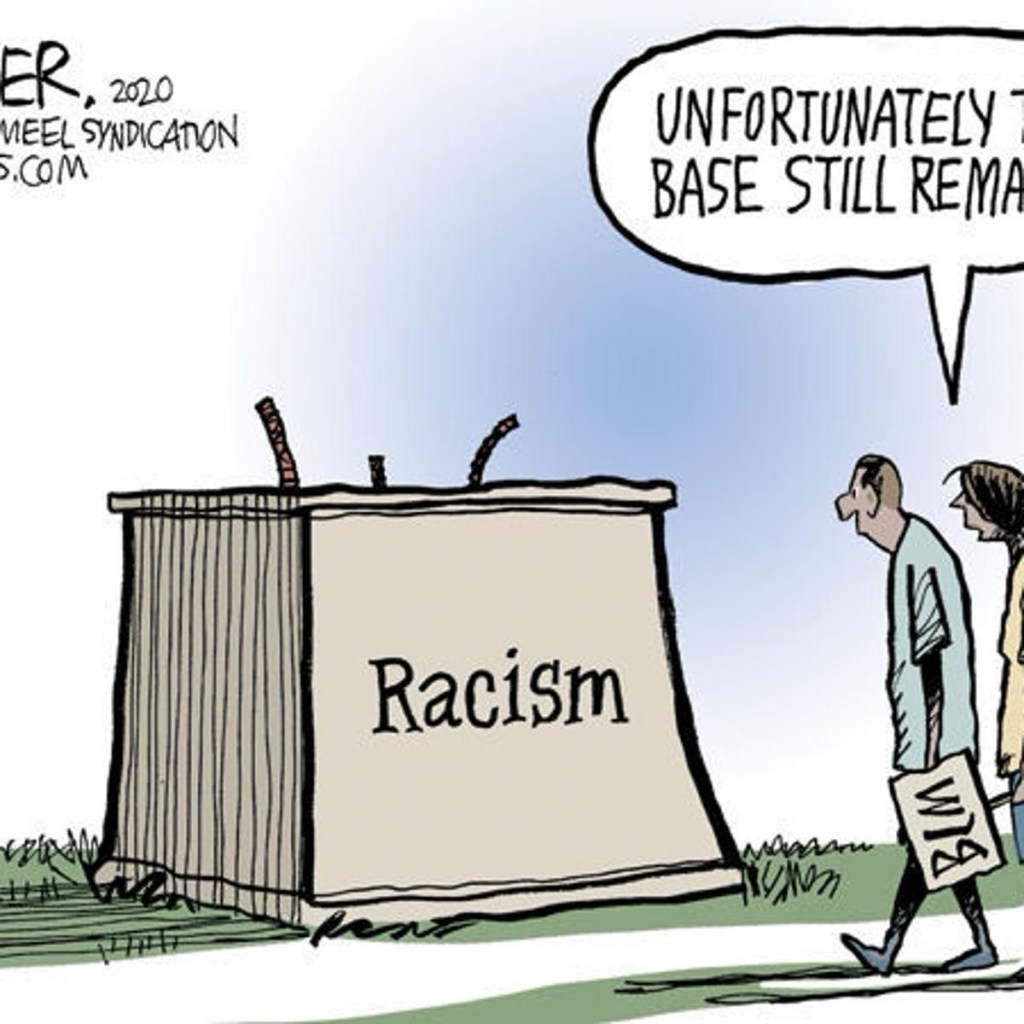
I have a question for my Republican friends who insist they are Christians, have never had a racist thought in their entire lives, and would like you to know that they love everybody equally.
If race doesn’t matter, why is it on the application?
If sex doesn’t matter, why is it on the application?
Why do I have to check a box identifying myself as one of several officially recognized versions of a human being every time I apply for a job, fill out a government form, or do just about anything else that requires paperwork?
And before somebody gets their Christian underwear in a bunch, I’m not suggesting that checking a box makes somebody racist. I’m asking why we’ve built a society that keeps reminding us that race and sex exist, then acts surprised when people notice.
We have spent generations telling people that race shouldn’t matter. Yet the government, employers, schools, and institutions have developed entire systems for collecting information about it.
Now, there is a legitimate reason for some of this. The Census Bureau explains that racial and ethnic data help measure disparities, evaluate government programs, and monitor compliance with civil rights laws. The Equal Employment Opportunity Commission says employers may collect demographic information to identify discriminatory hiring practices. (Census.gov)
In other words, you can’t determine whether a system is discriminating against people if you refuse to collect information about who is being discriminated against.
That part makes sense.
But here’s where my question comes in.
If the information is so important that we need to collect it, analyze it, report it, and use it to determine whether discrimination exists, then why do some people act as though the very acknowledgment of race is the problem?
You can’t simultaneously say, “Race doesn’t matter,” and “We need to know everybody’s race so we can make sure race isn’t affecting anything.”
That’s not necessarily hypocrisy. Sometimes it is the practical consequence of trying to correct a problem that society created in the first place. But it does make for an interesting conversation.
Especially when the same people who say race shouldn’t matter suddenly have very strong opinions about who belongs in this country, who gets to play on which sports team, who should receive assistance, and whether certain people deserve the same opportunities as everybody else.
Apparently, race doesn’t matter until somebody wants to talk about race.
Then it matters a great deal.
And sex? Same basic question.
If sex doesn’t matter, why are we still asking people to identify it on government forms, employment records, and other official paperwork?
Again, there are practical reasons. Demographic information can help institutions understand who is being served, identify disparities, and determine whether policies are affecting people differently. But the existence of a legitimate reason for collecting information doesn’t mean every use of that information is legitimate.
The distinction matters.
The problem isn’t necessarily that the box exists. The problem is when somebody checks a box and the system decides that person is worth more, worth less, more qualified, less qualified, more deserving, or less deserving because of it.
And that’s the part my Christian friends seem to have trouble reconciling.
Because if you believe every person is created in the image of God, then the logical conclusion is that the color of somebody’s skin, the sex they were born with, or the category they check on a government form should not determine their value as a human being.
Not their worth.
Not their dignity.
Not their right to be treated fairly.
You don’t get to say you believe that on Sunday and then spend Monday explaining why certain people should have fewer rights, fewer opportunities, or less consideration because of something they didn’t choose.
That’s not Christianity. That’s just selective application of the manufacturer’s warranty.
And before somebody tells me that institutional racism and sexism don’t exist because they personally have never discriminated against anybody, I would like to introduce them to the concept of institutions.
An institution doesn’t need to have a racist sitting in a room rubbing his hands together like a cartoon villain to produce unequal results.
Sometimes it is a policy. Sometimes it is a tradition. Sometimes it is a hiring practice that nobody has questioned in 40 years. Sometimes it is a system designed for one group that never bothered to account for everybody else.
The EEOC recognizes both intentional discrimination and certain policies that appear neutral but disproportionately disadvantage protected groups without sufficient job-related justification. (EEOC)
You don’t have to hate somebody to participate in a system that treats them differently.
You just have to be comfortable enough with the system that you never bother asking who it was built for.
And that is where I think we have confused equality with blindness.
Equality doesn’t mean pretending we are all identical.
It means recognizing that our differences should not determine whether we receive the same basic rights, opportunities, and dignity.
If the system needs to know our race to determine whether it is treating us fairly, then maybe we should stop pretending race is irrelevant.
If the system needs to know our sex to determine whether it is treating us fairly, then maybe we should stop pretending sex is irrelevant.
And if we are going to ask those questions, perhaps we should be honest about why we are asking them.
Not because one race is better than another.
Not because one sex is more deserving than another.
But because history has demonstrated that people in positions of power have not always treated everybody equally.
And if you don’t measure the problem, you can always pretend it doesn’t exist.
Which brings me back to my original question.
If race didn’t matter, you wouldn’t ask.
If sex didn’t matter, you wouldn’t ask.
The fact that we have institutionalized the collection of this information tells us something important: These categories have mattered in the way our society has been organized, and they still matter when we measure whether people are being treated fairly.
The goal shouldn’t be to pretend those differences don’t exist.
The goal should be to make sure they don’t determine who gets to live a full and equal life.
And if that sounds like a radical concept to somebody who claims to follow Jesus, perhaps they should spend a little less time checking everybody else’s boxes and a little more time reading the part about loving your neighbor.
Because apparently, even the Son of God couldn’t get through to some people without a government form.
-
Best laid plans
What’s one thing you wish you had started doing earlier in life?
I wish I would had saved earlier because I am close to retirement age and have zero in bank for that eventuality if it ever happens.
-
Fictional characters?
If you had to switch lives with a fictional character for a week, who would you choose?
I grew up in an era where you read, and you can sync yourself into any novel fiction or otherwise, and become any character of that book that you wanna be you know if you’re into the Harry Potter novel, you could be read the read the novel through the eyes of Ron Weasley or Hermione Granger, you could read comic books and imagine yourself as Superman it’s imagination is a great thing. I don’t know that I’d wanna live as a fictional character because as a writer, you’d have to climb into the mind of the writer, which is not always a great place to be.
-
Big Brother Has a Ring Doorbell
Dwain Northey (Gen X)
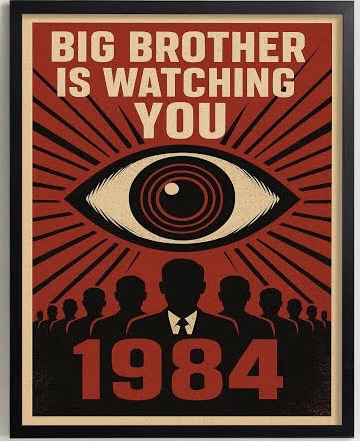
George Orwell was 42 years off.
In 1984, Big Brother had to install cameras, monitor conversations, and build an entire government apparatus to watch everybody. We have smartphones, doorbell cameras, and license plate readers. And unlike Winston Smith, we pay for our surveillance and carry it around voluntarily.
Apparently, dystopia is easier to sell when it comes with free shipping.
Alexa, Are You Listening?
Mention something you might want to buy, and suddenly your social media feed is full of advertisements for it. A vacuum cleaner. A vacation. A new pair of shoes.
Now, your phone may not literally be listening to every conversation. Advertising algorithms can infer an astonishing amount from your searches, location, browsing habits, purchases, and the people you interact with.
Which is somehow more comforting.
Your phone may not be listening. It may simply know you well enough to predict what you are going to say before you say it.
And then sell it to you.
Welcome to the Neighborhood
Ring doorbell cameras were supposed to protect our homes from porch pirates. Now, depending on the program and permissions involved, footage from privately owned cameras can become available to law enforcement.
You bought a doorbell.
You may have helped build a surveillance network.
And somewhere in the fine print, there is probably a sentence explaining that you agreed to this, provided you had the time, patience, and legal education to read it.
We have reached the point where you need to be a constitutional lawyer to install a doorbell.
Flock: Because License Plates Were Too Private
Then there are Flock cameras, automated license plate readers that capture vehicle information, including where and when a car was seen.
Useful when somebody steals your car.
Less comforting when you realize that a record of your movements can exist simply because you drove to work, the grocery store, or your mother’s house.
The camera was installed for public safety. The database can become a record of where ordinary people go.
And if that sounds like something out of 1984, congratulations. You have been paying attention.
The Box You Checked
Every app, camera, and online service comes with terms and conditions. We click “Accept” because the alternative is apparently not using the thing we just bought.
Somewhere in that legal equivalent of a hostage note, we may have agreed to data collection, retention, and sharing arrangements we never fully understood.
Then we discover what we agreed to and act surprised.
We shouldn’t have to be constitutional scholars to own a doorbell.
Safety, or Surveillance?
I am not opposed to cameras helping solve crimes. If somebody steals your car, I want the police to have useful evidence.
The question is how much surveillance we are willing to accept, who controls it, and what prevents a system designed for one purpose from becoming something else.
A camera installed to find stolen cars can become part of a system that tracks movements. A doorbell camera can become part of a system that shares footage. A smartphone can know more about you than some of your friends.
And the people controlling these systems are not necessarily the people living under them.
That is the part Orwell understood.
Big Brother Has Better Marketing
We imagine Big Brother as a government office filled with men in gray suits, reading our mail and monitoring our conversations.
The modern version is more efficient.
Big Brother might be a government agency, a technology company, a data broker, an advertising algorithm, or a neighborhood security system.
Sometimes it is all of them working together, and sometimes we have no idea who has access to what.
The technology does not have to be controlled by one person to create a surveillance state. It only has to become widespread enough that privacy is no longer the default.
And we are getting there.
In 1984, the telescreen was a symbol of oppression because it was always watching and impossible to escape.
We have something similar now, except ours comes with GPS, a microphone, a camera, and the ability to order toilet paper while sitting on the toilet.
We carry it everywhere.
We pay for it.
We tell it where we are, what we are doing, what we are buying, and occasionally what we had for breakfast.
Then we wonder why the advertisements are so damn accurate.
The difference between Orwell’s world and ours is that Big Brother no longer has to force us to participate.
We have made surveillance convenient.
We have made it profitable.
We have made it part of everyday life.
And when somebody points out that the cameras are everywhere, we call them paranoid.
George Orwell was 42 years off.
Big Brother is definitely watching.
He just has better marketing now.
And the really impressive part? We are paying for the privilege of being watched. We are installing the cameras, carrying the microphones, and clicking “Accept” on the terms and conditions.
Then we go online to complain about the government spying on us.
On the phone we bought.
Through the app we installed.
Using the Wi-Fi we pay for.
While the camera on our front porch records the delivery driver bringing us another device to make our lives more convenient.
At this point, the only thing missing from 1984 is the government sending us a monthly bill for the privilege of being surveilled.
Give it time.
I am sure somebody is working on an app for that.
-
Villain story arc
Have you ever liked a villain more than the hero? Who and why?
In any good novel or story that has a hero and a villain, the true line for the story is always more interesting around the villain. I can’t think of a villain I preferred more over hero or vice versa but you don’t have Batman if you don’t have Joker or penguin or Mr. freeze Superman is an interesting unless you have Lex Luther you have to have a villain for there to be a story otherwise it’s not interesting.
-
Altruism
Dwain Northey (Gen X)

The Donald Trump School of Altruism
I am 100% certain that Donald Trump has no idea what altruism is. Not because the word is particularly complicated, but because it involves doing something for someone else without expecting a parade, a plaque, a television special, or your name carved into the side of the building.
And if there is one thing Donald Trump appears constitutionally incapable of doing, it is anything that doesn’t come with a complimentary ego massage.
The latest installment in the ongoing Kennedy Center trauma is that the building is supposedly going to go bankrupt and collapse into a pile of cultural rubble unless Donald Trump’s name is attached to it. Which is an interesting proposition, considering the Kennedy Center was doing just fine before the man decided that a national cultural institution needed a little more Donald in its branding.
Apparently, the building’s structural integrity is directly proportional to the number of letters in the president’s last name.
I have to admit, I would not be surprised if, somewhere in Donald’s shoebox diorama of Washington, D.C., he has already gold-plated the Lincoln Memorial and installed a tiny plaque reading:
RESTORED TO GREATNESS BY DONALD J. TRUMP.
The Washington Monument? Now the Trump Spire. The Capitol? Perhaps Trump Hall of Government, featuring a revolving door and a gift shop selling commemorative hats.
And somewhere in the corner, a miniature White House with a tiny gold toilet, because apparently we have reached the point where even the national capital needs to be decorated like a casino owned by a man who has never met a mirror he didn’t like.
The problem is that Donald seems to believe that doing something good is not enough. It has to be acknowledged. It has to be documented. It has to be branded. And preferably, it needs to be bigger and shinier than whatever the other guy did.
Imagine Donald Trump paying for dinner at a restaurant.
Not because he was hungry. Not because he wanted to spend time with friends. But because he had decided that tonight was the night he would demonstrate his generosity.
He hands over his credit card, then waits.
The maître d’ walks to the center of the dining room.
“Ladies and gentlemen, may I have your attention? Tonight’s dinner has been paid for by Donald J. Trump, who has generously covered the entire bill out of his own pocket.”
Applause.
Donald stands, waves to the crowd, and explains that no one has ever paid for a dinner better than he has. The maître d’ nods solemnly. The waitstaff forms a receiving line. Someone presents him with a ceremonial steak.
And if the restaurant doesn’t name the dessert after him, he leaves a one-star review.
This is the fundamental difference between altruism and Donald Trump’s version of generosity. Altruism is helping someone because they need help. Trump’s version appears to be helping someone because he needs the credit.
It’s the difference between giving someone a hand and making sure they know whose hand it was.
And let’s be honest, this isn’t merely a Donald Trump problem. We have always had wealthy people who wanted their names on buildings. Hospitals, universities, libraries, museums. Sometimes the money genuinely helps. Sometimes the name is simply the price of admission to the billionaire’s ego.
But there is something particularly absurd about a president treating a national institution as though it were a hotel bearing his name.
The Kennedy Center was established as a memorial to John F. Kennedy, a president who understood that a nation could be measured by more than its military strength, stock market, or the size of its leader’s signature. It was meant to celebrate the arts, culture, and the things that make us more than a collection of people competing for the biggest piece of pie.
Now we have a president who apparently believes the entire institution is one nameplate away from financial salvation.
Maybe the building will survive. Maybe it won’t. But if it does collapse, I suspect Donald will insist that the rubble be arranged in the shape of his initials.
Because that is the thing about altruism. It doesn’t require your name on the gift.
It doesn’t require the recipient to thank you publicly.
It doesn’t require a television crew.
And it certainly doesn’t require the gift to become a monument to the giver.
Sometimes, you just do something good because someone needs it done.
No cameras. No applause. No gold plating.
Just the quiet satisfaction of knowing you helped.
Which, I suspect, is why Donald Trump finds the concept so confusing.
He has spent his entire life trying to convince the world that everything he touches becomes more valuable because he touched it.
The idea that something could be valuable without his name attached to it must be absolutely terrifying.
After all, what if the Kennedy Center survives without Donald Trump?
What if the Lincoln Memorial remains meaningful without his signature?
What if the Washington Monument continues to stand without being renamed?
What if, for once, something in Washington, D.C., is about the country rather than the man occupying the White House?
That would be a pretty impressive demonstration of altruism.
And Donald would hate it.


You must be logged in to post a comment.