Dwain Northey (Gen X)
https://www.cbsnews.com/news/naacp-travel-advisory-florida-says-state-hostile-to-black-americans/
Remember the good old days when there were only travel advisories and or ban for, what some would call, third word countries? Well now because of the vile vitriol of one Governor Ron DeSantis the state of Florida, a vacation destination, has received a travel advisory by the NAACP.
The wannabe future President has made the climate so venomous in Florida the anyone who is a part of any minority group does not feel safe in the state. Black, Brown, LGTBQ+, these are all groups that are under attack in the Sunshine State. The majority Republican legislature and their fearful leader has passed laws that make almost everything a jailable offence and the fact that the state has very loose gun laws and a stand your ground law makes it more dangerous than being a blonde female in central America.
Florida residents are able to carry concealed guns without a permit under a bill signed into law by Republican Gov. Ron DeSantis. The law, which goes into effect on July 1, means that anyone who can legally own a gun in Florida can carry a concealed gun in public without any training or background check. This with their ridiculous stand your ground law, ‘Florida’s “Stand-Your-Ground” law was passed in 2005. The law allows those who feel a reasonable threat of death or bodily injury to “meet force with force” rather than retreat. Similar “Castle Doctrine” laws assert that a person does not need to retreat if their home is attacked.’ Makes it really sketchy to go there.
This in top of the don’t say gay rule and the new trans ruling that just passed.
“Florida lawmakers have no shame. This discriminatory bill is extraordinarily desperate and extreme in a year full of extreme, discriminatory legislation. It is a cruel effort to stigmatize, marginalize and erase the LGBTQ+ community, particularly transgender youth. Let me be clear: gender-affirming care saves lives. Every mainstream American medical and mental health organization – representing millions of providers in the United States – call for age-appropriate, gender-affirming care for transgender and non-binary people.
“These politicians have no place inserting themselves in conversations between doctors, parents, and transgender youth about gender-affirming care. And at the same time that Florida lawmakers crow about protecting parental rights they make an extra-constitutional attempt to strip parents of – you guessed it! – their parental rights. The Human Rights Campaign strongly condemns this bill and will continue to fight for LGBTQ+ youth and their families who deserve better from their elected leaders.”
This law makes it possible for anyone to just accuse someone of gender affirming care to have their child taken from them this would include someone traveling from out of state. This alone justifies a travel ban to the Magic Kingdom for families.
Oh, and I haven’t even mentioned DeSantis holy war with Disney, the largest employer in the state. I really hope the Mouse eats this ass holes lunch.
Well that’s enough bitching, thanks again for suffering though my rant.
-
National Security!!!
Dwain Northey (Gen X)

Welcome to the National Security Excuse
There is a certain point at which the phrase “national security” stops sounding like a legitimate governmental concern and starts sounding like the administrative equivalent of a universal coupon code.
Apparently, just type NATIONAL SECURITY into the justification box and congratulations—you can build, demolish, restrict, rename, reshape, or apparently militarize whatever the hell you want.
Welcome to the Trump administration’s newest episode of Everything Is National Security.
First, we had to tear down the White House East Wing because, naturally, we desperately needed a ballroom. Not because Donald Trump wants a giant ballroom. No, no. That would be vanity, and we can’t possibly admit to that.
It is national security.
Then there is the 250-foot triumphal arch near Arlington National Cemetery.
Originally, it was supposed to be a monument celebrating America’s 250th anniversary. Now we’re being told it will also function as a military complex, potentially equipped with drones, snipers and ammunition.
Because apparently America’s national security apparatus was sitting around thinking, You know what we’re missing? A really big sniper tower next to Arlington Cemetery.
And then there is the press.
Apparently, journalists who aren’t sufficiently flattering to the president can become a national security threat too. Reuters recently reported that Trump has increasingly invoked national security to justify everything from the ballroom and proposed arch to restrictions involving the press. Legal experts interviewed by Reuters warned that stretching the national-security rationale across unrelated disputes could undermine the credibility normally given to legitimate national-security claims.
But wait.
We’re not done.
Because apparently elections are national security too.
Donald Trump has repeatedly claimed that large numbers of noncitizens are registered to vote and that election systems are dangerously vulnerable. In July, he cited a DHS figure of approximately 278,000 noncitizens supposedly registered to vote. Fact-checkers and election experts, however, found serious problems with the methodology behind that number, and there has been little evidence of widespread noncitizen voting.
And now the federal government is aggressively reviewing state voter rolls. Reuters reported today that the White House is pushing federal agencies to accelerate reviews of at least 47 state voter rolls in an unprecedented effort to identify noncitizens among registered voters as the midterms approach.
And here’s where the logic gets really interesting.
If the president declares that noncitizen voting is a national-security threat, then apparently the next logical step is:
Well, obviously the president needs more control over the elections.
Because that’s how this works, right?
Ballrooms are national security.
Arches are national security.
Press access is national security.
Noncitizen voting is national security.
Therefore, logically, federal control over elections must also be national security.
What could possibly go wrong?
Except there’s a tiny constitutional problem hiding underneath all that national-security wallpaper.
Elections aren’t supposed to belong to the president.
States have traditionally administered elections, subject to federal constitutional and statutory requirements. The administration’s attempts to exert greater federal control over election administration have already generated legal challenges.
And that’s where this stops being merely another episode of Donald Builds Something Weird in Washington.
Because when the person who controls the executive branch starts saying that the elections themselves are a national-security problem, and then uses that claim to justify increasing federal involvement in how elections are administered, we should probably pay attention.
Not because every claim about election security is automatically illegitimate.
Election security is absolutely important.
Preventing fraud is important.
Protecting voter information is important.
Making sure eligible citizens can vote and that votes are counted accurately is important.
But there is a difference between protecting elections and using the protection of elections as a justification for expanding presidential control over elections.
That distinction matters.
Because if the president gets to define the threat, define the emergency, define the national-security implications and then decide that those circumstances require more presidential control, we’ve created a rather convenient little circle:
I say there’s a threat. Therefore, I need more power. The fact that I have more power proves the threat required it.
Wash. Rinse. Repeat.
And suddenly we’re no longer talking about national security.
We’re talking about presidential authority.
That’s the trick hidden inside the phrase.
“National security” carries enormous emotional and legal weight because everybody understands that protecting the country sometimes requires extraordinary measures.
Nobody wants to be the person who says, Well, maybe we shouldn’t protect America from terrorists.
But that’s not the question.
The question is whether everything the president wants to do can simply be placed under the national-security umbrella.
Because if everything is national security, then nothing is beyond presidential reach.
Want a ballroom?
National security.
Want a giant arch?
National security.
Don’t like the reporters?
National security.
Don’t trust the election system?
National security.
Want the federal government more deeply involved in state election administration?
Well…
You guessed it.
National security.
At this rate, I’m expecting the next executive order to announce that replacing the White House curtains requires a national-security review because an enemy intelligence service might determine Donald Trump’s preferred shade of beige.
And here’s the part that really should bother everybody, regardless of political party:
National security is supposed to protect the government established by the Constitution. It isn’t supposed to become the excuse for concentrating power in one person.
The president is supposed to be part of the government.
Not synonymous with the government.
The country is supposed to survive the president.
The Constitution is supposed to outlast the president.
Elections are supposed to determine who gets temporary custody of the machinery of government—not give the person who currently has custody the authority to rewrite the rules governing who gets custody next.
So yes, let’s secure the elections.
Let’s investigate actual fraud.
Let’s prosecute actual crimes.
Let’s protect voter databases.
Let’s make voting systems secure.
Let’s do all of that.
But let’s also secure something else:
the principle that the person being elected does not get to become the person who controls the election merely by declaring the election a national-security matter.
Because eventually, somebody has to ask the obvious question:
If everything Donald Trump touches requires national-security justification, perhaps the real national-security question isn’t whether Donald Trump has enough power.
Maybe it’s whether any president should ever have that much power in the first place.
And if we ever reach the point where protecting America means protecting the constitutional system from the person occupying the Oval Office, then perhaps we’ve finally found the one national-security threat that actually matters.
Not the ballroom.
Not the arch.
Not the reporters.
Not the voters.
The idea that the president gets to decide that all of them are.
-
Karma
Do you believe in karma?
I believe you get into things what you put into them and if you put crap into the world, then you’re gonna get crap back. I just think no one finishes the phrase properly. That karma is a bitch, but they should finish it with only if you are.
-
Quiet, lightning, nerd talk
Dwain Northey (Gen X)

The Lightning You Can See but Not Hear
As children, we learn the equation pretty quickly: lightning equals thunder. One flashes; the other goes BOOM. But every once in a while, you’ll look up and see lightning dancing across the clouds—or even striking the ground—and hear absolutely nothing.
So where did the thunder go?
It didn’t disappear. Sound just has a much shorter range than light.
When lightning happens, the electrical discharge heats the surrounding air almost instantaneously to temperatures of roughly 30,000 kelvin. That sudden heating makes the air expand explosively, creating a pressure wave. We call that pressure wave thunder.
The important part is that the lightning and thunder travel very differently. Light reaches us essentially instantaneously, while sound moves through air at only about 1,125 feet per second. As a result, you can see a lightning flash from a storm that is much farther away than you can hear its thunder.
And sometimes the atmosphere helps hide the sound. Temperature layers, wind, terrain, buildings, and even the structure of the storm can bend or scatter sound waves. A distant lightning strike may produce thunder, but by the time those sound waves reach you, they’ve become too weak to hear.
There’s even a name for the phenomenon: heat lightning.
And here’s the slightly misleading part: heat lightning isn’t actually a special kind of lightning caused by heat. It’s ordinary lightning from a distant thunderstorm. The storm is simply far enough away that you can see the flashes while the thunder either hasn’t reached you or has become too faint to hear.
So the next time you see lightning without thunder, the storm isn’t being strangely quiet.
You’re just watching something happening much farther away than your ears can hear.
Turns out, even lightning has a social-distancing limit.
::: -
Is Failure the Plan?
Dwain Northey (Gen X)
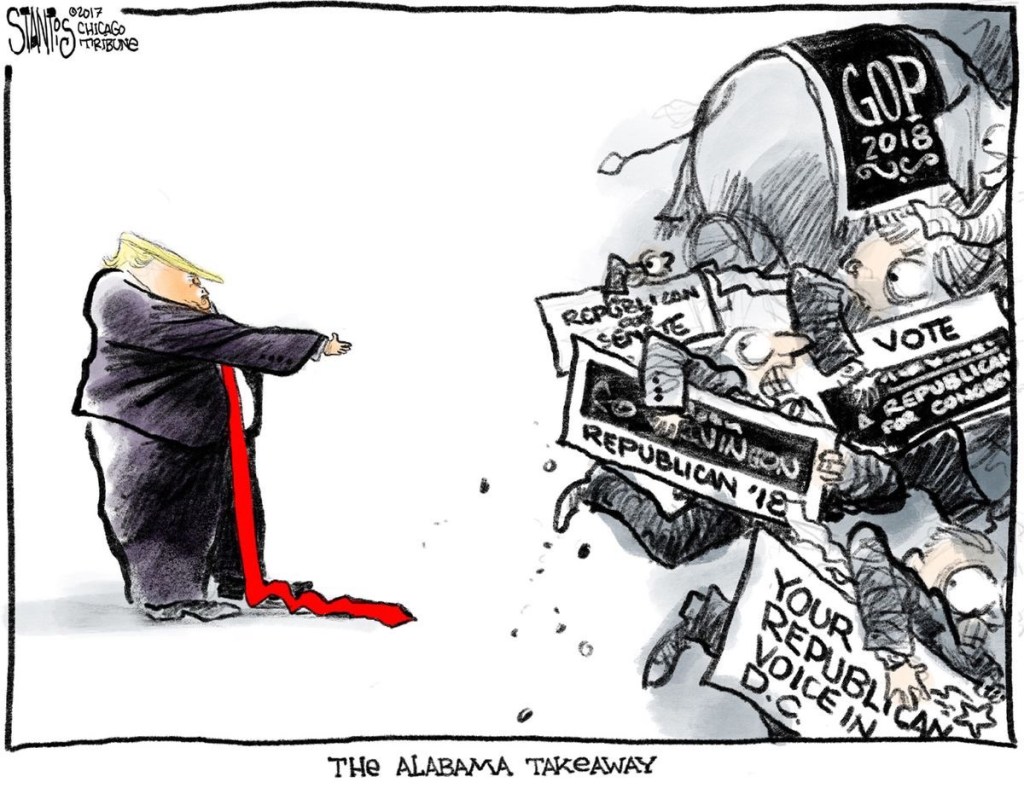
The GOP’s New Campaign Strategy: Please, Please Don’t Vote for Us
With the 2026 midterms now roughly six weeks away, I have a question that keeps rattling around in my increasingly cynical Gen X brain:
Are Republicans actually trying to win this election?
Because from where I’m sitting, it sometimes looks less like a political campaign and more like a group project where everyone on one side has decided the best way to guarantee failure is to keep doing exactly the things their opponents would have done if they were trying to sabotage them.
Maybe there’s a plan here.
Maybe the plan is so sophisticated that my primitive Gen X brain simply can’t comprehend it.
Or—and hear me out—the strategy is:
Lose now. Blame the Democrats later.
Because apparently we’re doing the latest installment of How to Make Americans Hate Something They Already Need.
Enter JD Vance and Mehmet Oz, who announced that the Trump administration plans to remove approximately 760,000 people from Affordable Care Act exchange coverage, claiming those enrollments are fraudulent, unauthorized, ineligible or otherwise “phantom.” Another roughly 419,000 enrollments are reportedly being subjected to additional verification. The administration says the cancellations will save about $2.2 billion.
And yes, there is legitimate evidence of fraud and unauthorized enrollment in the ACA marketplace.
That’s important.
Because I’m not arguing that nobody ever commits fraud. Of course they do. People commit fraud against Medicare, Medicaid, Social Security, insurance companies, banks, credit-card companies, grocery stores, and probably the self-checkout machine at Walmart.
But then we arrive at one of the arguments being used to identify suspicious ACA enrollments:
They haven’t filed any claims.
Excuse me?
Have we forgotten how insurance works?
Insurance is the thing you pay for hoping you don’t need it.
That’s kind of the entire point.
I have car insurance precisely because I hope I don’t get into a wreck.
I have homeowners insurance precisely because I hope my house doesn’t spontaneously decide to become a campfire.
And health insurance?
Well, I’d prefer not to need it because the alternative usually involves a doctor, a hospital, a diagnosis, a procedure, or a bill that makes you briefly consider becoming Amish.
Not filing a claim isn’t evidence that insurance isn’t working.
It’s evidence that you haven’t needed to use it.
And here’s the really important distinction: the administration isn’t simply saying, “You didn’t use your insurance, therefore you’re fraudulent.” Its HHS analysis says the unusually high concentration of zero-claim enrollment—particularly among people with $0 premiums—can be an indicator of people being enrolled without their knowledge or of other improper enrollment practices.
That’s a reasonable thing to investigate.
But investigating suspicious enrollment and treating lack of medical claims as inherently suspicious are two very different things.
Because imagine applying this logic to literally anything else.
“Sir, according to our records, you haven’t used your fire extinguisher.”
“Yes. Because my house isn’t on fire.”
“Sounds suspicious.”
Or:
“Your car insurance shows no collision claims.”
“Correct.”
“Fraud detected.”
Or my favorite:
“You’ve been paying for this gym membership for three years and we don’t have any evidence you’ve actually used the treadmill.”
Okay, you’ve got me there. That’s probably fraud.
But health insurance is fundamentally a risk pool. Millions of people pay premiums so that the relatively smaller number of people who actually need expensive medical care can afford it.
The healthiest possible insurance customer is, in fact, someone who pays their premiums and never needs the damn thing.
That’s not a bug.
That’s the business model.
And there’s another little detail here that seems to get lost in the political theater.
The ACA isn’t exclusively populated by some imaginary group of Democrats wandering around wearing Obama T-shirts and carrying copies of The Federalist Papers upside down.
Millions of Americans use it.
The administration’s own figures put current ACA exchange enrollment at roughly 19.2 million people.
Republicans use the term “Obamacare” as though it’s an ideological purity test.
But insurance cards don’t ask how you voted.
Your deductible doesn’t care whether you voted Republican.
Your cancer diagnosis doesn’t check your voter registration.
And your emergency-room bill certainly isn’t going to say:
“Oh, you’re a Republican? Never mind. Your coverage is free.”
Health insurance is one of those areas where ideology eventually runs headfirst into arithmetic.
People need it.
People use it.
People pay for it.
And when they don’t need it, they generally prefer to keep it anyway because they have this annoying habit of wanting to remain alive.
So here we are, six weeks before the midterms, watching the government announce that hundreds of thousands of people are losing ACA coverage while premiums have already risen sharply after enhanced subsidies expired. KFF Health News reported that average ACA premiums rose substantially in 2026 and that enrollment fell by nearly three million.
Again, the administration has a legitimate policy argument about fraud.
The question isn’t whether fraud should be investigated.
Of course it should.
The question is whether the cure for fraudulent enrollment should be designed so that legitimate people suddenly discover that the health insurance they thought they had is now sitting in the government’s recycling bin.
And then there’s the timing.
Six weeks before an election.
Which brings me back to my original question:
What exactly is the Republican strategy here?
Because if the strategy is to demonstrate that government can identify fraud and protect taxpayer dollars, okay.
That’s an argument.
If the strategy is to reduce federal spending on ACA subsidies, that’s an argument too.
But if you’re simultaneously making health insurance more expensive, removing hundreds of thousands of people from coverage, attacking the ACA as a program, and then heading into a midterm election where health care is one of the things voters are going to think about…
Well…
I’m starting to wonder whether “self-sacrifice” has officially become the GOP’s 2026 campaign mantra.
Maybe there’s a secret whiteboard somewhere in Washington.
At the top it says:
HOW DO WE WIN THE MIDTERMS?
And underneath:
- Make health insurance more expensive.
- Remove people from health insurance.
- Pick fights over things voters don’t care about.
- Keep doing things that generate negative headlines.
- Then blame Democrats for the consequences.
And someone in the back raises his hand.
“Should we maybe stop doing the things that are unpopular?”
Silence.
Someone slowly turns off the lights.
And the meeting adjourns.
Look, I’m a Gen Xer.
I’ve survived cassette tapes, rotary phones, leaded gasoline, Reagan-era nuclear anxiety, Windows 95, dial-up internet and the inexplicable cultural phenomenon of parachute pants.
I’ve learned one fundamental rule:
If something doesn’t make sense, there’s probably a reason.
Sometimes the reason is incompetence.
Sometimes it’s ideology.
Sometimes it’s money.
Sometimes it’s politics.
And sometimes it’s a strategy so convoluted that you have to wonder whether the people executing it have accidentally wandered into the wrong election.
But I suppose we’ll find out in November.
Until then, I’m going to sit here with my health insurance card, hoping desperately that I never have to use it.
Because apparently in 2026, being healthy enough not to file a claim may now require a congressional investigation.
-
I don’t
How do you write what people actually want to read?
I don’t actually write what I think people wanna read I just write what suits me and it seems like some people want to read it so I don’t write for outrage outright for clicks or whatever you wanna call it. I just write with something that’s interesting to me and sometimes I think that other people are of the same mindset.
-
Seat of my pants
What’s the most spontaneous thing you’ve ever done?
When I was discharged from the military, I moved to Florida on a whim. Didn’t know anybody ever been there before just threw a dart and went.
-
One more step
Dwain Northey (Gen X)
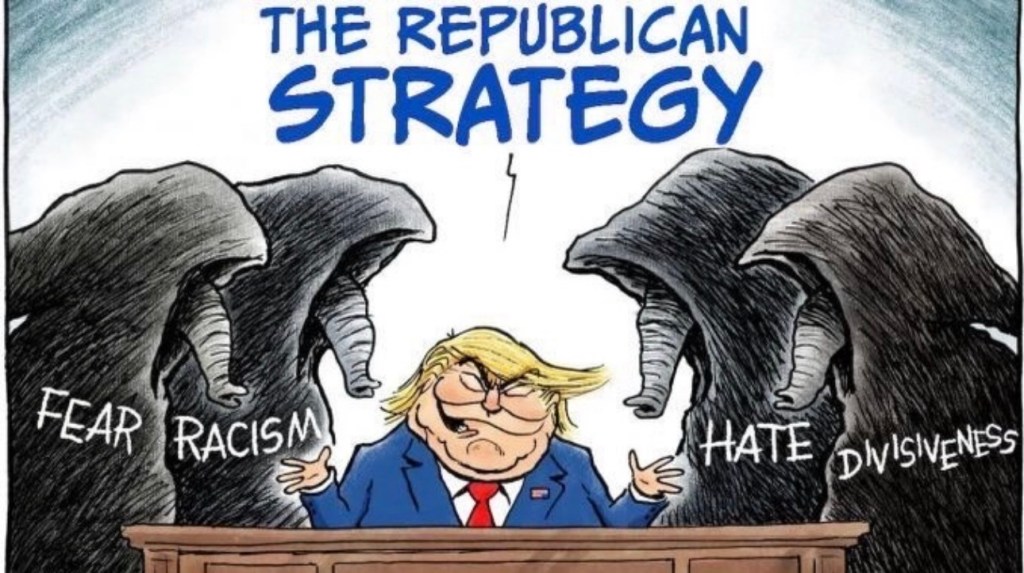
Apparently, the Emperor Needs an Editor
Well, congratulations, America.
We appear to have reached the next level of authoritarianism: the president apparently doesn’t just want the news. He wants the news edited to his specifications.
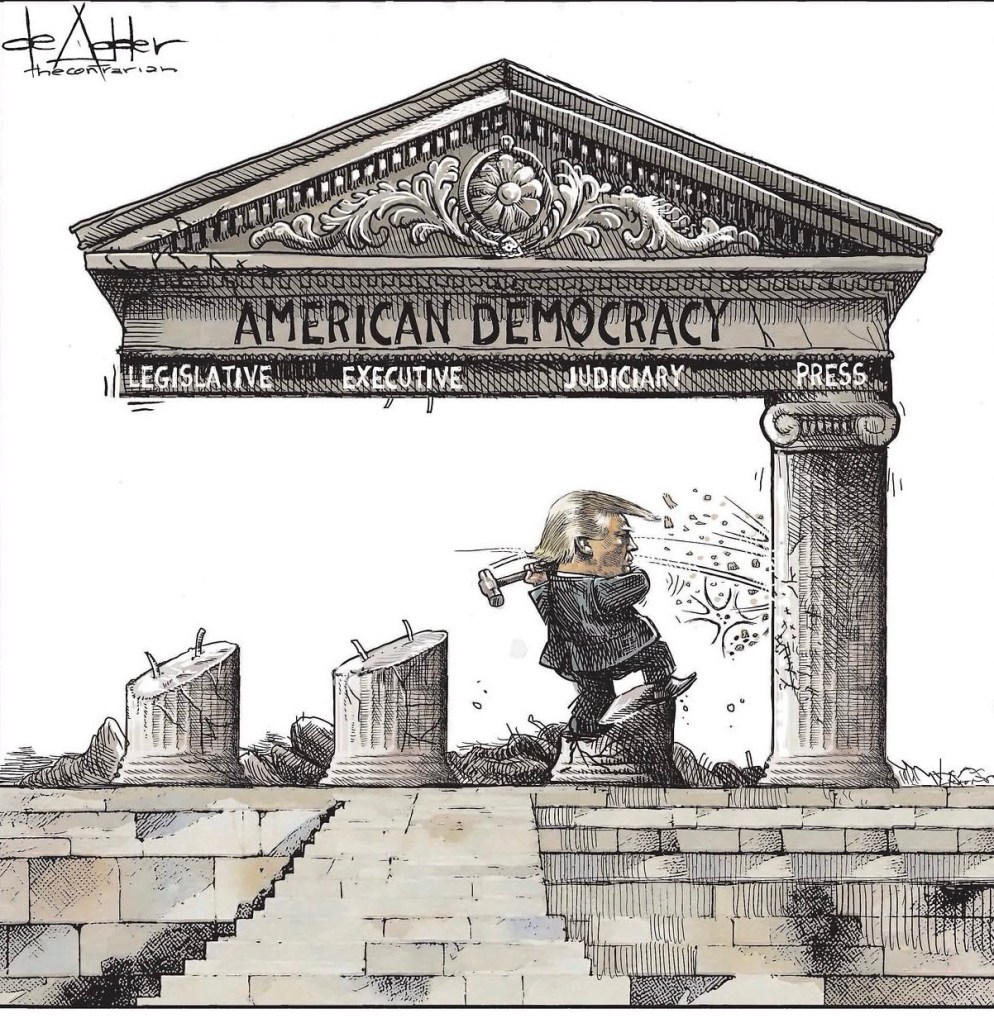
Donald Trump has now barred CNN, MS NOW and Politico from the White House, accusing them of producing “fake news.” The outlets have challenged the ban in court, arguing that the administration is retaliating against them for their coverage. Meanwhile, the remaining television networks have suspended participation in the White House television pool in protest. (AP News)
Because apparently reporting something unflattering about Dear Leader is now grounds for having your press credentials confiscated.
I suppose we’re supposed to be grateful he hasn’t required every reporter to begin the morning by saying, “Good morning, Mr. President. You look exceptionally presidential today. Your hair is magnificent. Your approval numbers are tremendous. And yes, that thing you said yesterday was absolutely brilliant.”
Maybe that’s next.
The whole point of a free press is that journalists aren’t supposed to be the president’s public-relations department.
They’re supposed to ask inconvenient questions.
They’re supposed to investigate.
They’re supposed to say, “Hold on. That doesn’t make sense.”
And, occasionally, they’re supposed to say, “No, Mr. President. That’s not what happened.”
That’s called journalism.
Apparently, we’re now experimenting with court journalism—where the people surrounding the king are expected to compliment the king.
And just when you think the absurdity has reached its ceiling, here comes science.
The administration is reportedly drafting an executive order that would create an outside board with the power to approve or veto National Institutes of Health grants. The proposed board would include political appointees, including OMB Director Russell Vought, with unanimous approval reportedly required for grants. (Reuters)
Let me make sure I understand this.
For decades, America built one of the world’s most powerful scientific research systems around scientists evaluating scientific research.
Researchers submit proposals.
Experts review them.
Other scientists determine whether the methodology is sound, whether the research has merit and whether the work could advance our understanding of disease, medicine, biology or whatever particular rabbit hole they’re investigating.
But apparently we’ve decided that perhaps what science really needs is Donald Trump sitting somewhere with a red pen.
Because obviously the guy who spent years arguing about the size of crowds and whether hurricanes can be redirected with a Sharpie is exactly who I want deciding which biomedical research deserves federal funding.
“Hmm. Cancer research. Very complicated. Doesn’t make me look particularly handsome. Denied.”
“Research involving something I don’t like politically? Absolutely not.”
“Research that confirms something scientists have been telling us for thirty years? Sounds suspicious. Denied.”
And let’s be clear about something.
The issue isn’t whether the government should have standards for scientific funding. Of course it should. Taxpayer money should be accountable. Dangerous research should have safeguards. The administration already has policies restricting federally supported high-risk biological research. (HHS.gov)
The issue is who gets to decide what constitutes good science.
Because science isn’t supposed to begin with:
“What does the president believe?”
It begins with:
“What does the evidence show?”
That’s the entire point.
You don’t get to vote on whether gravity works.
You don’t get to fire the thermometer because you don’t like the temperature.
You don’t get to tell the microscope that it has a political agenda because it keeps showing you something inconvenient.
And you certainly don’t get to determine scientific truth by presidential decree.
That’s not science.
That’s politics wearing a lab coat.
And this is where these two seemingly unrelated stories actually become the same story.
Control the information. Control the people who distribute the information. Control the people who produce knowledge. Then control what information and knowledge are allowed to receive institutional support.
At some point, you aren’t merely governing.
You’re constructing an information ecosystem in which the government increasingly gets to decide what Americans are permitted to hear, what researchers are permitted to pursue and which inconvenient facts receive the oxygen of public funding.
That’s how authoritarian systems work.
They don’t necessarily begin with someone kicking down your door at midnight.
Sometimes they begin with something much more mundane:
“That reporter doesn’t get a credential anymore.”
“That research doesn’t align with our priorities.”
“That scientist isn’t getting the grant.”
“That news organization isn’t welcome here.”
And each individual decision can be rationalized.
Until you step back and realize that the government has gradually replaced independent institutions with loyalty tests.
That’s the dangerous part.
Because democracy isn’t supposed to require the president to be correct.
It is specifically designed around the assumption that presidents will sometimes be wrong.
That’s why we have courts.
That’s why we have Congress.
That’s why we have inspectors general.
That’s why we have scientists.
That’s why we have journalists.
That’s why we have people whose entire job is to look at someone in power and say:
“Prove it.”
The president doesn’t need a press corps that tells him he’s wonderful.
He needs a press corps that makes him uncomfortable.
Scientists don’t need a president who tells them what conclusions they’re allowed to reach.
They need the freedom to discover that the president was wrong.
Because here’s the really inconvenient thing about science:
The universe doesn’t care who won the election.
Cancer doesn’t care about your political party.
Viruses don’t care about your campaign slogan.
Climate doesn’t care about your approval rating.
Gravity doesn’t care how many people voted for you.
And facts don’t become fake news simply because they’re inconvenient to the guy sitting behind the Resolute Desk.
So perhaps the question we ought to be asking isn’t whether Donald Trump is offended by the press or whether he thinks scientists are sufficiently respectful of his administration.
Perhaps the question is much simpler:
Why does someone with enormous political power need everyone around him to agree with him?
A confident president can tolerate criticism.
A secure administration can tolerate investigation.
A government that believes its policies can withstand scrutiny doesn’t need to control who gets to ask the questions—or who gets to conduct the research.
And if your response to criticism is to silence the critic, and your response to inconvenient science is to control the funding, eventually you aren’t defending the truth.
You’re defending the narrative.
And history has a rather unpleasant habit of reminding us what happens when governments become more interested in controlling the narrative than discovering the truth.
But hey, maybe I’m wrong.
I’m sure somebody will tell me.
Assuming they’re still allowed in the press pool.
-
“Fix You”
Dwain Northey (Gen X)

Maybe “Fix You” Was Never About You
There are songs we hear a hundred times before we actually listen to them.
Fix You by Coldplay is one of those songs for me.
For years, I heard it the way most people probably hear it: as a song about comforting someone you love when they’re hurting. You’ve lost something. You’re exhausted. You’re trying to hold yourself together. And someone comes along and says, I’m going to fix you.
It sounds romantic.
It sounds like rescue.
But the older I get, the less convinced I am that the song is actually about fixing somebody else.
Maybe it’s about fixing yourself.
And maybe that is a much more difficult thing to admit.
The song begins with failure. Not someone else’s failure. Your failure.
You try your best and it isn’t enough. You get what you want, but it doesn’t feel like what you thought it would feel like. You lose something you can’t replace. You become tired, frustrated, and emotionally empty.
That doesn’t sound much like somebody standing outside another person’s life with a toolbox.
It sounds like someone staring at the wreckage of his own.
And then comes the line everyone remembers:
“Lights will guide you home.”
Home.
That’s an interesting word.
Not I’ll carry you home.
Not I’ll save you.
Not I’ll make everything better.
I’ll help you find your way home.
There is a difference.
Because sometimes home isn’t a physical place. Sometimes home is the person you were before life knocked enough pieces off of you that you stopped recognizing yourself.
Maybe “fixing” isn’t about repairing another human being at all.
Maybe it’s about finding the parts of yourself you abandoned along the way.
That’s the uncomfortable part of getting older. Eventually you realize nobody is coming with the magic wrench.
Nobody is going to crawl underneath your hood, replace the defective parts, tighten a few bolts and send you back onto the highway with a reassuring thumbs-up.
Unfortunately, there is no emotional Jiffy Lube.
You have to do some of the repairs yourself.
And that’s where I think Fix You becomes much more introspective than romantic.
The song isn’t necessarily saying, “You are broken, and I will make you whole.”
It can just as easily be saying, “I know what it feels like to be broken because I am broken too.”
That’s a different kind of love.
Maybe even a more honest one.
Because there is a dangerous idea buried inside the notion that we can “fix” another person. It assumes we know what is wrong with them. It assumes we know what they need. It assumes their healing is somehow our responsibility.
But people aren’t appliances.
You can’t replace somebody’s emotional alternator.
You can’t tighten their self-esteem with a socket wrench.
You can’t install a new childhood.
And you certainly can’t love somebody hard enough to make them choose healing if they’re not ready to do it themselves.
What you can do is stand beside them.
You can hold the flashlight.
You can remind them where the road is.
You can say, “You’re not alone.”
And sometimes that’s what love actually looks like.
But the deeper interpretation of Fix You is that the person holding the flashlight may need it too.
Because we’re all carrying things we don’t talk about.
Regrets.
Failures.
Lost relationships.
Things we said that we wish we hadn’t.
Things we didn’t say when we should have.
Dreams that didn’t happen.
People who left.
People we left.
Versions of ourselves that disappeared somewhere between who we thought we would become and who we actually became.
And at some point, you look around and realize that the person who needs fixing isn’t necessarily the person sitting across from you.
It might be the person looking back at you in the mirror.
That’s a harder realization.
It’s easy to believe we can fix somebody else. It gives us a job. A purpose. Something outside ourselves to concentrate on.
Fixing ourselves requires something much less comfortable:
Honesty.
It requires admitting that maybe we’re tired.
Maybe we’re lonely.
Maybe we’re angry about things we thought we’d gotten over.
Maybe we’re still carrying wounds we learned to hide so well that eventually we forgot they were there.
Maybe we’re not actually unhappy.
Maybe we’re just not sure what happiness is supposed to feel like anymore.
And maybe that’s okay.
Maybe healing isn’t some dramatic transformation where you wake up one morning and suddenly everything makes sense.
Maybe it’s smaller than that.
Maybe it’s getting out of bed when you don’t particularly want to.
Maybe it’s forgiving yourself for things you can’t change.
Maybe it’s accepting that some doors aren’t going to reopen.
Maybe it’s realizing that the person you were at twenty, thirty, forty, or fifty doesn’t have to be the person you are now.
Maybe fixing yourself isn’t becoming the person you were.
Maybe it’s becoming comfortable with the person you are.
That’s why I hear Fix You differently now.
I don’t hear a savior promising to repair somebody else’s life.
I hear somebody who understands the wreckage.
Somebody who knows what it is to lose.
Somebody who knows what it is to fail.
Somebody who knows what it is to hurt.
And perhaps somebody finally learning that healing isn’t about returning to the person you used to be.
It’s about finding your way home.
Maybe the song isn’t saying, “Let me fix you.”
Maybe it’s saying:
“I’ve been broken too. Let’s find our way back.”
And at this point in my life, I think that’s a much more meaningful promise.
Because sometimes the person we spend our entire lives waiting for to save us…
is the person we’ve been avoiding in the mirror.
Maybe that’s who we were supposed to fix all along.
Ourselves.
-
Self-care?
How do you make time for self-care?
I honestly really don’t do anything for self-care. The only thing for my mental stability. Is this blog where I can blow off steam about whatever’s annoying me at the point and usually it’s politics but religion falls in there too, but I honestly don’t do much or any self-care.
-
Morning Wood
Dwain Northey (Gen X)

There is something almost performance-art ridiculous about the priorities coming out of the Pentagon—or, as Pete Hegseth insists on calling it now, the Department of War. At a time when the United States is dealing with actual wars, military deployments, geopolitical threats and the very real business of keeping people alive, the secretary of war has apparently decided that one of our great national-security emergencies is whether the troops over 30 are getting sufficiently enthusiastic about waking up in the morning.
The Pentagon has now issued guidance requiring male service members 30 and older to be screened for testosterone deficiency as part of their annual health assessments. The guidance lists loss of spontaneous morning erections among the symptoms clinicians should consider. It also allows for testosterone-replacement treatment when medically appropriate.
And yes, I realize low testosterone can be a legitimate medical condition. Nobody is arguing that soldiers shouldn’t receive appropriate medical care. If a soldier has symptoms, gets properly evaluated, has genuinely low testosterone and needs treatment, by all means treat the damn condition.
That’s called medicine.
What makes this so bizarre is the obsession with turning testosterone into some sort of military masculinity metric.
Because apparently the new definition of a warrior isn’t simply Can you do the job?
Now it’s apparently:
How’s your T? How’s your muscle mass? How’s your libido? And, soldier, completely unrelated question: how’s your morning wood?
Because nothing says military readiness quite like Uncle Sam conducting a quarterly inventory of America’s erections.
Medical experts have questioned the wisdom of blanket screening. Testosterone naturally varies, and established medical practice generally focuses testing on people who have symptoms rather than assuming everyone over 30 has a hormone deficiency simply because birthdays happened. Experts have also warned that testosterone replacement isn’t a harmless performance supplement and can affect fertility and other aspects of health.
But here’s where the whole thing becomes particularly surreal.
This is the same administration that has made a tremendous issue out of transgender people serving in the military.
The argument against transgender service has repeatedly invoked the need for strict physical and medical standards and the supposed burden of hormone treatment. Yet now the military is creating a system specifically designed to identify testosterone deficiencies and potentially provide testosterone therapy to service members.
A federal judge actually noticed the obvious contradiction and asked the administration to explain why testosterone replacement can be offered to one group of service members while hormone treatment is used as part of the argument for excluding another.
That doesn’t require a political scientist to understand.
It requires about thirty seconds and a functioning bullshit detector.
And then there’s the larger irony.
We’ve apparently decided that transgender Americans who have served their country for years—people who may have spent much of their adult lives wearing the uniform—somehow threaten the military’s warrior ethos because their gender doesn’t conform to somebody else’s preferred definition of masculinity.
Meanwhile, the Pentagon is literally checking the testosterone levels of men over 30 to determine whether they have enough of the hormone associated with being sufficiently manly.
At some point you have to wonder whether we’re defending the country or auditioning for the world’s most expensive fraternity.
There is a profound difference between military readiness and performative masculinity.
Readiness means having trained personnel, functioning equipment, competent leadership, adequate logistics, intelligence, medical support and troops who are physically and mentally capable of accomplishing their missions.
It does not mean everybody has to conform to somebody’s 1950s fantasy of what a warrior looks like.
And if somebody wants to argue that testosterone deficiencies can affect physical performance, fine. That’s a medical question. Study it. Treat people who need treatment. Establish evidence-based standards.
But let’s not pretend that a soldier’s worth is somehow measured in nanograms per deciliter.
The military needs people who can fly aircraft, maintain engines, analyze intelligence, operate communications systems, treat wounded soldiers, command units, write software, defuse bombs, repair equipment and make sound decisions when everything has gone spectacularly to hell.
Some of those people will have high testosterone.
Some will have low testosterone.
Some will be men.
Some will be women.
Some will be transgender.
And none of those biological or personal characteristics magically determine whether somebody can do the job.
Which brings me back to the name.
The Department of Defense became the Department of War in 2025, according to the department’s own history. Hegseth is now officially the Secretary of War.
I’m old enough to remember when the whole point of having a Department of Defense was that the military existed to defend the country.
Apparently we’ve now gone from defending America to defending the Warrior Ethos, defending masculinity, defending testosterone levels and—presumably if the next memo is sufficiently enthusiastic—defending the sacred right of every 31-year-old infantryman to demonstrate that his endocrine system remains adequately patriotic.
Maybe someday we’ll get around to defending the country.
But first, apparently, somebody needs to check whether Private Johnson is awake.
And that, ladies and gentlemen, is where we’re spending our national-security genius.


You must be logged in to post a comment.