Dwain Northey (Gen X)
https://www.cbsnews.com/news/naacp-travel-advisory-florida-says-state-hostile-to-black-americans/
Remember the good old days when there were only travel advisories and or ban for, what some would call, third word countries? Well now because of the vile vitriol of one Governor Ron DeSantis the state of Florida, a vacation destination, has received a travel advisory by the NAACP.
The wannabe future President has made the climate so venomous in Florida the anyone who is a part of any minority group does not feel safe in the state. Black, Brown, LGTBQ+, these are all groups that are under attack in the Sunshine State. The majority Republican legislature and their fearful leader has passed laws that make almost everything a jailable offence and the fact that the state has very loose gun laws and a stand your ground law makes it more dangerous than being a blonde female in central America.
Florida residents are able to carry concealed guns without a permit under a bill signed into law by Republican Gov. Ron DeSantis. The law, which goes into effect on July 1, means that anyone who can legally own a gun in Florida can carry a concealed gun in public without any training or background check. This with their ridiculous stand your ground law, ‘Florida’s “Stand-Your-Ground” law was passed in 2005. The law allows those who feel a reasonable threat of death or bodily injury to “meet force with force” rather than retreat. Similar “Castle Doctrine” laws assert that a person does not need to retreat if their home is attacked.’ Makes it really sketchy to go there.
This in top of the don’t say gay rule and the new trans ruling that just passed.
“Florida lawmakers have no shame. This discriminatory bill is extraordinarily desperate and extreme in a year full of extreme, discriminatory legislation. It is a cruel effort to stigmatize, marginalize and erase the LGBTQ+ community, particularly transgender youth. Let me be clear: gender-affirming care saves lives. Every mainstream American medical and mental health organization – representing millions of providers in the United States – call for age-appropriate, gender-affirming care for transgender and non-binary people.
“These politicians have no place inserting themselves in conversations between doctors, parents, and transgender youth about gender-affirming care. And at the same time that Florida lawmakers crow about protecting parental rights they make an extra-constitutional attempt to strip parents of – you guessed it! – their parental rights. The Human Rights Campaign strongly condemns this bill and will continue to fight for LGBTQ+ youth and their families who deserve better from their elected leaders.”
This law makes it possible for anyone to just accuse someone of gender affirming care to have their child taken from them this would include someone traveling from out of state. This alone justifies a travel ban to the Magic Kingdom for families.
Oh, and I haven’t even mentioned DeSantis holy war with Disney, the largest employer in the state. I really hope the Mouse eats this ass holes lunch.
Well that’s enough bitching, thanks again for suffering though my rant.
-
George Washington wasn’t a King
Dwain Northey (Gen X)
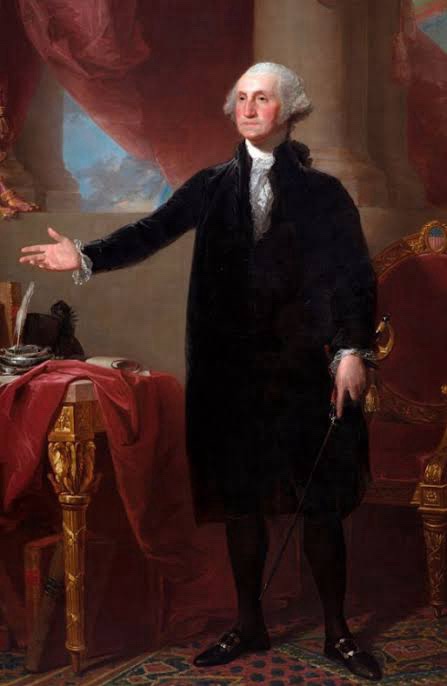
There are some things in American history that you would think even Donald Trump might understand. George Washington is one of them. Not because Trump has demonstrated a particular interest in history beyond the parts that can be used to make himself look important, but because Washington’s entire legacy is built around something Trump apparently finds difficult to comprehend: the president is not a king.
Yet here we are, with Trump wanting to immortalize George Washington in a 30-foot statue in Washington, D.C. Because nothing says “I understand the founding principles of this republic” quite like turning the man who refused a crown into a 30-foot monument to presidential grandeur.
I’m sure the intention is to honor Washington. I’m sure there are people involved who genuinely believe this is a fitting tribute to the father of our country. And if you want to build a statue of George Washington, go right ahead. The man did, after all, lead the Continental Army, preside over the Constitutional Convention, and serve as the first president of the United States.
But perhaps we should pause long enough to remember what made Washington historically significant in the first place.
It wasn’t that he was the most powerful man in America. It was that he understood power was supposed to belong to the country, not to the man occupying the office.
Washington had already demonstrated that understanding before he became president. After leading the Continental Army to victory, he resigned his commission and returned to private life. There was no coronation. No declaration that the man who had won the war was now entitled to rule the nation he had helped create.
When he became president, he served two terms and then voluntarily left office. At a time when the world was full of leaders who treated power as something to be accumulated, protected, and passed down to their own families, Washington walked away.
That decision helped establish the tradition of peaceful transfers of power that became one of the defining features of American democracy.
Washington could have been a king. He had the military prestige, the public admiration, and the opportunity. Instead, he helped establish a republic in which the president was an elected servant of the people.
And now, centuries later, we have a president who seems determined to surround himself with the trappings of royalty while claiming to be honoring the very man who rejected them.
The irony is so thick you could carve it into a monument.
Trump’s fascination with grand buildings, oversized portraits, gilded interiors, and the general aesthetic of a man who believes the nation should be impressed by his personal magnificence is hardly a secret. But a 30-foot George Washington statue in the capital? That’s not just a matter of taste. It’s a question of what we choose to celebrate.
Because the message matters.
When you elevate a president into a towering figure of national reverence, you risk turning the office into a personality cult. And when the president proposing the monument has spent considerable time treating the presidency as an extension of his personal brand, perhaps the symbolism deserves a little scrutiny.
Washington’s legacy wasn’t that he was larger than the country. It was that he understood the country was larger than him.
He didn’t need to be immortalized as a king. He became immortalized by refusing to act like one.
There is a difference between honoring a founding father and building a monument that makes the president look like a ruler from some ancient empire. One celebrates the creation of a republic. The other risks celebrating the individual.
And that distinction is not merely academic.
The peaceful transfer of power Washington helped establish was tested throughout American history, including when he left office and when the nation faced later crises. The idea that a president serves a limited term and then leaves is not some quaint tradition from a simpler time. It is one of the central safeguards against authoritarianism.
The president is supposed to be temporary. The Constitution is supposed to endure.
Washington understood that. He understood that the office was bigger than the officeholder, and that the country could not depend on the personal virtue of every man who occupied the White House. The system had to be stronger than the individual.
That’s why the symbolism of a towering statue matters.
If you want to honor George Washington, perhaps the most appropriate monument would be one that reminds Americans that he could have held onto power but chose not to. That he could have been crowned but wasn’t. That he helped establish a country where the president was elected, not ordained.
Maybe a statue of Washington handing the presidency to his successor. Maybe a monument to the peaceful transfer of power. Maybe something that reminds us that the greatness of the first president was not measured in feet.
Because if we’re going to build a 30-foot statue of George Washington, let’s at least make sure we understand why we’re doing it.
Otherwise, we might as well put a crown on his head and call it a day.
And somewhere, George Washington is probably rolling over in his grave.
Not because someone wants to honor him.
Because someone still doesn’t understand what he was trying to accomplish.
-
Reading
What’s the longest book you’ve ever read?
When I was in high school the longer books, I read where Stephen King novels stand the talisman, IT, things like that. I’ve read the Odyssey. I’ve read most of the Christian Bible. I don’t believe that it’s all historical facts, but I’ve read it.
-
Advice to youth
What’s the best advice you’d give to someone younger than you?
Best advice I would give someone younger. My son included. Is that not everything’s a failure if you learned something from it
-
Continuing Investigations
Dwain Northey (Gen X)
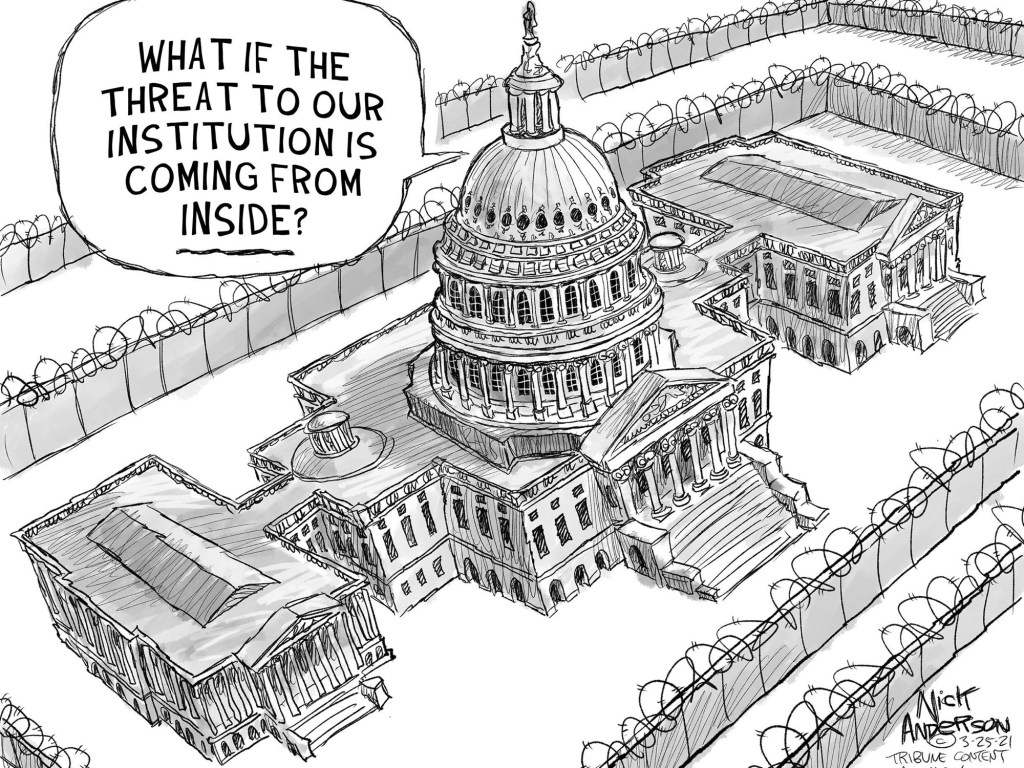
I realize that when and if, or if and when, Democrats take back the House and Senate in November, there are going to be investigations. Lots of investigations. Investigations into the current administration, the shenanigans, the questionable decisions, the things that were done in broad daylight while everyone in charge pretended not to notice.
And honestly, we have to.
If people in power broke laws, abused their authority, misused taxpayer money, or decided the Constitution was more of a suggestion than a governing document, then somebody needs to look into it. That is what oversight is for. You don’t get to burn down the house and then complain when the next owners want to know who left the matches on the kitchen counter.
But I am looking forward to the day when our elected representatives can stop spending a considerable portion of their time investigating the previous administration and actually get back to doing the job we elected them to do.
You know, passing laws.
The whole governing thing.
Making the country better for the people who live here instead of treating Congress like a never-ending episode of Law & Order: Political Dysfunction Unit.
I understand that accountability matters. It matters a lot. Especially when the people who were supposed to protect the country decided that protecting their own political interests was a higher priority. But there comes a point when the investigation stops being the work and becomes the entire workplace.
And I would really like to see us get back to a government that spends more time asking, “What can we do to improve people’s lives?” and less time asking, “What did those assholes do last time?”
We have roads that need fixing. Healthcare that needs fixing. An economy that should work for more people than the ones who already own everything. We have an environment that would appreciate a little less political neglect. We have voting rights, education, housing, and a dozen other things that could use the attention of people who were elected to address them.
Instead, we get hearings. Subpoenas. Press conferences. Another round of cable news speculation about whether someone will be held accountable this time.
And then, six months later, we’re still waiting for the legislation.
Look, I am not suggesting we ignore wrongdoing. That would be stupid. The whole point of having a government with checks and balances is that nobody gets to do whatever the hell they want just because they won an election.
But I would like to see the investigations serve a purpose beyond giving the next election cycle something to campaign about.
Find out what happened. Hold people accountable. Fix the laws and procedures that allowed it to happen. Then move the hell on.
Because the people who elected you did not do so because they wanted you to spend four years conducting an autopsy on the last administration. They elected you because they wanted a government that works.
And I know this is a radical concept in modern American politics, but maybe we could try passing legislation that makes people’s lives better.
Maybe we could investigate the previous administration while also doing the job we were elected to do. I realize that sounds like a lot to ask from a Congress that has occasionally struggled to agree on whether the sky is blue, but I remain cautiously optimistic.
I am looking forward to the day when the headlines are about laws passed instead of laws broken.
When our representatives are competing over who has the better solution instead of who has the more damning subpoena.
When the question isn’t, “What did the last administration screw up?” but, “What are we going to do about the problems facing the country right now?”
Because accountability is necessary.
But governing is the point.
And after all the years of watching Washington turn into a perpetual investigation with occasional legislation, I would really like to see us get back to the part where the people we elected actually do something for the people who elected them.
Imagine that.
A government that investigates when it needs to, passes laws when it should, and doesn’t confuse the two as if they’re interchangeable.
I know. Crazy talk.
But November is coming.
-
The last Forever War
Dwain Northey (Gen X)

Twenty-Five Years Later, I’m Still Confused About Iraq
Twenty-five years after September 11, 2001, I find myself thinking about the things we were told, the things we believed, and the things that still don’t make much sense. And one of those things is how we went from being attacked by terrorists in New York, Washington, and Pennsylvania to invading Iraq.
I’m still confused.
Well, I guess I’m not entirely confused. I understand what happened. I’m just still trying to understand how we got from point A to point B and why so many people accepted the explanation along the way.
September 11 was an attack on the United States by al-Qaeda, a terrorist organization led by Osama bin Laden. Nineteen hijackers murdered nearly 3,000 people, destroyed the World Trade Center, damaged the Pentagon, and sent a plane into a Pennsylvania field because ordinary Americans were apparently not allowed to have a normal Tuesday.
The United States responded by invading Afghanistan, where the Taliban had provided sanctuary to al-Qaeda. That war had a direct connection to the attacks. We were looking for the people responsible.
Then, somehow, the conversation shifted to Iraq.
Saddam Hussein.
Weapons of mass destruction.
Mushroom clouds.
A dictator who had nothing to do with planning the September 11 attacks suddenly became the central character in America’s response to them.
And I’m sitting here wondering, did we lose the plot somewhere between the Pentagon and Baghdad?
Because if the reason we went to war was the terrorist attack on September 11, then why was George W. Bush more focused on finding Saddam Hussein than finding Osama bin Laden?
That question has never really gone away for me.
Osama bin Laden was the man who organized the attacks. He was the one responsible for sending those planes into buildings and killing thousands of Americans. He was the person we were supposed to be hunting.
Instead, the Bush administration spent enormous political energy making the case that Iraq was an imminent threat to the United States. We were told Saddam had weapons of mass destruction. We were told he had connections to terrorists. We were told that invading Iraq was part of the broader war on terror.
Except the weapons weren’t there, and the supposed connection between Saddam Hussein and the September 11 attacks wasn’t there either.
The 9/11 Commission found no evidence that Saddam Hussein’s regime cooperated with al-Qaeda in carrying out attacks against the United States. Saddam was a brutal dictator, but being a brutal dictator isn’t the same thing as being responsible for every terrorist attack that happens to occur while you’re in power.
If it were, we’d need a much larger map.
And let’s not forget that Iraq had already been invaded by the United States in 1991. Saddam Hussein had invaded Kuwait, and the international community responded. There were legitimate reasons for that war. But in 2003, we weren’t responding to a new Iraqi invasion of another country. We were making the case for a preventive war based on intelligence that turned out to be disastrously wrong.
Meanwhile, Osama bin Laden remained alive.
He was eventually killed in Pakistan in 2011, nearly a decade after September 11. By then, the United States had spent years fighting in Iraq, lost thousands of military personnel, spent enormous amounts of money, and helped create conditions that would contribute to further instability and violence across the region.
All while the man responsible for the attacks was still out there.
I understand that history is complicated. I understand that governments make decisions based on intelligence, politics, national security, and a thousand other things that ordinary people don’t get to see. I understand that hindsight is a wonderful tool because it doesn’t require us to sit in a room in 2002 trying to decide whether the information in front of us is accurate.
But some things don’t require hindsight.
You don’t need twenty-five years of historical distance to ask why the man responsible for the attack wasn’t the primary target of the war we were told was about that attack.
You don’t need a PhD in international relations to understand that Iraq and al-Qaeda were not the same thing.
And you certainly don’t need to be a military strategist to recognize that invading a country because its leader might have weapons of mass destruction is a very different argument from invading a country because its government is directly responsible for attacking you.
Those are two different wars with two different justifications.
Yet somehow, after September 11, we were expected to accept them as part of the same story.
Twenty-five years later, I still think about the people who died that day. The passengers on the planes. The people working in the towers. The firefighters, police officers, and emergency workers who ran toward the buildings while everyone else was trying to get away. The families who never got to say goodbye.
Their deaths deserved a response. Their families deserved justice. The country deserved leadership that could distinguish between the people who attacked us and the people we decided we wanted to fight.
Instead, we got a war in Iraq that was sold to the American public using the fear and anger of September 11.
And that is the part that still bothers me.
Not because Saddam Hussein was a good guy. He wasn’t. Not because Iraq was a peaceful democracy before we showed up. It wasn’t. And not because the United States had no legitimate national security concerns.
But because the reasons we were given for going to war mattered.
They mattered when we sent young men and women into combat. They mattered when families received folded flags. They mattered when we spent trillions of dollars that could have been used for almost anything else. They mattered when we asked Americans to trust their government.
And they matter now, twenty-five years later, when we look back at the decisions that followed the worst terrorist attack in American history.
The question isn’t whether Saddam Hussein was a terrible person. He was.
The question is whether he was responsible for September 11.
He wasn’t.
The question isn’t whether Iraq was a country with problems. It was.
The question is whether invading Iraq was the necessary response to the terrorist attacks.
It wasn’t.
And the question isn’t whether Osama bin Laden deserved to be brought to justice.
He did.
So when I think about September 11, I think about the people we lost, the families who still carry that loss, and the men and women who served in the wars that followed.
But I also think about the decisions made in the aftermath.
Because remembering history isn’t just about remembering what happened. It’s about remembering what we were told, what we believed, and what we should have learned.
Twenty-five years later, I still don’t understand how the country that was attacked by Osama bin Laden ended up invading Iraq.
Well, I understand the history.
I’m just still trying to understand the logic.
And maybe that’s the point. Maybe the most important thing we can do on this anniversary is keep asking the questions that make us uncomfortable.
Because the next time somebody tells us that a war is necessary, that the intelligence is solid, that the threat is imminent, and that we just need to trust the people in charge, maybe we should remember what happened the last time we stopped asking questions.
-
Improvements
What’s one thing that would instantly improve your city?
I would like the city of Phoenix to just work on one road project at a time instead of 20 because they make it very difficult to get around the city when they have multiple closures.
-
Travel-log part two
What’s the longest trip you’ve ever taken?
The longest trip I’ve ever taken wasn’t a vacation. It was a relocation from Washington state to Frankfurt Germany when I was 16 years old because my father was in the military and we were stationed in Europe while in Europe, I did get to visit multiple countries with in Europe and the Great Britain, but the longest time sitting on a plane was from Seattle to Frankfurt Germany in 1983
-
The Great Human Agreement That Money Is Real
Dwain Northey (Gen X)
Every once in a while, I find myself thinking about something so fundamental to human existence that I wonder how we all agreed to it without somebody standing up and asking a few questions.
Money, for example.
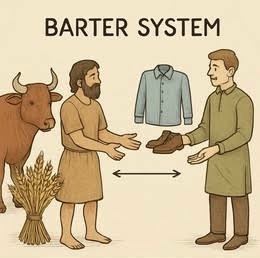
I’m still dumbfounded that we went from a barter system, where you traded something you had for something you needed, to a system where we hand each other small pieces of metal or paper and pretend they have value because somebody told us they do.
At least barter made sense.
You fixed my windows, I gave you some grain. You repaired my roof, I gave you a cow. You helped me survive the winter, I gave you something that helped you survive the winter. There was an actual connection between the work being done and the thing being exchanged.
Somewhere along the way, though, humanity decided that carrying around a cow every time we needed something was probably inconvenient. Fair enough. Cows are not particularly portable, and I imagine the early banking industry had some serious livestock-management issues.
So we invented money.
The earliest forms of money included things like grain, livestock, shells, and precious metals. Eventually, civilizations began producing standardized coins, often stamped with the image of a ruler. A king’s face on a piece of metal became a promise that this little disk was worth something.
Which, when you think about it, is a hell of a marketing strategy.
“Here is a picture of me on a piece of metal. I declare this valuable.”
And people said, “Sounds good.”
Granted, those early coins had some intrinsic value because they were made from gold, silver, or other useful metals. But even then, the value was largely based on agreement, trust, and the authority of whoever was stamping the king’s head onto the thing.
Then we moved to paper money.
Now, instead of carrying around a piece of metal that might actually be worth something, we carry pieces of paper that represent a promise. And eventually, we stopped even needing the paper. Most of the money we use today is just numbers in a bank account, moving from one computer screen to another.
I can work eight hours, receive a paycheck, deposit it into my bank account, and use a plastic card to buy groceries. No grain. No cattle. No silver. No gold. Just a series of numbers that everybody agrees means I can have food.
And the truly amazing part is that it works.
Most of the time.
We have built an entire global economy on the collective agreement that these little pieces of paper, these coins, and these electronic numbers are worth something. We use them to buy houses, pay medical bills, send our kids to college, and determine whether we can afford to retire.
We have assigned value to something that, in and of itself, has very little practical value.
A dollar bill is not particularly useful as a piece of paper. You can’t eat it. You can’t build a house with it. You can’t fix a broken window with it. You could probably use it to start a fire, but that seems like a poor financial decision.
Yet we have decided that it is legal tender for all debts, public and private.
Which is a fancy way of saying, “This piece of paper is worthless unless everybody agrees it isn’t.”
And somehow, we have all agreed.
Of course, money isn’t entirely worthless. It represents the value of goods, services, labor, and the economic activity that produces them. The dollar is useful because people trust that it can be exchanged for things they need. But the paper itself isn’t what makes it valuable. The agreement is.
And that agreement can change.
Inflation is what happens when the purchasing power of money declines. You can have the same amount of money in your pocket and discover that it buys less than it did yesterday. The paper hasn’t changed. The number hasn’t changed. The value has.
Which brings us to the part that really fascinates me.
We have created an economic system where the thing we use to measure value can itself lose value. We work for money, save money, invest money, and plan our futures around money. But money is not a fixed thing. It is a human invention that depends on trust, stability, and the continued willingness of people to accept it.
And yet we treat it like some immutable law of nature.
Like gravity.
Like the sun rising.
Like the fact that the government will eventually find another way to tax us.
I understand why we moved away from barter. Barter has limitations. What if I need a doctor but the doctor doesn’t need my windows fixed? What if I have a cow but the person selling me a car doesn’t want a cow? Money solves those problems by providing a common medium of exchange.
But I still find it fascinating that we went from trading things we actually needed to trading things that represent the value of things we need.
We don’t trade windows for grain anymore. We trade the value of fixing windows for the value of grain, which is represented by money, which is represented by paper, metal, or numbers in a computer.
And then we spend our lives trying to acquire more of it.
The whole system works because we agree that it works. And because it works, we rarely stop to think about how strange it actually is.
Humanity has spent thousands of years refining the process of exchanging goods and services, only to arrive at a system where the most important thing in the transaction is something that has no inherent value of its own.
We have built civilization around a shared belief.
Not unlike religion, I suppose, except money actually does require you to pay for things.
And unlike religion, you can’t just pray that your mortgage company will accept your good intentions as payment.
The next time I hand somebody a piece of paper with a dead president’s face on it, I’m going to try to remember how remarkable the whole thing is.
Somewhere along the way, we decided that this was better than trading cattle.
And the rest of us just went along with it.
Because apparently, once you get enough people to agree that something is valuable, it becomes valuable.
Even if it’s just a piece of paper.
-
Genealogy Disconnect
Dwain Northey (Gen X)

Point, Counterpoint: The Genealogy Problem
Every once in a while, you have to actually stop reading the Bible as a collection of things you were told it says and start reading it as a collection of things it actually says.
And Matthew gives us one of those wonderfully inconvenient little moments.
Matthew begins his Gospel with something that, at first glance, seems almost painfully unnecessary:
A genealogy.
Not just a casual mention of who begat whom, but a carefully constructed lineage tracing Jesus all the way back through Joseph, through David, and ultimately to Abraham.
Matthew is making a point.
Jesus isn’t just some guy who showed up in Bethlehem. Matthew wants his readers to understand that Jesus belongs to the lineage promised to Israel. He is connected to Abraham. He is connected to David. He is part of the historical line from which the Messiah was expected to come.
And then Matthew introduces the problem.
Joseph isn’t supposed to be Jesus’s biological father.
That’s not some modern reinterpretation of the story. That’s the whole point of the virgin-birth narrative that immediately follows the genealogy.
Matthew spends an entire chapter establishing Joseph’s ancestry and establishing Jesus’s connection to Joseph.
Then, essentially, he says:
“Except Joseph didn’t actually father him.”
Well…
Point. Counterpoint.
If Joseph is Jesus’s legal or adoptive father, then perhaps the genealogy is intended to establish Jesus’s legal connection to David.
That’s certainly a theological possibility.
But notice what that means.
Matthew has gone to extraordinary lengths to establish Jesus’s earthly credentials through a man who, according to the very story Matthew is telling, isn’t his biological father.
And that raises a rather obvious question:
Why is Joseph’s bloodline so important if Jesus’s significance doesn’t come from Joseph’s bloodline?
If Jesus is literally the Son of God, conceived by divine intervention, then his connection to Abraham and David isn’t biological through Joseph.
And if the Davidic lineage is important because prophecy requires the Messiah to descend from David, then we’ve suddenly got a theological bookkeeping problem.
Because the genealogy is telling us:
“Here’s how Jesus connects to David.”
And the virgin birth is telling us:
“Except not through Joseph.”
Point.
Counterpoint.
And here’s where things get even more interesting.
Matthew doesn’t begin with:
“Jesus, the Son of God, has arrived.”
He begins with:
“The book of the genealogy of Jesus Christ, the son of David, the son of Abraham.”
That’s not an incidental introduction.
That’s the thesis statement.
Matthew wants to establish Jesus as son of David and son of Abraham before he tells us about the miraculous conception.
Why?
Because those earthly genealogical credentials mattered enormously to the people Matthew was writing for.
Jesus needed to be connected to the Jewish story.
He needed to belong to the story of Abraham.
He needed to belong to the royal line of David.
He needed to fulfill the expectations surrounding the Messiah.
And Joseph is the mechanism Matthew uses to establish that connection.
Which leaves us with an uncomfortable possibility:
Maybe the genealogy itself tells us something about how early Christians understood Jesus that doesn’t perfectly fit the theology that developed later.
Maybe Jesus’s connection to David mattered precisely because his connection to humanity mattered.
Maybe the earliest arguments about Jesus weren’t simply, “He’s God, therefore none of this earthly lineage matters.”
Maybe they were, “This is the Messiah we’ve been waiting for, and here’s how he fits into the story.”
And that’s an important distinction.
Because Christianity eventually developed a very sophisticated theology surrounding Jesus’s divine nature, human nature, virgin birth, incarnation, and relationship to God.
But the Gospel texts weren’t written as a single theological textbook.
They were written by different authors, for different audiences, with different emphases.
And sometimes those emphases don’t fit together as neatly as the Sunday-school version would have us believe.
Matthew says:
Look at his lineage.
Then Matthew says:
Joseph wasn’t his biological father.
Point.
Counterpoint.
And maybe that’s not a problem that needs to be solved.
Maybe it’s a question that needs to be asked.
Because if we’re going to call something sacred, shouldn’t we be willing to actually read it closely enough to notice when the text itself makes us stop and scratch our heads?
Faith shouldn’t require us to pretend contradictions aren’t interesting.
In fact, maybe that’s where faith gets interesting.
Because if the answer to every difficult question is simply, “Don’t ask that,” then we’re not really studying scripture.
We’re protecting an interpretation of scripture.
And those are two very different things.
So I’ll leave you with the question Matthew seems to accidentally—or perhaps deliberately—put on the table:
If Joseph’s genealogy is important enough for Matthew to spend seventeen verses establishing it, and that genealogy is supposed to prove Jesus’s connection to Abraham and David, what exactly is Matthew trying to prove through Joseph if Joseph isn’t Jesus’s biological father?
Point.
Counterpoint.
And somewhere between the two is where the real conversation begins.
-
Staycation
What’s your best tip for budget travel?
I haven’t taken a vacation in years, so I generally just stay home so I guess it’s the staycation or no-cation.


You must be logged in to post a comment.