Dwain Northey (Gen X)
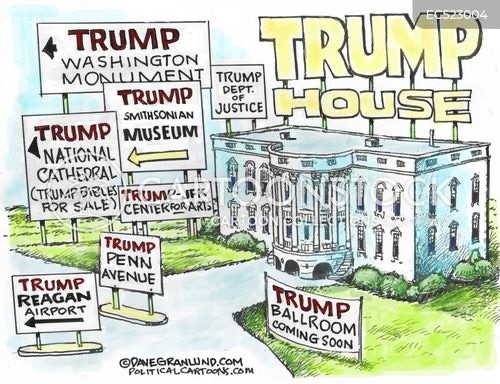
There has got to be a part of Donald Trump that looked across the Atlantic after Queen Elizabeth II died and thought, “Well now wait a minute… why does Charles get all the fun?”
Because think about it. The moment King Charles III ascended to the throne, the machinery of monarchy kicked into gear. New postage stamps. New portraits. New official portraits hanging in government buildings. And perhaps most importantly to a man obsessed with branding, new currency. Charles’ face is now sliding onto pound notes and coins simply because he inherited a crown.
And somewhere in Mar-a-Lago, Donald probably saw that and thought, “See? THAT’S what respect looks like.”
The difference, of course, is that Charles actually is a king. Ceremonial, constitutional, fancy-hatted, ribbon-cutting king, yes, but still a king. England literally has a monarchy. They have spent centuries perfecting the art of putting one family’s face on money and pretending it’s perfectly normal. It’s baked into the system. Americans fought an entire revolution specifically to avoid that sort of thing.
Which makes Trump’s apparent fixation with slapping his image onto everything feel less patriotic and more like a man trying to cosplay monarchy in a country founded to reject it.
Now we’ve got talk about commemorative currency, including the idea of a $250 bill with Trump’s face on it tied to the 250th anniversary of the Declaration of Independence. Because apparently nothing says “celebrating freedom from kings” like printing a politician’s giant orange head onto a denomination that doesn’t even exist.
You almost have to admire the irony.
The Declaration of Independence was essentially America’s breakup text to a monarch. It was the colonies saying, “We’re done with inherited power, royal ego, and one guy thinking he’s the center of the universe.” Fast forward 250 years and somehow we’re discussing whether one American politician deserves the kind of symbolic treatment usually reserved for dead presidents and hereditary rulers.
And this obsession with image projection keeps growing. His face on trading cards. His face on merchandise. His name in gold letters large enough to be seen from low Earth orbit. Reports of his image being pushed into official government aesthetics. There is always this gravitational pull toward iconography, toward permanence, toward being visually unavoidable.
Because for Trump, visibility equals legitimacy.
That’s why Charles getting his face on actual currency probably stings in a way most people don’t even consider. Charles doesn’t have to demand reverence. The institution hands it to him automatically. The crown itself manufactures importance. Trump, meanwhile, has spent decades trying to manufacture the same aura through sheer repetition, branding, and spectacle.
And at the core of it is something deeper than vanity. Trump doesn’t merely seem to want admiration; he seems to want historical anointment. Not just remembered, but canonized. Not merely elected, but chosen. There’s always this undertone that he views himself as existing above ordinary political figures, as if criticism is not disagreement but heresy.
That’s why so much of his rhetoric drifts into messianic territory. He’s not just wronged politically; he’s persecuted. He’s not just popular; he’s destined. Supporters don’t merely vote for him; some speak about him in almost theological terms, as though he descended from a golden escalator carrying divine purpose and a Sharpie.
Meanwhile Charles, who waited seventy years to become king, probably would gladly trade some of that ceremonial burden for a quiet afternoon and fewer public appearances. But monarchy is inherited duty. Trump treats power like product placement.
And honestly, if you step back from all of it, the strangest part may be how much of modern politics has become about imagery rather than governance. We used to argue about tax policy, infrastructure, healthcare, foreign alliances. Now we spend entire news cycles discussing portraits, flags, branding, slogans, social media posts, and whether someone’s face belongs on money.
America doesn’t have a king. At least not officially. But we do seem dangerously fascinated with the aesthetics of kingship.
And Donald Trump, watching Charles calmly appear on pound notes by royal tradition, probably sees not a constitutional formality but a level of symbolic adoration he desperately wishes America would grant him.
Which is awkward considering the entire point of America was supposedly, “Yeah… we don’t do that here.”

