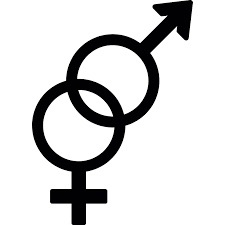
Gender Icons
For centuries, ♂ and ♀ have represented the concepts of male and female in the world of science. Long before these icons had anything to do with biology, however, they were used throughout ancient cultures such as Greece and Rome. ♂ corresponded to the Greek god Ares (Mars, in Roman mythology), whereas ♀ was tied to the Greek goddess Aphrodite (Venus, in Rome). The association between the gods and those symbols came about because of metals used to forge weaponry, with Ares representing iron (thouros) and Aphrodite representing copper (phosphoros). Over time, the Greek words for the metals were written in shorthand using the symbols that we now use to convey gender.
The symbols first played a role in biological research in 1751, when the father of modern taxonomy, Carl Linnaeus, adopted and used the icons to refer to the gender of flowers in his dissertation Plantae hybridae. Many scientists thereafter followed in Linnaeus’ footsteps, with those symbols later extending to human genetics. In recent decades, new symbols have been created based on those centuries-old designs in order to be more inclusive of those who don’t identify as male or female.
 Esoteric Meandering Shouting Into the Void