- KHRUSHCHEV & HOXHA, 1961
In the wake of World War II, new ideological borders were drawn across the European continent. Vast cultural and economic differences formed a deep divide between the democratic nations of Western Europe and the communist regimes of the Soviet Union and its allies in the East. Throughout the Cold War era, these two distinct factions were separated by a symbolic boundary that cut through the continent, known as the Iron Curtain.
The term “Iron Curtain” was first used in reference to the Cold War in 1946; nations that were considered “behind” the Iron Curtain were those under Soviet and communist influence, as those regimes maintained a firm grasp on power. As time progressed, cracks formed in the Iron Curtain as former communist nations embraced democracy, ultimately leading to the political reunification of Europe. But for as long as it existed, the Iron Curtain served as a philosophical barrier between two vastly different worlds. Here are five fascinating facts from behind the Iron Curtain.
Photo credit: Icon and Image/ Michael Ochs Archives via Getty Images
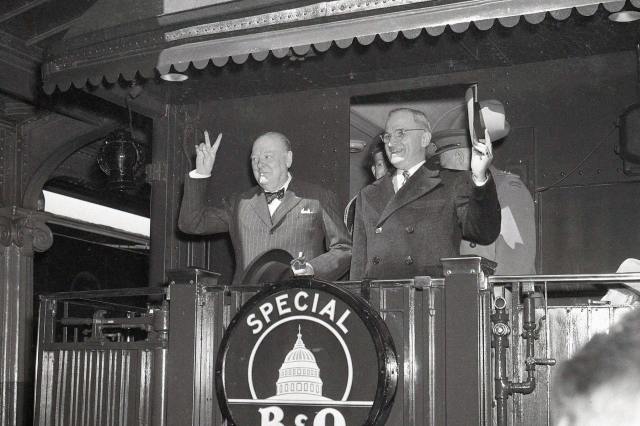
The Term “Iron Curtain” Was Popularized by Winston Churchill
Long before the term “Iron Curtain” was coined in reference to the Cold War, the words referred to a fireproof safety mechanism that separated the audience from the stage in theatrical productions. In 1945, author Alexander Campbell borrowed the term in his book It’s Your Empire to describe censorship related to World War II-era Japanese conquests. “Iron Curtain” was first used in the context of communist Europe during a speech by British Prime Minister Winston Churchill on March 5, 1946. Appearing with President Harry Truman at Westminster College in Fulton, Missouri, Churchill stated, “From Stettin in the Baltic, to Trieste in the Adriatic, an iron curtain has descended across the continent.” Churchill sought to warn the audience of the threat posed by the Soviet Union, and the term “Iron Curtain” resonated, remaining popular for decades after. Around the same time as Churchill’s speech, another great wordsmith used the phrase “Cold War” for the first time — author George Orwell in his 1945 essay “You and the Atom Bomb.” Two years later, Truman adviser Bernard Baruch formally coined the term “Cold War” to describe the cooling relationship between the United States and Soviet Union.
 Esoteric Meandering Shouting Into the Void