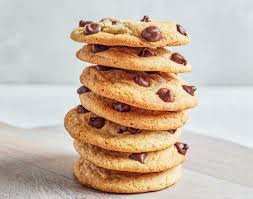
Toll House Chocolate Chip Cookies
In August 1930, amid the early days of the Great Depression, a Massachusetts chef named Ruth Wakefield took a major risk: She decided to chase her dream of opening an inn and restaurant. It was touch and go at first: In the Toll House Inn’s first month, the money on hand dwindled to just $10, a little more than $180 today. But by the end of the year, the business had grown so popular it needed 12 employees to keep up with demand. By the end of the Depression, against all odds, Wakefield had to expand the inn to serve around 1,000 diners per day. Comfort food with complimentary second helpings along a busy road for auto travelers turned out to be a winning strategy.
Wakefield is widely credited with inventing the chocolate chip cookie, after stumbling on a recipe that proved to be a hit with diners at the Toll House Inn. Originally served not as a stand-alone dish but as an accompaniment to ice cream, the cookie became the restaurant’s most enduring creation, and Wakefield appeared in newspapers and radio shows to talk about the trendy treat. In its early days it was called the “Toll House cookie” or “chocolate crunch cookie”; the “chocolate chip cookie” name came around 1939 because the recipe called for literally chipping the chocolate off the bar.
Speaking of chocolate chipping: After Nestle got Wakefield’s permission to use the recipe, the cookie started appearing in ads, and it was so popular that it started influencing product development. Early on, Nestle released a semisweet chocolate bar scored into 160 pieces, and in 1940, the company debuted its “morsel” chips — the chocolate chips we know today.
 Esoteric Meandering Shouting Into the Void