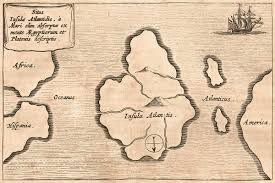
Is the Lost City of Atlantis Real?
The lost city of Atlantis has been a source of intrigue and curiosity for centuries. The enigmatic sunken island, however, is not a vanished land awaiting discovery so much as an enduring myth.
Advertisement
null
The story of Atlantis first appeared in Plato’s dialogues “Timaeus” and “Critias,” written around 360 BCE. The Greek philosopher described Atlantis as a sophisticated civilization that became corrupt under its own might, angering the gods and causing the city to disappear underwater. Despite the legend’s intrigue, no historical or archaeological evidence has ever confirmed the existence of Atlantis. Instead, it is widely regarded as a fictional allegory used by Plato to explore themes such as power, virtue, and society.
You may also like
- Revealing Facts About 5 Celebrated Painters
- 5 Facts About England’s Elizabethan Era
- Unforgettable Moments in Baseball History
Advertisement

Credit: UniversalImagesGroup via Getty Images
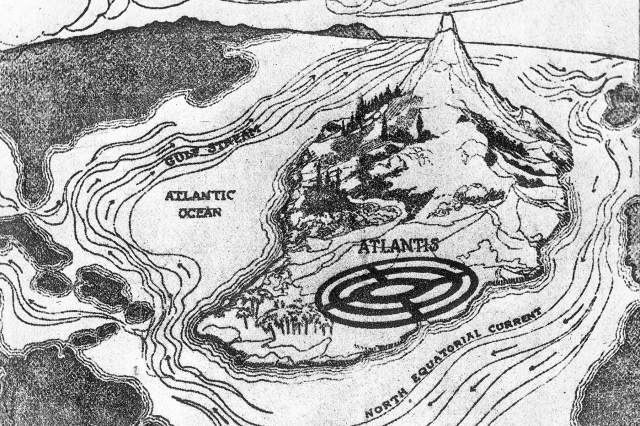
According to Plato’s myth, Atlantis was an island of demigods located beyond the Pillars of Hercules (in the modern-day Strait of Gibraltar), which in Greek mythology represent the boundary of the known world. The half-god, half-man Atlanteans let their greed surpass their ethics, and as they pushed to conquer more territory, the gods sent catastrophic earthquakes and floods that sank Atlantis into the ocean within about a day. While Plato’s account is widely considered a philosophical allegory for his ideas about the ideal state and moral decay, some have taken the story literally, sparking centuries of speculation and searches for the so-called lost civilization.
So why is Plato’s fable often taken as historical fact? The belief that Atlantis really existed is widely attributed to 19th-century American writer and congressman Ignatius L. Donnelly (who also went on to write a book aiming to prove that English philosopher Francis Bacon was the true author of William Shakespeare’s plays). In his 1882 book Atlantis: The Antediluvian World, Donnelly argued that the mythical island described by Plato was not only real but also the cradle of all ancient civilization. Donnelly’s idea captured the imagination of the public, and while it has since been debunked as pseudoscientific, it inspired additional research and theories over the years.
Advertisement
Credit: ullstein bild Dtl via Getty Images
One such theory links Atlantis to the disappearance of the architecturally and artistically advanced Minoan civilization that lived on the Greek islands of Crete and Thera (modern Santorini) around 3000 BCE to 1100 BCE. A catastrophic earthquake resulting in a volcanic eruption and subsequent tsunamis most likely contributed to the end of the Minoans, and, some think, align with Plato’s account of a sudden disappearance of a thriving civilization.
Proponents of the Atlantis myth also point to an underwater discovery known as Bimini Road as evidence of the ancient city. Discovered in 1968 off the coast of North Bimini, an island in the Bahamas, the submerged rock formation consists of a series of rectangular limestone blocks whose symmetry and layout appear to be human-made. Despite the attention the diving discovery received at the time, carbon dating concluded that the Bimini stones were a natural geological occurrence created by erosion.
 Esoteric Meandering Shouting Into the Void
One response to “Myth or Real”
I think it could be real but that’s just my opinion lol
LikeLiked by 1 person