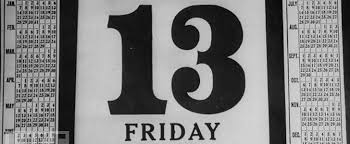
Friday the 13th
This superstition marries ideas about both Friday and the number 13 to create what is supposedly the unluckiest day of the calendar. The aura of doom around the number 13 may go back to early civilizations who based their numerical systems on the number 12. (That’s how we got 12-month calendars and days divided into 12-hour segments, for one thing.) Because it came right after 12, 13 was seen as a problematic or strange leftover.
Odd as it may seem, the association is reinforced by two stories of ancient dinner parties. In Norse mythology, evil was introduced into the world when the trickster god Loki showed up as the 13th guest at a dinner in Valhalla. Judas Iscariot, who betrayed Jesus, was also the 13th guest to arrive at the Last Supper. That led to a belief, starting around the 17th century, that it was unlucky to have 13 guests at a table. Incidentally (or not), it was also imagined that witches’ covens usually numbered 13.
Friday, meanwhile, was the day Jesus was crucified. By tradition, it was also thought to be the day Eve gave Adam the apple and they were cast out of the Garden of Eden. In Britain, Friday was also Hangman’s Day, when those condemned to die met their fate. Somehow, over the centuries, these ideas combined to give Friday a bad rep — at least until TGIF came along.
Yet it was only the Victorians who combined the ideas around Friday and the number 13 to create the idea of Friday the 13th as being uniquely unlucky. Of course, these days the American horror film franchise may have reinforced the idea.
 Esoteric Meandering Shouting Into the Void