A Lasting Cultural Impact
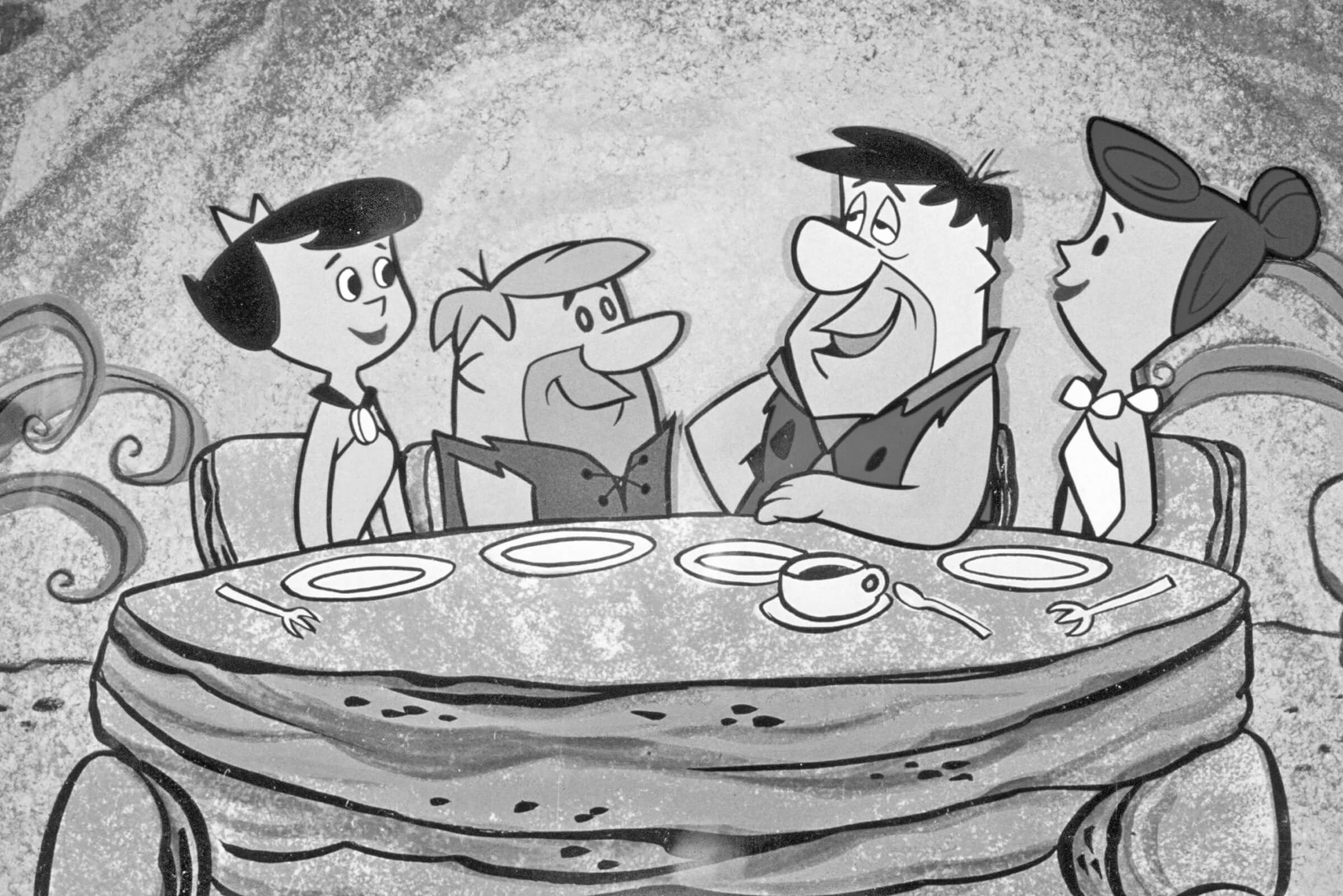
Over the course of six seasons and 166 episodes, The Flintstones carved out a formidable TV legacy. The show was the premiere 30-minute animated sitcom, as well as the first cartoon ever nominated for Outstanding Comedy Series at the Primetime Emmys — an honor The Simpsons has never even achieved.
Despite its laugh track, The Flintstones embarked on nuanced storylines in its middle seasons about routes to parenthood. After Fred and Wilma became U.S. television’s first animated couple to sleep in the same bed, nine episodes were devoted to Wilma’s pregnancy with their daughter, Pebbles. During the following season, with Barney and Betty, the series acknowledged the plight of infertility, a rarely addressed topic on screen or in society at the time. The Rubbles eventually adopted a son, Bamm-Bamm. The Flintstones proved that there was a grown-up audience for animation, emboldening future TV creators to tackle mature themes such as parental abandonment (The Simpsons), politics (South Park), mortality (Archer), and mental illness (Bojack Horseman) — to great critical acclaim.
Additionally, The Flintstones was an early satirist of TV tropes and celebrity culture that helped establish the practice of famous guest stars doing cameos as themselves. Ann-Margret, Ed Sullivan, Tony Curtis, Rock Hudson, and Cary Grant were among the prominent personalities that entered Bedrock. The show also gave rise to numerous TV spin-offs, two live-action films, and millions of brontosaurus cranes worth of merchandise sales, ranging from Fruity Pebbles cereal to Flintstones Vitamins. After a robust second life in syndication, The Flintstones recently found a new home on HBO Max.
 Esoteric Meandering Shouting Into the Void