Germany Began Seeking Peace by October 1918
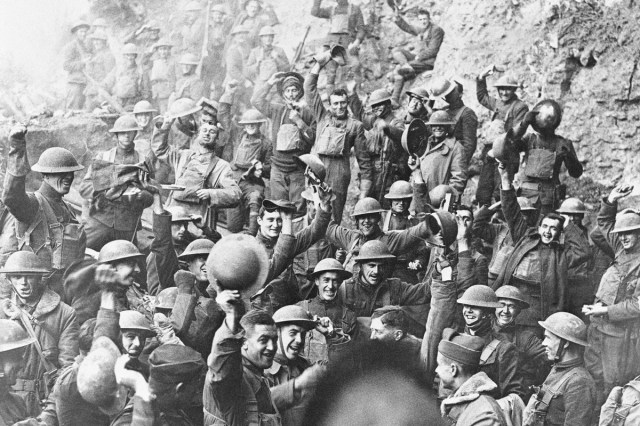
Even with the once-impenetrable Hindenburg Line breached, the Germans largely held their ground in the fighting that continued across the Western Front. Nevertheless, the string of Allied victories, combined with deteriorating conditions at home, prompted the German high command to reach out to U.S. President Woodrow Wilson for a peaceful resolution in early October. The following month, Germany agreed to the strict terms that enabled the armistice to take hold at 11 a.m. on November 11, 1918.
All told, the celebrated Hundred Days Offensive lasted about 95 days. Yet it’s no exaggeration to say that its successful strategy and execution were crucial in bringing the First World War to a long-awaited end.
For many people, the enduring image of World War I is that of infantry troops bunkered down in a trench somewhere along the hazy battlefield of the war’s Western Front. Indeed, while stagnant trench warfare was the norm for a large chunk of the conflict in Europe, it was the transition to a mobile phase of the war in 1918 that brought about its fairly sudden conclusion, with the success of a rapidly moving offensive across late summer and early autumn that year. Here’s a look at how the Hundred Days Offensive ensured victory for the Allied forces.
The German Spring Offensive Failed To End the War
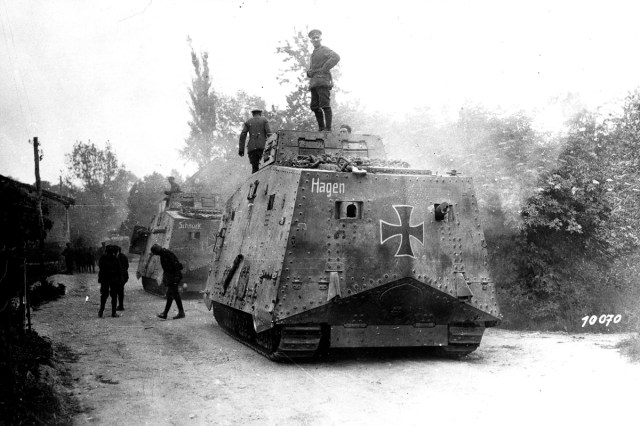
Following Russia’s exit from the war in late 1917, German General Erich Ludendorff funneled troops to the Western Front for what became known as the Spring Offensives. Beginning with Operation Michael on March 21, 1918, the German army launched four major attacks by mid-June that brought it within 55 miles of Paris but failed to deliver a knockout blow.
The Germans struck again near the French city of Reims on July 15, commencing the Second Battle of the Marne. However, they were unable to split the French army as intended, and instead were driven back when the Allies launched a counterattack three days later.
At a conference of Allied leaders on July 24, Supreme Allied Commander Ferdinand Foch outlined plans for a rapid-fire series of strikes against the exhausted and stretched-out German army. These attacks formed what later became known as the Hundred Days Offensive.

The Tide Turned With the Battle of Amiens
The Allied surge began with a surprise attack at Amiens on the morning of August 8, 1918. Following a barrage of gunfire at 4:20 a.m., the combined French, British, Canadian, and Australian forces overwhelmed the outnumbered German defenses along the river Somme. Upon losing some 26,000 of his troops on that day alone, Ludendorff referred to the disaster as “the black day of the German army.”
When their advance slowed by the third day of fighting, the Allies continued hitting the Germans along various points of the front. As part of what is sometimes called the Second Battle of the Somme, the combined British and Australian forces drove the Germans out of Albert, France, on August 22, and a New Zealand corps helped wrest control of the town of Bapaume a week later.
Having only recently entered the war, the U.S. First Army was given the task of eliminating the St. Mihiel salient (a protuberance of German territory along the line) in mid-September. It was an easy victory for the newcomers, as by that point the Germans had largely retreated to the Hindenburg Line, a nearly 100-mile-long series of heavily defended trenches, tunnels, and fortifications across northeastern France.
The Allies Broke Through the Hindenburg Line
In late September 1918, the Allies pressed their advantage with the launch of a four-prongedattack. On September 26, a combined American and French force invaded the Meuse Valley to commence the Battles of the Meuse-Argonne, also known as the Meuse-Argonne Offensive. On September 27, the Canadian Corps led the charge across the Canal du Nord in the Battle of Cambrai. The following day, a Belgian force joined the British in an attack on the battle-scarred terrain outside Ypres in Flanders.
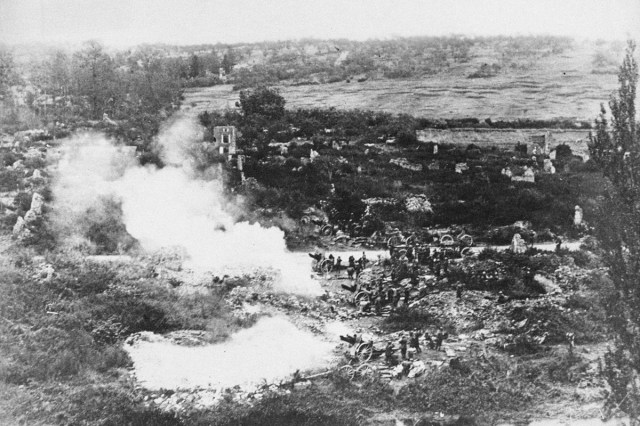
The main target of this offensive was the St. Quentin Canal, which formed part of the Hindenburg Line. Following a massive fusillade of shells from more than 1,600 guns, the Allies launched their ground assault on the morning of September 29.
On one end, the American and Australian corps struggled to pass the German defenses at Bellicourt Tunnel. However, the British were well prepared to cross the canal to the south with their rafts and life preservers. Aided by the dense fog, they overtook enemy positions on the steep eastern bank and thwarted the detonation of the Riqueval Bridge. By the start of October, the St. Quentin Canal was effectively in Allied hands.
Germany Began Seeking Peace by October 1918
Even with the once-impenetrable Hindenburg Line breached, the Germans largely held their ground in the fighting that continued across the Western Front. Nevertheless, the string of Allied victories, combined with deteriorating conditions at home, prompted the German high command to reach out to U.S. President Woodrow Wilson for a peaceful resolution in early October. The following month, Germany agreed to the strict terms that enabled the armistice to take hold at 11 a.m. on November 11, 1918.
All told, the celebrated Hundred Days Offensive lasted about 95 days. Yet it’s no exaggeration to say that its successful strategy and execution were crucial in bringing the First World War to a long-awaited end.
 Esoteric Meandering Shouting Into the Void