Dwain Northey (Gen X)
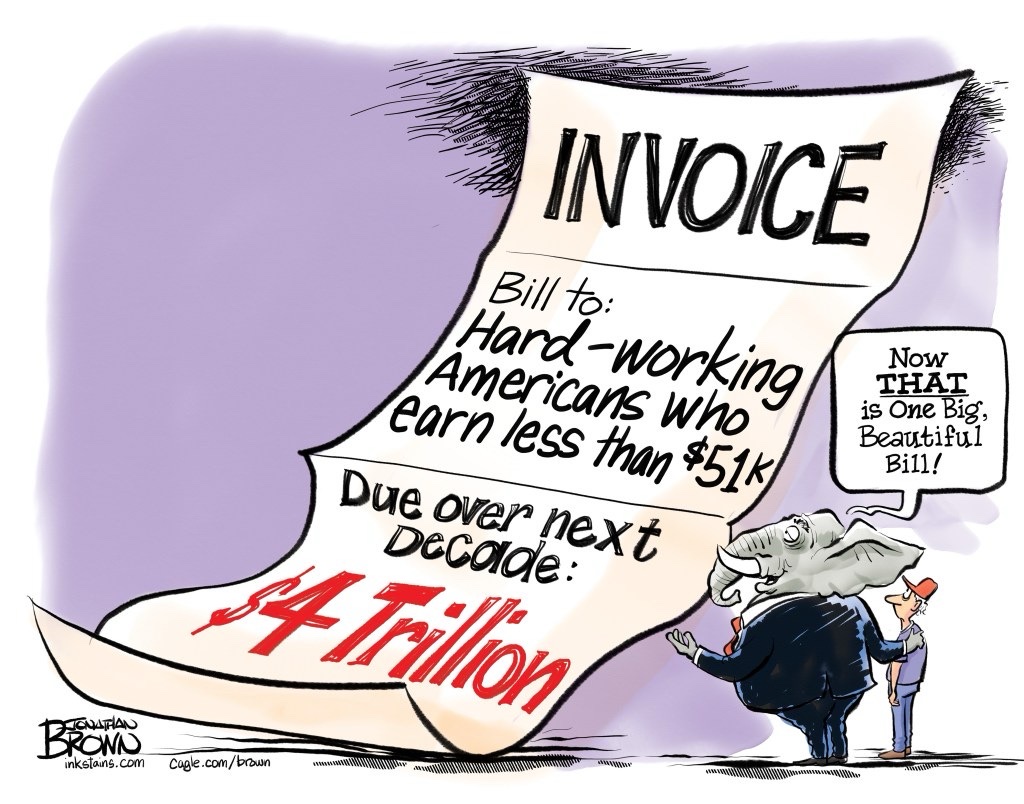
The recent passage of the GOP tax bill in the House represents a stark example of economic policy that redistributes wealth from the middle and lower classes to the wealthiest Americans. While proponents argue that the bill stimulates economic growth, analyses from the Congressional Budget Office (CBO) and other nonpartisan entities reveal a different reality: the legislation exacerbates income inequality and shifts financial burdens onto those least equipped to bear them.
The bill’s provisions include substantial tax cuts for high-income earners and corporations, such as lowering the corporate tax rate to 15% and eliminating the estate tax for millionaires. These measures are projected to cost trillions over the next decade. In contrast, the CBO estimates that by 2033, the bottom 10% of income earners would experience a 4% decline in their annual financial resources, including both cash and the value of government aid such as Medicaid and SNAP .
To offset the revenue loss from these tax cuts, the bill proposes significant reductions in social safety net programs. Medicaid and food assistance programs would face deep cuts, disproportionately affecting low-income families. For instance, the Economic Policy Institute reports that the average household among the bottom 20% of earners could see a 6.8% decrease in their budget due to increased healthcare expenses resulting from Medicaid cuts .
Additionally, the bill includes changes to the State and Local Tax (SALT) deduction cap, raising it from $10,000 to $40,000 for individual filers. While this adjustment may benefit middle-class taxpayers in high-tax states like New York, it primarily serves affluent households who itemize deductions, leaving many middle-class families with no significant relief .
Critics argue that these policies represent a form of economic theft, where public resources are redirected to benefit the wealthy at the expense of the broader population. The combination of tax cuts for the rich and cuts to essential services for the poor and middle class constitutes a regressive redistribution of wealth, undermining the social contract and exacerbating economic disparities.
In conclusion, the GOP tax bill passed by the House exemplifies a deliberate policy choice to prioritize the interests of the wealthy over the needs of the majority. By shifting financial burdens onto lower-income Americans and reducing support for essential services, the legislation deepens existing inequalities and undermines efforts to build a more equitable society.
 Esoteric Meandering Shouting Into the Void