Dwain Northey (Gen X)
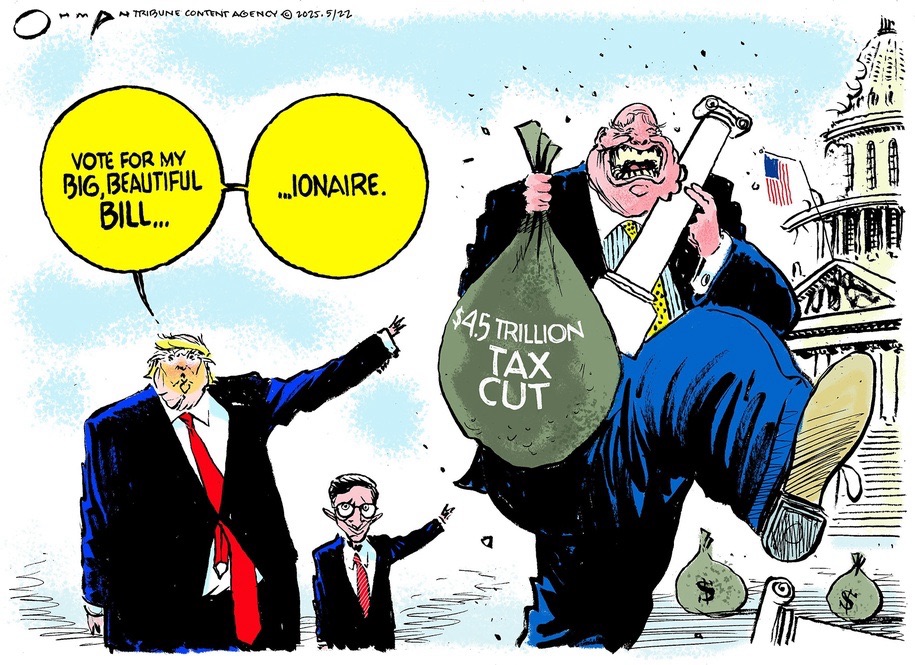
The GOP appears to be leveraging a well-worn political strategy: betting on America’s short attention span to push through a budget bill that delivers immediate rewards to the wealthiest Americans, while quietly laying the groundwork for future cuts to vital social programs. Under the guise of fiscal responsibility, the bill funnels generous tax breaks and incentives to billionaires and large corporations—benefits that take effect immediately and are easy to publicize. Meanwhile, the cuts to programs like Social Security, Medicaid, and food assistance are strategically delayed until 2029, well after the current election cycle.
This timing is no accident. By deferring the most unpopular aspects of the bill, Republicans create plausible deniability. When the cuts hit, they can claim that Democrats—likely to hold some level of power by then—are either responsible or at least complicit in letting them go into effect. This maneuver lets the GOP enjoy the political and financial support that comes from pleasing wealthy donors today, while shifting the political fallout onto others in the future.
It’s a cynical but calculated move that assumes voters will not connect the dots years down the line. Republicans are counting on the fact that media cycles are short, political narratives can be rewritten, and public memory is often fleeting. By 2029, the origin of the cuts could be muddled in partisan spin, with right-wing media reinforcing a narrative of Democratic mismanagement.
In this way, the GOP is not just passing a budget—they’re playing a long game of misdirection. They provide for their base now, obscure the consequences until later, and prepare to spin the blame when the public feels the sting. It’s a gamble on forgetfulness, and unfortunately, it’s a tactic that’s worked before.
 Esoteric Meandering Shouting Into the Void