Dwain Northey (Gen X)
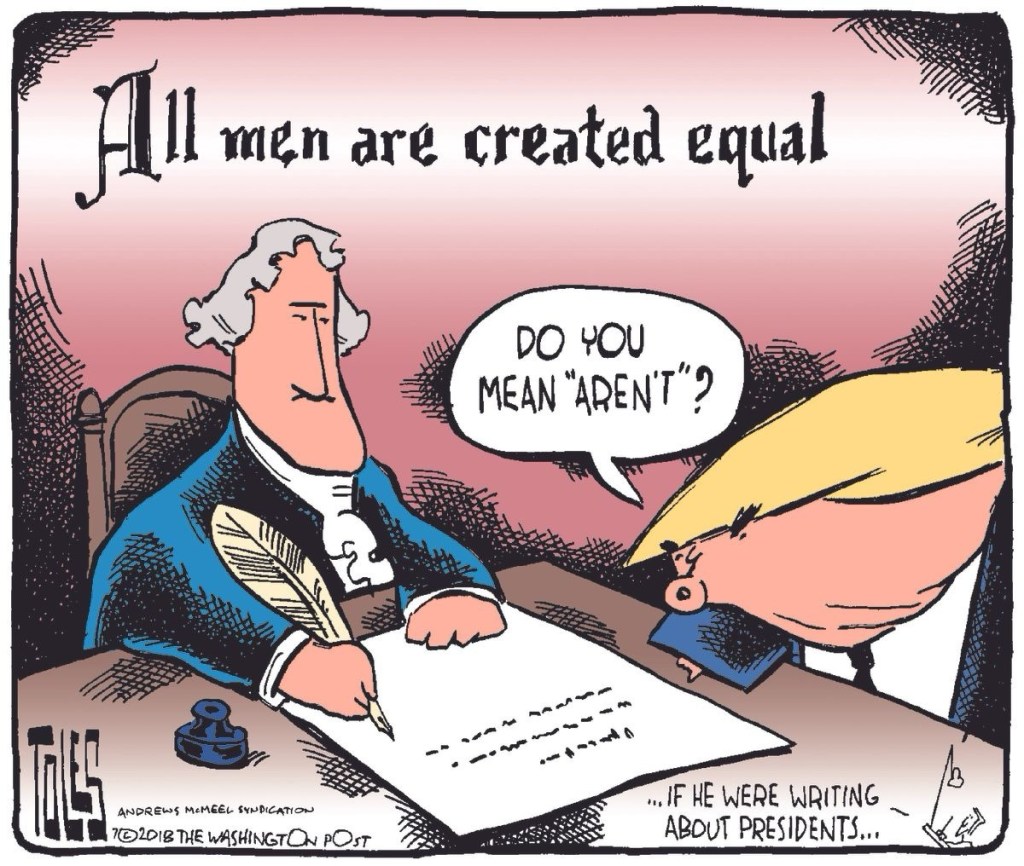
Many Americans struggle to distinguish between the Declaration of Independence and the U.S. Constitution. This confusion is common, even among public figures, and highlights a broader issue with civic education. The Declaration of Independence, adopted on July 4, 1776, was essentially a “divorce decree” from Great Britain. It laid out grievances against King George III and asserted the colonies’ right to separate. It is a fiery, revolutionary document focused on breaking political ties, not forming a government.
The Constitution, on the other hand, was adopted over a decade later, in 1787. It serves as the supreme law of the land, establishing the structure, powers, and limits of the federal government. It replaced the Articles of Confederation and is the foundation for American law and governance.
Donald Trump once referred to the Declaration of Independence as a document of “love and unity,” a striking mischaracterization. His comment illustrates the misconception that the Declaration was about building internal harmony rather than severing colonial ties. In reality, the Declaration was born of frustration, conflict, and rebellion. Understanding the distinction between these two founding documents is essential for grasping how the U.S. came to exist and how it is supposed to function. Confusing the two distorts the country’s origin story.
 Esoteric Meandering Shouting Into the Void