Dwain Northey (Gen X)
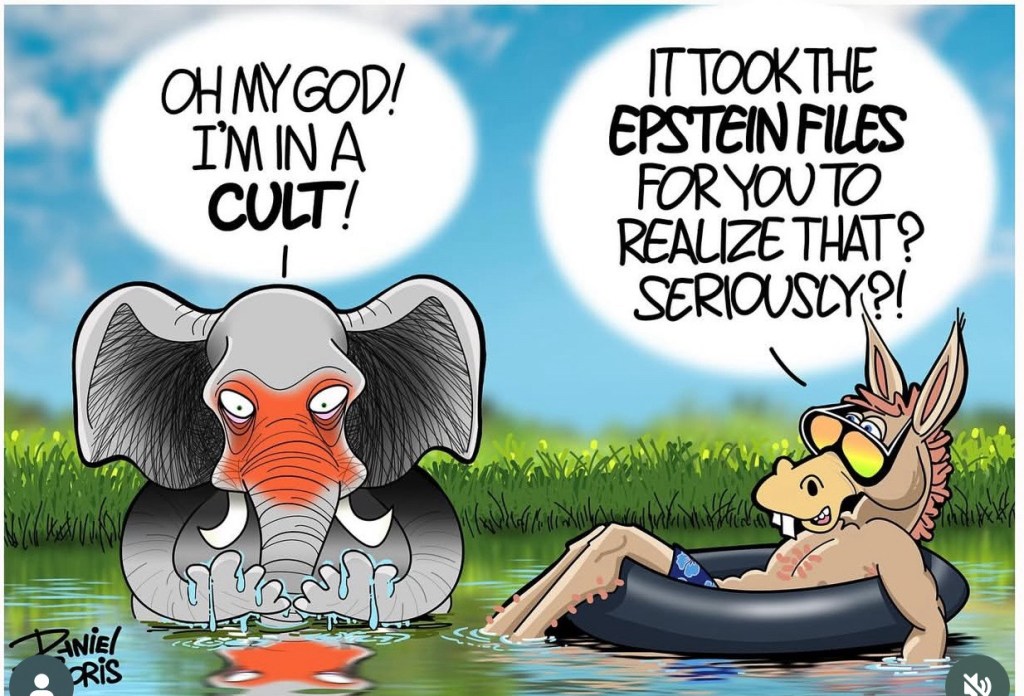
Describing the current iteration of the Republican Party as a “cult” is a contentious but increasingly common perspective among political analysts and psychologists. This view stems from the party’s strong allegiance to former President Donald Trump, often at the expense of traditional conservative principles or empirical truth. Cult-like characteristics—such as unwavering loyalty to a central figure, rejection of external criticism, and the promotion of alternate realities—have become more evident since Trump’s rise.
A defining example is the Republican Party’s response to the 2020 presidential election. Despite numerous court rulings, audits, and investigations affirming Joe Biden’s victory, a significant portion of the party continues to push the false narrative that the election was “stolen.” This widespread denial of reality, reinforced by Trump and echoed by GOP leaders, mirrors the kind of reality distortion often found in cults.
Additionally, Republican figures who dissent—such as Liz Cheney or Mitt Romney—have faced censure, exile from leadership, or primary challenges, suggesting that loyalty to Trump supersedes ideological consistency or factual accuracy. Cheney’s removal from her leadership role for criticizing Trump’s role in the January 6 Capitol riot illustrates this point clearly.
Furthermore, Republican-led state legislatures have passed laws restricting access to voting, often justified by unfounded claims of voter fraud—another example of how conspiratorial thinking has supplanted policy-based debate. These patterns—devotion to a leader, demonization of dissent, and departure from objective truth—support the argument that the GOP, in its current form, displays cult-like behavior.
 Esoteric Meandering Shouting Into the Void