Dwain Northey (Gen X)
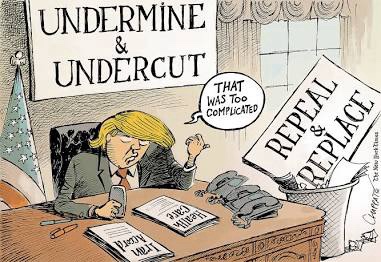
In the grand theater of American politics, there’s a curious double standard that plays out whenever executive orders are involved. If a Democratic president dares to sign an executive order, the right immediately cries “Tyranny!”—as though the ink on the paper itself threatens to dismantle the Constitution, set the Capitol aflame, and personally confiscate every backyard barbecue grill in the country. The talking heads on conservative media go into overdrive, declaring that this single signature marks the end of American freedom as we know it. Suddenly, it’s all about “overreach,” “dictatorship,” and “unelected power grabs,” even though, by definition, the president is… elected.
Now, contrast this with the reaction when a Republican president signs an executive order. In that case, it’s not tyranny—it’s “strong leadership.” It’s not “executive overreach”—it’s “cutting through Washington red tape.” And it’s certainly not something to challenge in court—no, no—this is the kind of decisive action that should be instantly enshrined as permanent law, preferably written into the Constitution in gold ink with a bald eagle standing guard. Suddenly, the same folks who once fretted about “presidents behaving like kings” are applauding like it’s the Super Bowl halftime show.
This hypocrisy isn’t accidental—it’s baked into the political playbook. Republicans have spent decades framing themselves as defenders of liberty while conveniently overlooking that executive orders are used by every president, regardless of party, and have been since George Washington. The real issue isn’t the executive orders themselves—it’s who’s holding the pen. If it’s their guy, they trust the pen as a divine instrument of justice. If it’s the other party’s guy, that pen might as well be a dagger aimed at the heart of the republic.
It gets even more absurd when you look at the content of these orders. A Democratic president issues an EO to protect the environment? That’s “job-killing socialist nonsense.” A Republican president issues one to loosen environmental protections? Well, that’s “restoring American competitiveness.” A Democrat signs an order expanding healthcare coverage? “Government takeover of medicine!” A Republican signs one cutting healthcare access? “Returning healthcare decisions to the people.”
In the end, this isn’t about executive power—it’s about partisan power. The very same act—signing an executive order—magically transforms from tyranny to heroism depending entirely on the political jersey of the signer. And the audience, primed by decades of partisan conditioning, cheers or boos on cue, never noticing that the rules of the game change not by principle, but by party.
Donald Trump’s presidency has offered a masterclass in how to stretch the limits of executive orders for personal and political gain. While every president uses EOs, Trump wielded them as a primary tool of governance, often bypassing Congress entirely—not because gridlock made it necessary, but because compromise was never in his vocabulary. From attempting sweeping immigration bans without legislative backing, to unilaterally diverting military funds to build his border wall after Congress explicitly refused, Trump treated executive orders as personal decrees rather than constitutional instruments.
Perhaps most telling was his tendency to announce major policy changes via EO or memorandum with little forethought, often catching his own agencies by surprise. Environmental protections were gutted, civil rights safeguards were rolled back, and foreign policy decisions were made in tweet-to-EO pipelines. Each time, the GOP—once champions of “limited government”—remained silent or even applauded.
The same party that railed against “Obama’s abuse” of executive authority suddenly found “broad presidential powers” to be not only acceptable, but admirable. This wasn’t principle; it was pure partisanship. As long as the pen was in Trump’s hand, the checks and balances they once demanded were left in the drawer, unused and forgotten.
 Esoteric Meandering Shouting Into the Void