Dwain Northey (Gen X)
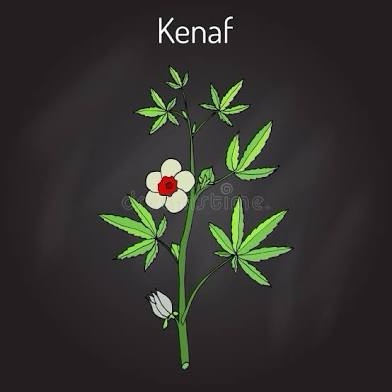
When we talk about saving the planet, two names dominate the conversation: hemp and bamboo. They’ve been crowned the poster children of sustainability, rediscovered as miracle materials to replace the destructive habits of the fossil fuel and deforestation era. Hemp gives us textiles, bioplastics, and even building materials like hempcrete. Bamboo builds homes, furniture, and even clothing, growing back faster than we can cut it. But the green revolution needs more than two heroes. There is a third pillar, a largely overlooked plant that could balance the equation and push us closer to true environmental reinvention: kenaf.
Most people have never heard of kenaf. That’s the tragedy. While it sits in obscurity, we are watching forests disappear, plastic choke oceans, and climate chaos accelerate. Yet kenaf could stand shoulder to shoulder with hemp and bamboo as a renewable powerhouse. A member of the hibiscus family, kenaf is a tall, fibrous plant that grows with astonishing speed—up to 18 feet in just a few months. While we’re waiting 20 years for a tree to be harvested for paper, kenaf completes its life cycle in a single season. Imagine the pressure it could take off the world’s forests if we simply replaced tree pulp with kenaf pulp for paper and packaging.
But it doesn’t stop at paper. Kenaf fibers are strong enough to replace synthetic composites in cars, furniture, and plastics. Carmakers have already experimented with kenaf panels to reduce weight and environmental impact. Its inner core is so absorbent that it can clean up oil spills, serve as eco-friendly animal bedding, or replace the toxic fillers used in many industrial processes. In short, kenaf is not a one-trick crop—it’s an all-purpose workhorse, quietly capable of transforming multiple industries at once.
And here’s the kicker: kenaf is not picky. Unlike bamboo, which prefers tropical and subtropical zones, or hemp, which still carries the baggage of outdated cannabis laws, kenaf can grow almost anywhere cotton does. From the southern United States to India, Africa, and Latin America, kenaf can be seeded, grown, and harvested in a single warm season. For farmers, this means a new cash crop. For humanity, it means a carbon sink, a plastic alternative, and a forest saver—all rolled into one.
If hemp is the rebel and bamboo is the showman, kenaf is the unsung laborer—the one quietly doing the job nobody notices until it’s gone. And right now, what the green revolution desperately needs is not just flashy promises but reliable, scalable, renewable materials. Kenaf offers exactly that.
The truth is, we don’t have the luxury of ignoring plants like kenaf any longer. To reinvent our relationship with the environment, to move beyond slogans and toward actual solutions, we need to elevate this “forgotten” crop into the spotlight. Hemp, bamboo, and kenaf: three pillars of a new, renewable world. That’s not just agriculture—it’s survival.
 Esoteric Meandering Shouting Into the Void