Dwain Northey (Gen X)
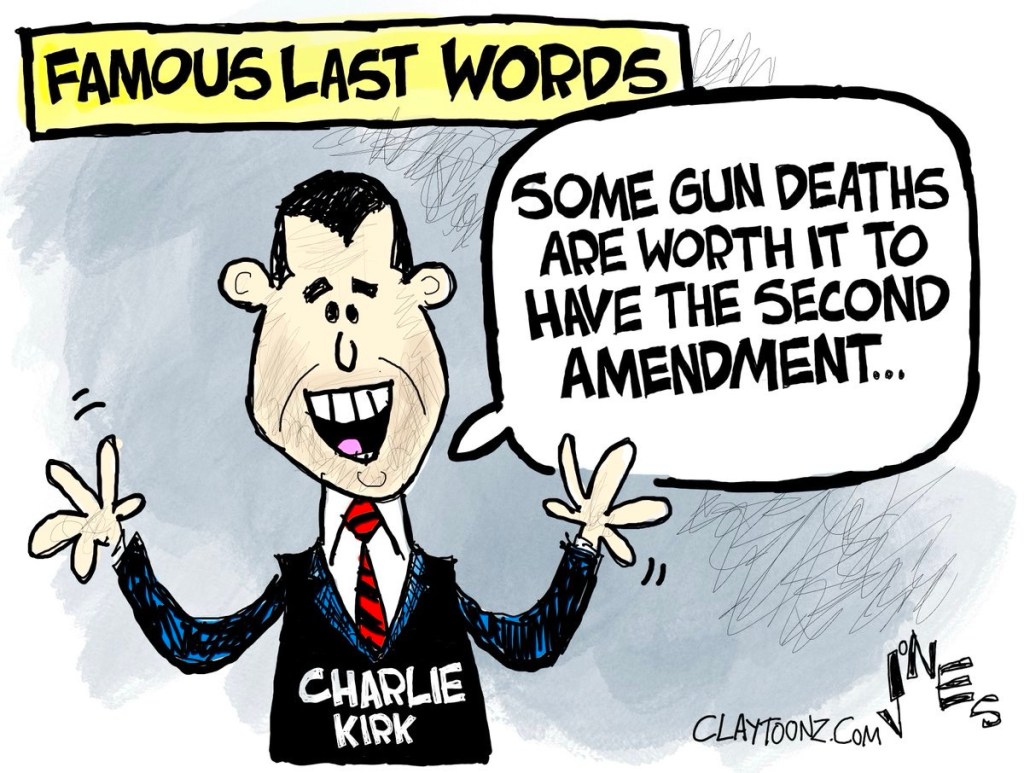
Hopefully, this is the last time I write about Charlie Kirk, because frankly, the man was a self-inflicted wound on American politics even when he was alive. But here we are, wading into the swamp of irony that his death has created. What fascinates me isn’t so much the tragedy itself—because no one in their right mind celebrates violence—but the way his supporters and the Republican establishment are about to contort themselves into rhetorical yoga poses to explain away the uncomfortable truth: his killer wasn’t some foreign “other,” wasn’t a Democrat, wasn’t Antifa, wasn’t a migrant caravan member, and wasn’t some imaginary shadow government operative. No, the shooter has been identified as the very thing Kirk and his movement spent years glorifying: a white, Mormon, Christian, Republican, Trump-supporting member of their own ideological cult.
Now, the problem for the GOP spin machine is obvious. Their entire political strategy depends on fearmongering about outsiders. They thrive on the narrative that danger always comes from “out there”—from immigrants, from urban crime, from Democrats supposedly grooming your children. If that scaffolding collapses, they’re left staring at a much harder truth: the rot is internal. The monster isn’t at the gate. It’s sitting comfortably in the pew, voting Republican, listening to the same podcasts, and parroting the same talking points. But acknowledging that? That’s poison to their brand.
So what happens now? You can already see the test balloons going up. They’ll try the lone wolf excuse, the old “mentally ill individual” dodge, as if political radicalization and violent rhetoric had nothing to do with it. They’ll paint the shooter as some rare anomaly, when in reality, this is the logical endpoint of a culture marinated in paranoia, rage, and the belief that violence is a form of patriotism. What’s more ironic is that Kirk himself fed into this toxic environment. He wasn’t shy about framing politics as a battle of survival, where compromise was weakness and empathy was treason.
But his death now forces his allies to reckon with the monster they’ve nurtured. The killer was not someone they can easily “otherize.” You can’t send ICE after him. You can’t claim it was an Islamist terrorist. You can’t point to a “woke” liberal arts college and say, “See, this is what happens.” The killer was one of their own. He belonged to the tribe. He would’ve fit in at a Turning Point USA conference without raising eyebrows. That fact alone should send chills through the GOP establishment.
Yet, I don’t expect self-reflection. What I expect is spin. They’ll bend reality until it breaks, because the alternative—admitting that the violence is homegrown and rooted in their own movement—would require honesty they don’t possess. They’ll gaslight their base into believing something else, anything else, because to tell the truth would be to admit that the problem isn’t “out there,” it’s in here.
So yes, hopefully this is the last time I write about Charlie Kirk. But his death, more than his life, exposes the hypocrisy at the core of the modern Republican project. They created a movement obsessed with enemies. Now they must grapple with the fact that one of those enemies came from within their own ranks.
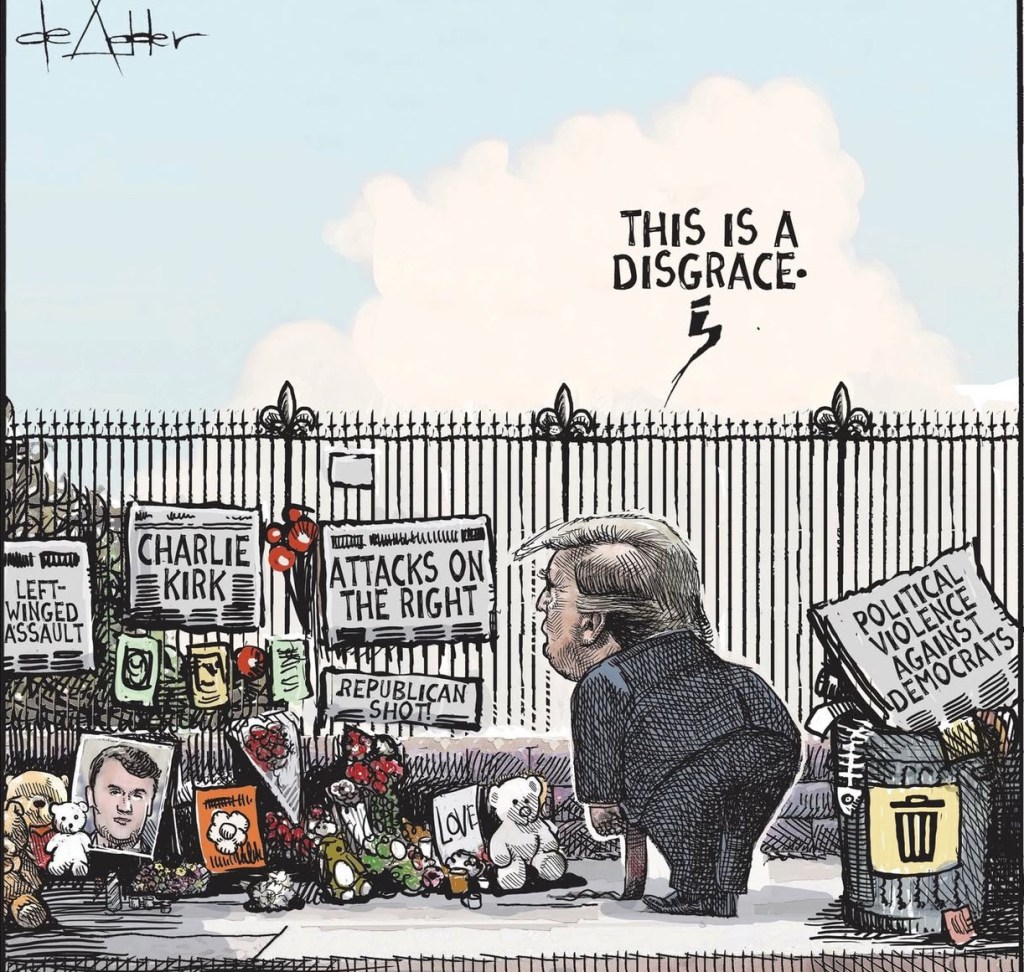
 Esoteric Meandering Shouting Into the Void