Dwain Northey (Gen X)
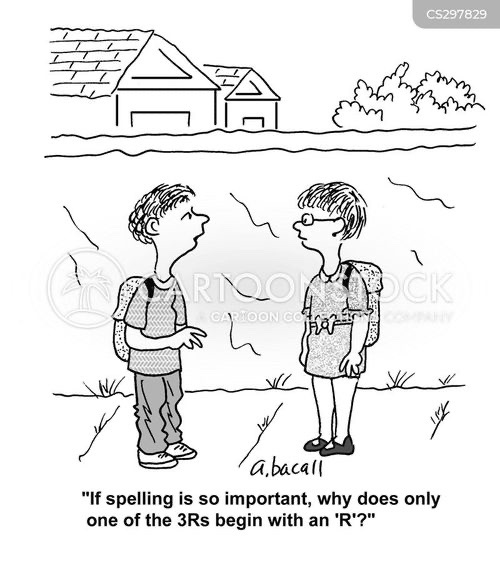
The so-called “three R’s” of education—reading, writing, and arithmetic—have always been a bit of a farce. Only one of them actually starts with R, but we accepted the slogan as if it were some sacred truth. That linguistic sloppiness foreshadowed a much deeper flaw in our schools: a system obsessed with appearances and shortcuts rather than actual learning.
The greatest failure came with the rise of standardized testing. What was once intended as a tool to measure progress quickly became the point of education. Entire school years are now organized around bubble sheets and benchmarks. Students don’t learn to think; they learn to perform. They don’t practice analysis, debate, or synthesis; they practice regurgitation. Education has been reduced to a performance of obedience rather than an exercise in discovery.
This wasn’t some natural drift—it was engineered. No Child Left Behind in the early 2000s shackled schools to testing, punishing those who didn’t “make the grade.” Race to the Top in the Obama years doubled down, tying teacher evaluations and school funding to test scores. What was once a diagnostic became the entire definition of success. And so, under pressure from state boards and administrators, teachers were forced to “teach the test,” trimming away art, civics, and critical inquiry in favor of test prep drills.
The fallout is obvious. We’ve raised generations of students who can answer what but not why. They can plug formulas but cannot apply them to real-world problems. They can memorize facts, but not evaluate sources. And in an era of conspiracy theories and information warfare, that’s not just an academic weakness—it’s a threat to democracy itself.
Teachers, meanwhile, have been stripped of autonomy and creativity. They are judged by their students’ test scores, not by their ability to foster curiosity or ignite a love of learning. Many of the best leave the profession out of frustration, while those who remain are trapped in a system that treats them as test administrators rather than mentors.
So how do we fix it? First, we need to rethink assessment entirely. Testing has its place, but it should measure growth and understanding, not dictate the curriculum. Project-based learning, essays, debates, and real-world problem-solving give a far clearer picture of student ability than multiple-choice guessing games ever could.
Second, we must restore teacher autonomy. Teachers are professionals, not robots. Trusting them to craft lessons that spark curiosity and adapt to their students’ needs is the surest path to genuine learning.
Third, we need to emphasize civic and critical education. In an age of misinformation, the most important skill isn’t memorizing a formula—it’s learning to ask, Is this true? Who benefits if I believe it? How do I know what I know?
Finally, we must broaden our definition of success. Education isn’t about producing test scores—it’s about producing citizens capable of reason, creativity, and empathy. If we want a healthy democracy, we have to nurture those qualities, not measure them away.
The irony is that the “three R’s” left out the one that matters most: reason. Until we restore it, we’ll keep producing graduates who can take a test but can’t think their way out of a con. And history has already shown us how dangerous that is.
 Esoteric Meandering Shouting Into the Void