Dwain Northey (Gen X)
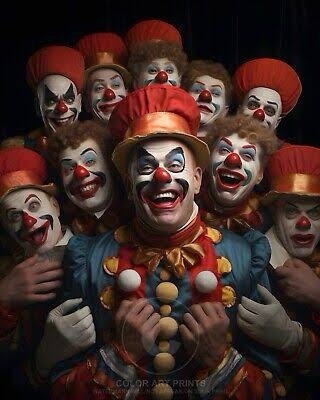
There’s something undeniably terrifying about clowns. Not the Hollywood monster kind with razor teeth and red balloons—though, sure, Pennywise deserves an honorable mention—but the real ones. The kind with smeared greasepaint, a laugh that lasts a beat too long, and eyes that say, I know where the bodies are buried.
Clowns are the apex predators of the uncanny valley. They exist in that liminal space between laughter and nightmare, where the human face is painted into something that shouldn’t exist but somehow does. Vampires and werewolves? Those are safe. They’re myths, costumes, characters we can turn off when the porch lights come on. But clowns? Clowns walk among us. They have day jobs. They drive minivans. They shop at Target—sometimes in full makeup.
Historically, clowns weren’t meant to be funny. Court jesters mocked kings and paid for their punchlines in blood. Even the circus variety—the bright costumes, the floppy shoes, the squeaky horns—carry an air of something ancient and dark, like a ritual gone wrong that we just kept doing because laughter was easier than screaming.
Every few years, society remembers the truth. The 1980s clown panics. John Wayne Gacy. The “killer clowns” that started popping up in random towns like demonic Pokémon. We act surprised every time, as if the evidence isn’t painted in greasepaint right in front of us: clowns are real, and they are terrifying because they mean to be.
So, when Halloween rolls around and someone shows up dressed as a vampire, fine. You smile. You offer them candy. But when the clown walks up the driveway, balloon in one hand and that painted grin stretched too wide—you freeze. Because deep down, you know that the mask isn’t covering the monster. The mask is the monster.
So yes, ghosts and ghouls may haunt our imagination. But clowns? Clowns haunt reality.
🎃 Happy Halloween. And remember—if you hear laughter behind you, don’t turn around.

 Esoteric Meandering Shouting Into the Void