Dwain Northey (Gen X)
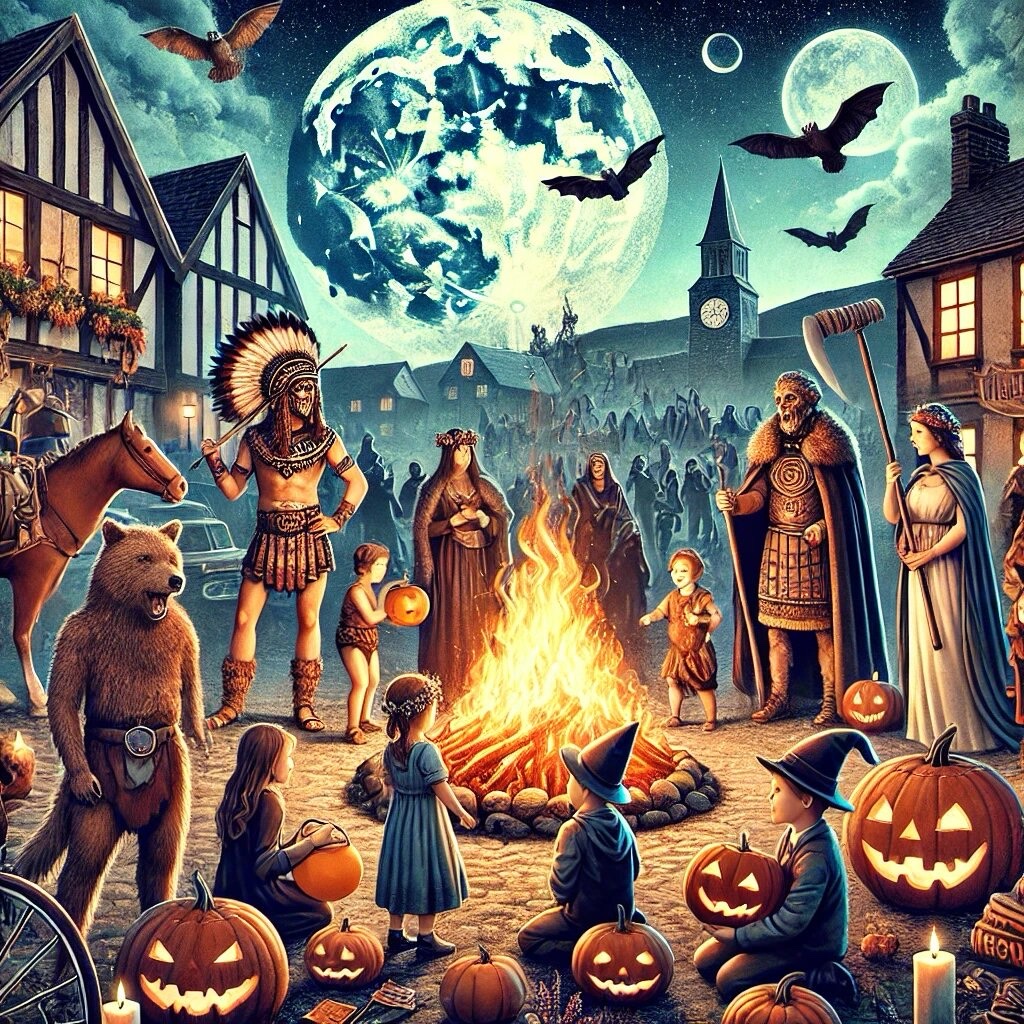
Halloween, now one of the most beloved and commercially successful holidays in the world, is a fascinating blend of ancient rituals, religious observances, and modern pop culture. Its evolution from a solemn Celtic festival to a sugar-fueled celebration of costumes and candy reflects centuries of cultural blending and social change.
From Samhain to All Hallows’ Eve
The roots of Halloween trace back over 2,000 years to the ancient Celtic festival of Samhain (pronounced sow-in), celebrated on October 31. For the Celts of Ireland, Scotland, and parts of northern Europe, Samhain marked the end of the harvest season and the beginning of winter—a time associated with death and the supernatural. They believed that on this night, the veil between the worlds of the living and the dead was at its thinnest, allowing spirits to roam freely. To ward off or appease these spirits, people lit bonfires, wore disguises, and offered food and drink.
When Christianity spread across Europe, the Church sought to replace pagan festivals with Christian observances. In the 9th century, Pope Gregory IV established All Saints’ Day on November 1, and the evening before became known as All Hallows’ Eve, which eventually evolved linguistically into Halloween. Though the Church attempted to sanctify the day, many pagan customs—such as dressing in costumes and lighting fires—persisted, blending old beliefs with new religious meanings.
From Mischief to “Trick-or-Treat”
In medieval Europe, a custom known as “souling” developed, particularly in England and Ireland. On All Souls’ Day (November 2), the poor would go door to door, offering to pray for the souls of the household’s dead in exchange for “soul cakes,” small round pastries marked with a cross. This early form of door-to-door begging for food can be seen as a precursor to modern trick-or-treating.
Similarly, in Scotland and Ireland, there was the practice of “guising”, where children dressed in costumes and performed songs, recited poems, or told jokes in exchange for small gifts or treats. These customs were carried to North America in the 19th century by Irish and Scottish immigrants, merging with other fall festivals and neighborhood games to form the foundation of Halloween as we know it.
The Rise of Candy Culture
However, the modern custom of giving candy specifically is a relatively recent development. In the early 20th century, children in the United States might have received coins, nuts, fruits, or small toys when they went door to door. It wasn’t until after World War II, when sugar rationing ended and mass-produced sweets became affordable, that candy became the treat of choice.
By the 1950s, as suburban neighborhoods flourished and Halloween became a safe, community-oriented holiday, candy manufacturers recognized a marketing opportunity. Companies like Hershey, Mars, and Nestlé began promoting small, individually wrapped candies as the perfect trick-or-treat items. The simplicity and hygiene of pre-packaged candy made it the ideal choice for parents, and by the 1970s, handing out candy had become the dominant Halloween tradition.
A Holiday of Ancient Echoes and Modern Delights
Today, Halloween is a dazzling mix of ancient spirituality, immigrant folklore, and capitalist ingenuity. While its origins lie in rituals meant to ward off spirits and honor the dead, the modern celebration focuses on fun, imagination, and of course, candy. Each “fun-size” chocolate bar handed out on October 31 carries within it a piece of that long, layered history—from Celtic bonfires to medieval soul cakes to mid-century candy wrappers.
In essence, Halloween is a cultural chameleon: what began as a night of fear and reverence has transformed into one of joy, sugar, and shared community spirit—proof that traditions, like ghosts, have a way of coming back in new forms.
 Esoteric Meandering Shouting Into the Void