Dwain Northey (Gen X)
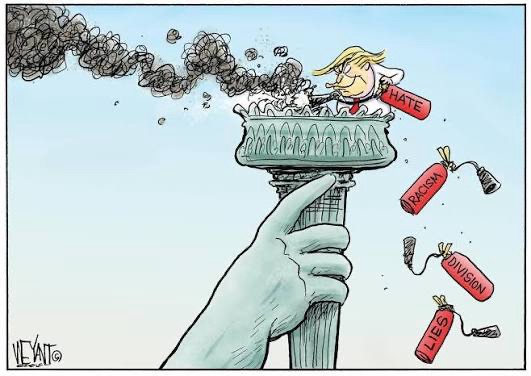
It started, as all great wars do, with a tweet—or maybe twelve. DJ T, the man who never met a mirror he didn’t salute or a critic he didn’t declare an enemy of the state, has taken his lifelong battle against anyone who ever said anything mean about him and expanded it to include the entire population of the United States. That’s right. Every last one of us. From toddlers to teachers, from veterans to vegans—congratulations, America, you’re all part of the resistance now.
At first, it seemed like garden-variety pettiness: the name-calling, the tantrums, the “I alone can fix it” slogans delivered with the subtlety of a foghorn in a library. But then the pettiness metastasized. Suddenly, the man wasn’t just mad at reporters or comedians or the guy who made fun of his hands—he was mad at the country itself. Every flaw became an insult. Every question, an act of treason. Every mirror that didn’t flatter him enough, an accomplice in the great American betrayal.
And so began his war—not of armies, but of ego. A scorched-earth campaign where the earth happened to be… well, ours. He bombed the credibility of institutions, shelled the idea of truth, and carpet-bombed the concept of humility. He even took a wrecking ball—literally—to the White House, turning what was once “The People’s House” into the world’s tackiest metaphor: a gilded ballroom, complete with chandeliers bright enough to blind the ghosts of Lincoln and Roosevelt as they wander, wondering what they did to deserve this afterlife.
Meanwhile, his rallies—those endless, sweaty, self-congratulatory episodes of mass therapy—became his battlefronts. He ranted not against foreign powers or existential threats, but against us: Americans who dared to think, read, question, or worse, laugh. He told his followers that America was a disaster, a hellhole, a disgrace—and somehow, the only way to save it was to make it more like him.
And the saddest part? Some believed it. They mistook cruelty for courage and confusion for conviction. They clapped as he insulted their country, their cities, their neighbors. They didn’t realize they were cheering the general who had declared war on his own army.
Now the White House looks less like a seat of democracy and more like the world’s most dangerous wedding venue. The press briefings have turned into hostage videos. The flag still waves outside, but it feels tired—like it’s seen too much nonsense and would very much like a nap.
The irony, of course, is that DJ T will never win this war. You can’t conquer a people you claim to lead. You can’t love America while loathing Americans. You can’t make a country great while calling it garbage every other sentence. But he’ll keep fighting anyway, shouting into the marble halls, angry at the ghosts, the voters, the journalists, the comedians, the wind.
Because in the end, his true enemy isn’t any of us—it’s the truth.
And that’s one war he’ll never win, no matter how many ballrooms he builds on top of the rubble.
Would you like me to punch this up a little more—more biting sarcasm, darker humor, or more emotional melancholy?
 Esoteric Meandering Shouting Into the Void