Dwain Northey (Gen X)
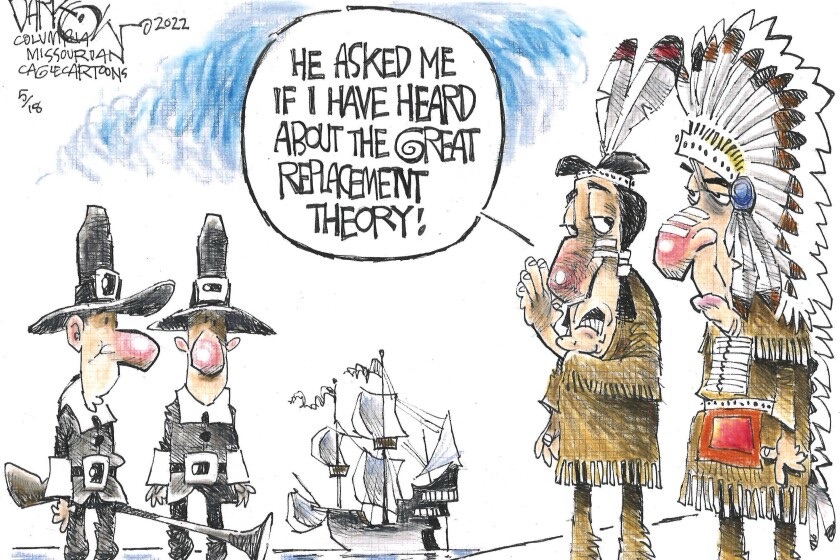
Imagine, for a reckless moment, that Christopher Columbus—lost, stubborn, and violently confident—looked at the shoreline in 1492 and said, “Well… this is very clearly not India.” Imagine further that instead of slapping a geographical error onto millions of people like a permanent typo, he shrugged and called the people he met what logic might suggest: Americans.
Not “Indians.” Not a placeholder name born of navigational failure. Just Americans. Because they lived here. Radical idea.
Now fast-forward a few centuries. Cue the powdered wigs, the muskets, the self-importance. The Revolutionary War breaks out, and suddenly a group of European settlers are shouting, “We’re Americans now!” Except—oops—that label is already taken. It belongs to the people who have been farming, trading, governing, worshiping, storytelling, and surviving on this land since before Europe was workshopping feudalism.
That little semantic shift would have been catastrophic—not for history, but for ego.
How do you stage a revolution built on stolen identity when the original Americans are still very much present, still very much labeled as such, and still very much excluded from your liberty-and-justice-for-all brochure? It’s hard to chant “We the People” when everyone knows exactly which people were here first—and were already called that.
By the time of the Civil War, the problem compounds. Blue and gray uniforms alike shout about defending “American values,” “American soil,” and “the American way of life.” But which Americans? The ones arguing over tariffs and slavery, or the ones who were marched off their land, renamed, reclassified, and politely erased from the national branding exercise?
Because let’s be honest: calling Indigenous people “Indians” wasn’t just a mistake. It was a convenience. A bureaucratic shrug that made it much easier to pretend the continent was vacant, unclaimed, and available for destiny manifesting. If they’d been universally known as Americans, every treaty violation, every land grab, every boarding school, every forced march would read less like expansion and more like what it was: Americans dispossessing Americans.
That’s not a great look for a nation built on mythmaking.
And imagine the modern fallout. Every chest-thumping proclamation of “real Americans” would immediately collapse under its own historical weight. You can’t cosplay as the original when the originals are right there—still American, still here, still reminding everyone that the name came before the flag.
So perhaps that’s why the misnaming stuck. Because history, like branding, is easier when you control the labels. “Indian” allowed later arrivals to inherit the word “American” without inheriting the accountability. It turned conquest into coincidence and theft into tradition.
Had Columbus gotten the name right, the rest of American history would have had to tell the truth much sooner. And nothing terrifies a mythology-driven nation more than accurate nouns.
 Esoteric Meandering Shouting Into the Void