Dwain Northey (Gen X)
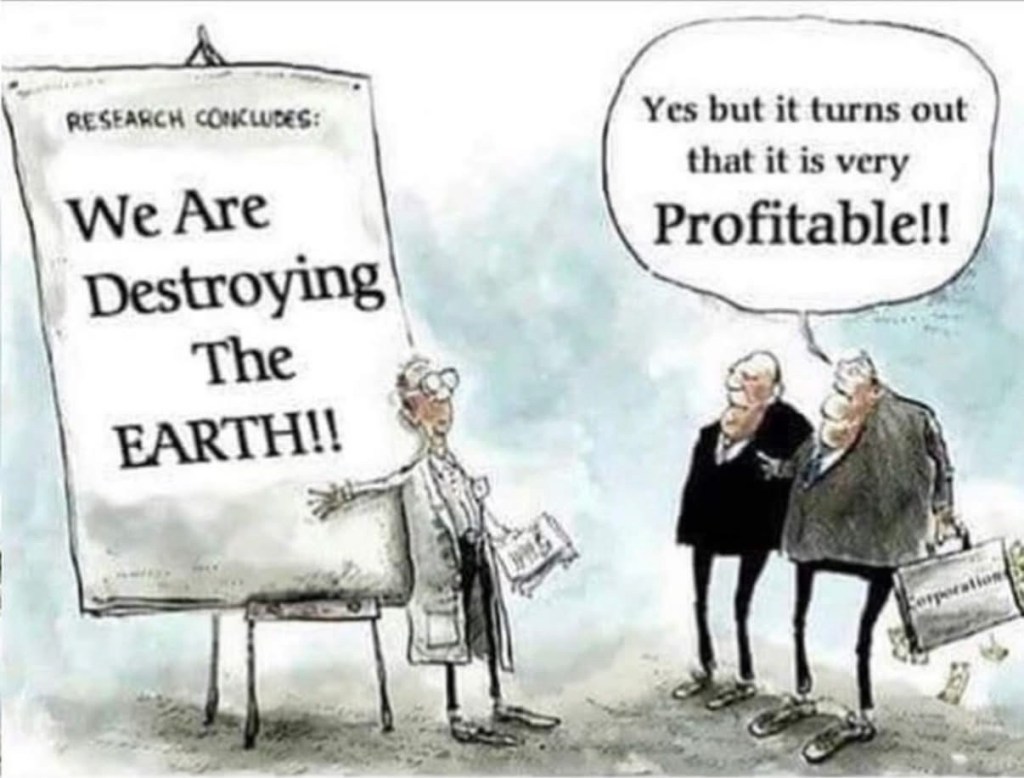
At some point—probably right around the time the last oil well wheezes like a 200-year-old asthmatic—we’re going to have a collective “oh” moment. Not an aha, mind you. An oh. The kind you make when you realize the thing you’ve been defending with religious fervor was always finite, always dirty, and always headed toward the same fate as rotary phones and Blockbuster memberships.
Green energy, meanwhile, has been standing there this whole time, awkwardly raising its hand like the quiet kid in class saying, “Um… I can do this forever.” The sun keeps shining. The wind keeps blowing. Water keeps flowing. None of these require drilling holes in the planet, blowing up ecosystems, or pretending that quarterly profits are more important than breathable air. And yet, somehow, renewable energy is treated like a risky new fad—right up there with avocado toast and empathy.
The fossil fuel industry, on the other hand, is marketed as eternal. As if oil magically regenerates when you chant “energy independence” loud enough. We act shocked—shocked!—every time prices spike, pipelines fail, or some oil executive quietly admits that, yes, of course they know this stuff is running out, but could we please not talk about that until after the next shareholder meeting?
So the question becomes: who finally pulls the emergency brake on this generational denial? Is it Gen Z, already side-eyeing the mess they’ve inherited while being told they’re “too idealistic”? Or Gen Alpha, who may grow up genuinely confused as to why adults once powered civilization by lighting ancient dead plants on fire and then arguing about it on cable news?
Because let’s be honest: a large chunk of those who came of age in the late 20th century are still emotionally invested in the idea that change itself is the problem. They were promised infinite growth on a finite planet and took that deal very personally. Suggest solar panels, and they hear an attack on their pickup truck. Mention climate reality, and suddenly it’s 1978 and someone is yelling about gas lines and freedom.
What makes this all especially rich is that green energy isn’t just about saving polar bears or hugging trees—it’s about survival, economics, and stability. It’s about not handing future generations a bill labeled “Good luck.” Renewables are cheaper, cleaner, and—here’s the key word—renewable. Fossil fuels are not. That’s not politics; that’s arithmetic.
So yes, eventually the realization will come. It always does. History shows us that progress rarely happens because the old guard suddenly has an epiphany; it happens because newer generations refuse to keep pretending the emperor’s oil barrel is full. Whether it’s Gen Z or Gen Alpha who finally says, “No, actually, this is ridiculous,” remains to be seen.
But one thing is certain: the sun will still be shining long after the last oil executive insists that green energy “just isn’t practical yet.” And when that day comes, the rest of us may finally stop asking when we’ll realize green energy can save us—and start wondering why it took us so long to admit what was obvious all along.
 Esoteric Meandering Shouting Into the Void