Dwain Northey (Gen X)
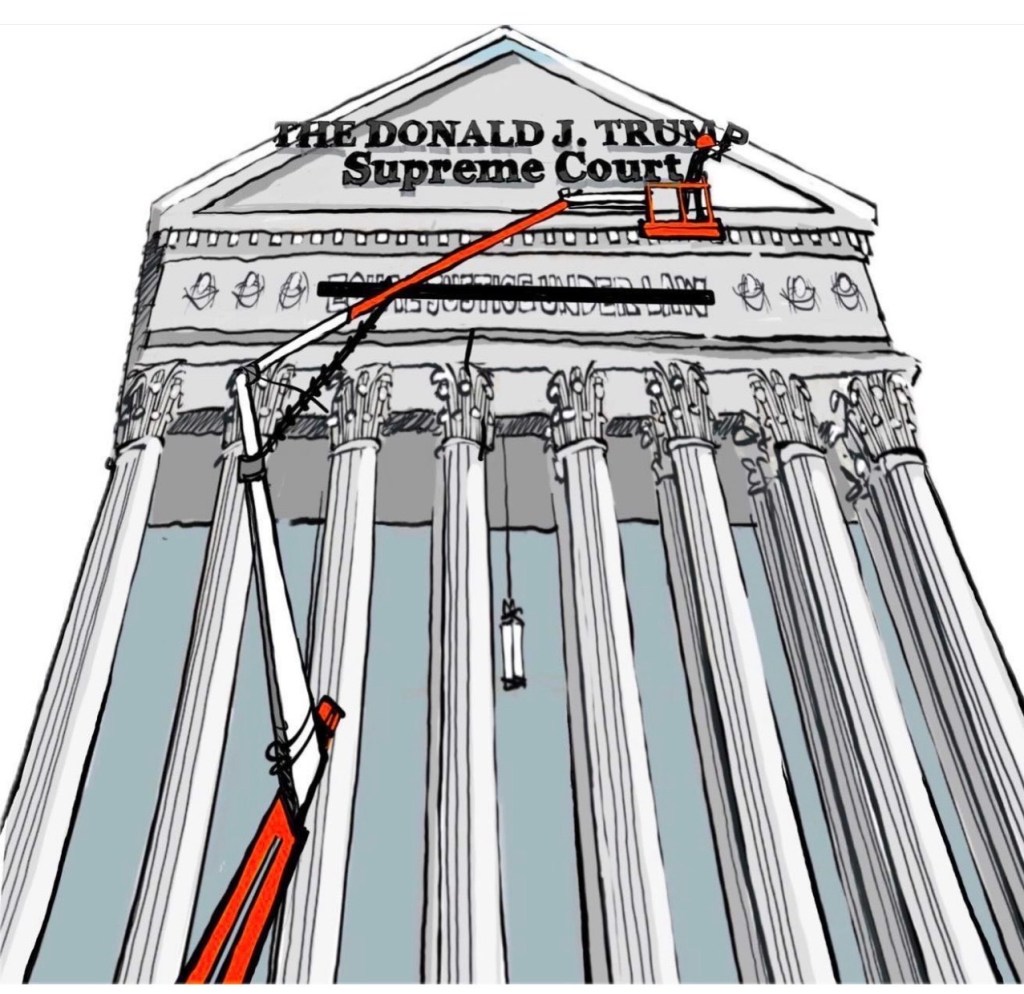
2025 ended the way all great American eras do: with a Sharpie, a wrecking ball, and a promise that technically came true if you squint hard enough and abandon context. Donald, never one to confuse humility with leadership, decided that history simply wasn’t spelling his name loudly enough. So naturally, the Kennedy Center—once a place for art, culture, and people capable of sustained thought—received a tasteful rebrand. Nothing honors JFK’s legacy of public service quite like turning a national cultural institution into a vanity plaque.
Not content with renaming the arts, Donald turned his attention to the White House itself. The East Wing, that dull old symbol of governance, continuity, and public service, was torn down—not for something frivolous, mind you, but for a grand ballroom. Because nothing says House of the People like a gilded hall designed for chandeliers, donor dinners, and the occasional self-congratulatory slow clap. Democracy, after all, works best with marble floors and a dress code.
And looming just beyond the ballroom plans is the pièce de résistance: Donald’s proposed Triumphal Triangle Arch—which, we are assured, is absolutely not inspired by emperors. Any resemblance to Napoleon’s Arc de Triomphe, constructed during the Napoleonic Wars as a monument to conquest and ego, is purely coincidental. This is different. This arch celebrates… something else. Freedom. Strength. Ratings. Definitely not the subtle visual language of a man who sees himself as history’s misunderstood strongman.
Then there were the Epstein files. Remember those? The ones Donald swore—hand on heart, fingers crossed, truth social post pending—that he would release in the name of transparency. And he did. Technically. Page after page drenched in black ink, redacted to the point that future historians may classify them as minimalist poetry. Somewhere beneath the ink lie facts, but what we’re allowed to see boils down to two orphaned words floating in an abyss of censorship. Transparency, it turns out, means you can see the paper, just not the truth.
Now it’s 2026. The midterms hover on the horizon like an inconvenient reminder that elections still happen. Odds are the House will change hands, and the Senate might follow if voters remain stubbornly attached to consequences. Which gives the current Republican House and Senate about twelve months to do what they do best: legislate like a group that knows the clock is ticking and the receipts are coming.
Expect a mad dash of confirmations, deregulations, and ideological wish-list items jammed through under the banner of “the will of the people,” even as polling suggests the people are quietly Googling what did they just pass? It’s governance as a smash-and-grab, dressed up as patriotism.
And when the gavels finally change hands, today’s architects of excess will insist they were victims—of the media, of history, of time itself. They will say they were building legacies.
They were. Just not the kind you need a ballroom, a renamed theater, and an emperor’s arch to explain.
 Esoteric Meandering Shouting Into the Void