Dwain Northey (Gen X)
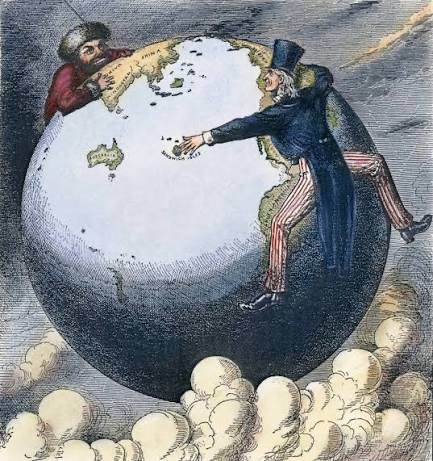
Once upon a time—say, roughly between powdered wigs and cholera—the ruling philosophy of international relations was wonderfully simple: might makes right. If you had an army, a navy, and the self-confidence of a man who’d never been told “no,” congratulations, you owned half the planet. This was imperialism, a system built on the elegant logic that brown land full of resources clearly existed for white men with flags to “discover.” 🔱
The 18th and 19th centuries were the golden age of this thinking. Empires strutted around the globe like toddlers in antique uniforms, planting flags, renaming rivers, and announcing to millions of people, “Good news! You now belong to us.” Britain perfected it, France romanticized it, Spain looted it, and everyone else took notes. Morality was optional; cannons were not.
Then came the 20th century, which—after two world wars, tens of millions of dead, and a near-total collapse of civilization—collectively decided that maybe, just maybe, imperialism was a bad idea. World War I showed us what happens when empires trip over their own egos. World War II finished the lesson with an exclamation point made of mushroom clouds. The takeaway was supposed to be clear: national sovereignty matters, conquest is bad, and no one gets to redraw the map just because they feel nostalgic for empire.
We even wrote it down! The UN Charter. Self-determination. Decolonization. A whole postwar order built on the radical notion that countries shouldn’t be treated like Monopoly properties. For a while, it almost worked. Former colonies became nations. Borders stabilized. “Imperial ambition” became something you admitted only after three drinks and a tenure appointment.
And then—enter stage right—Donald the Madman Trump, strutting into history like a man who skimmed the 19th century and thought, Yes, this. Let’s do this again. Why learn from history when you can cosplay it? Why respect international law when you can bully it? Why cooperate when you can dominate?
To Trump and his global acolytes, the post–World War II order isn’t a hard-won framework that prevented another global catastrophe—it’s an inconvenience. Treaties are for suckers. Alliances are protection rackets. Sovereignty is conditional, apparently, on whether Dear Leader finds your country useful, annoying, or rich in something he wants. Oil? Minerals? Strategic location? Congratulations, you’re suddenly in his line of sight, justified by some half-baked excuse scribbled on a napkin and shouted at a rally.
This isn’t strength; it’s imperial nostalgia with a Wi-Fi connection. It’s the belief that loudness equals legitimacy and that power excuses everything. It’s the same old imperial logic, just updated for cable news: if we can do it, then we should, and if anyone objects, they’re weak, ungrateful, or enemies.
What’s most impressive—if horrifying—is how casually this regression is embraced. As if the last century never happened. As if Verdun, Hiroshima, decolonization movements, and international law were just a rough draft we can throw away because one man misses the thrill of dominance. History, in this worldview, isn’t a warning—it’s a menu.
So here we are, being dragged backward toward an era the world bled itself dry to escape. The age of empires, revived not by kings or emperors, but by a man who thinks diplomacy is a zero-sum game and governance is personal branding. The 21st century was supposed to be about cooperation, shared challenges, and collective survival. Instead, we’re being offered a rerun of imperialism—now with more bravado, less shame, and absolutely no understanding of how catastrophically it ended last time.
But sure. Let’s give “might makes right” another try. What could possibly go wrong?

 Esoteric Meandering Shouting Into the Void