Dwain Northey (Gen X)
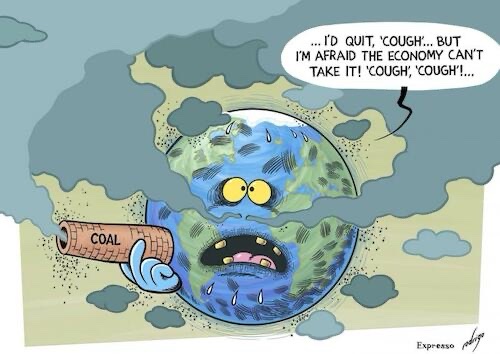
Ah yes, welcome to the bold new era of governance where numbers are optional, science is more of a vibe than a discipline, and “lives saved” are apparently an accounting nuisance best left off the spreadsheet. This administration, in a stunning act of intellectual minimalism, has decided that when it comes to EPA standards on particulate matter, counting the people who don’t die is just… extra. And really, who has time for extras?
Because let’s be honest: particulate matter is tiny. Microscopic, even. And if something is too small to see, it’s practically imaginary, right? Sure, scientists have spent decades documenting how PM2.5 worms its way into lungs, bloodstreams, and hearts, shaving years off lives with the quiet efficiency of a corporate downsizing. But unless those particles show up wearing name tags and carrying protest signs, how can we be expected to take them seriously?
The administration’s logic is refreshingly simple: if you can’t count it easily, don’t count it at all. Cancer cases that don’t happen. Asthma attacks that never occur. Heart attacks politely canceled due to cleaner air. These are what economists might call “externalities,” and what this administration calls “inconvenient.” After all, you can’t hold a press conference for a funeral that never happened. No grieving families, no dramatic visuals, no ratings. What’s the political upside?
This is governance by toddler math. If a life is saved quietly, in the privacy of someone continuing to exist, does it really count? According to the latest reasoning, no. Only deaths that occur loudly, expensively, and preferably on a tight news cycle deserve recognition. Prevention is boring. Prevention doesn’t poll well. Prevention doesn’t make donors feel powerful.
The EPA, of course, has the audacity to rely on decades of peer-reviewed research, epidemiological models, and—how dare they—actual data. Their estimates that air quality standards save tens of thousands of lives annually are based on measurable reductions in mortality and morbidity. But models involve math, and math leads to numbers, and numbers can contradict narratives. And narratives, as we know, are far more important than reality.
So the administration has heroically stepped in to say, “Enough.” Enough of this elitist obsession with evidence. Enough of assuming that public policy should be evaluated based on outcomes instead of vibes. If people don’t drop dead immediately after deregulation, clearly nothing bad is happening. Long-term health impacts are just long-term theories. Correlation is fake news. Causation is woke.
And really, where does it end? If we count lives saved by cleaner air, next thing you know we’ll be counting lives saved by seatbelts, food safety regulations, clean water standards, and—God forbid—vaccines. Before you know it, the entire premise of government acting to protect public health starts to look reasonable, and that simply won’t do.
What’s especially impressive is the philosophical commitment here. This isn’t just policy; it’s epistemology. A bold declaration that reality only exists if it aligns with quarterly goals. If science produces results that suggest regulation is good, then clearly science has become political and must be ignored. The numbers didn’t disappear—we just stopped believing in them. Very postmodern. Very chic.
In the end, the message is clear: lives saved don’t count unless they’re profitable, visible, and politically convenient. Clean air is nice, but deregulation feels freer. And freedom, apparently, means the freedom to pretend that fewer funerals are meaningless.
So breathe deep while you can. Just don’t expect anyone in charge to notice—or care—that you’re still alive because of it.
 Esoteric Meandering Shouting Into the Void