Dwain Northey (Gen X)
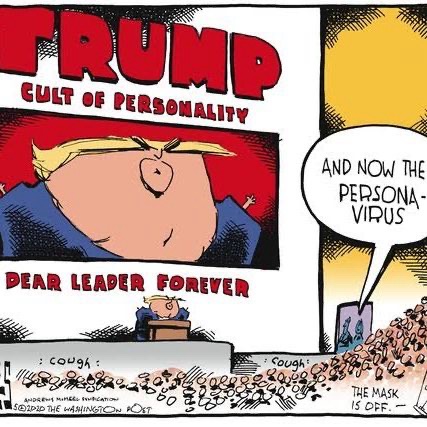
When Did Democracy Turn Into a Fan Club?
Once upon a time—back when the Constitution was still treated like a governing document and not a collectible trading card—American politics involved an almost quaint idea: you voted for someone, not forgave them for everything forever. Presidents were leaders, not messiahs; flawed humans, not action figures still sealed in ideological plastic.
Yes, Franklin Delano Roosevelt won four elections, but let’s recall a few inconvenient details. The country was clawing its way through the Great Depression and then fighting World War II. Americans weren’t swooning; they were clinging to continuity while the world was literally on fire. That wasn’t a cult of personality—it was a foxhole election.
Abraham Lincoln? Half the country hated him so much they seceded. The other half mostly tolerated him because the alternative involved dissolving the nation. If Lincoln were alive today, cable news would brand him “divisive,” and some think tank would accuse him of “weaponizing the Emancipation Proclamation.”
Teddy Roosevelt was wildly popular, charismatic, larger than life—a genuine American superhero who wrestled history into submission with his bare hands. And yet, people still voted against him. Imagine that. Liking a president and still opposing him. A concept so radical today it would cause a panel discussion meltdown.
John F. Kennedy inspired hope, youth, and idealism. He was admired, criticized, challenged—and tragically assassinated before even finishing one term. No golden statues. No “JFK can do no wrong” yard signs still haunting lawns sixty years later. Just history, complicated and unfinished.
Fast-forward to Barack Obama. Democrats liked Obama—some loved him—but when he messed up, we complained. Loudly. Liberals criticized drone strikes, immigration policy, Wall Street bailouts. There were protests. There were op-eds. There were arguments. No one insisted that reality itself had to bend to protect his ego.
Republicans, of course, had Ronald Reagan—Saint Ronnie of the Blessed Tax Cut. And yes, criticism of Reagan was often treated like heresy, but even then, Republicans eventually admitted things like “Iran-Contra was… awkward.” George W. Bush was adored until Katrina, Iraq, and reality showed up like an uninvited guest. Then—remarkably—they let him go. The party moved on.
And then came Donald Trump.
Somewhere between reality television and grievance cosplay, American politics crossed the Rubicon into full-blown personality cult. Trump didn’t just demand loyalty; he demanded submission. Facts became optional. Institutions became enemies. Criticism became treason. Losing an election became impossible by definition, because the Leader cannot fail—he can only be betrayed.
This wasn’t conservatism. It wasn’t populism. It was fandom with nuclear codes.
In this new political religion, Trump is never wrong. If he contradicts himself, it’s strategy. If he insults veterans, judges, journalists, or democracy itself, it’s “telling it like it is.” If he loses, it’s fraud. If he wins, it’s destiny. The movement does not adapt; it calcifies. Former allies become heretics. Facts become conspiracies. Loyalty tests replace policy.
This is not how democracies work. This is how strongman myths work.
America used to elect presidents. Now a portion of the electorate has chosen a brand, complete with merch, slogans, and a persecution narrative that explains away all evidence. It’s no longer “Is this leader good for the country?” but “How dare you question him?”
That’s the tell. That’s the moment politics stopped being civic duty and became identity.
Democracy requires disagreement. It requires disappointment. It requires the ability to say, “I voted for you, and you screwed this up.” The moment a leader becomes untouchable, democracy becomes theater—and the audience is told to clap no matter what’s happening on stage.
So when did American politics become a cult of personality?
The moment loyalty mattered more than truth.
The moment criticism became betrayal.
The moment one man mattered more than the system itself.
And history, inconveniently, has seen this movie before. It never ends well.
 Esoteric Meandering Shouting Into the Void