Dwain Northey (Gen X)
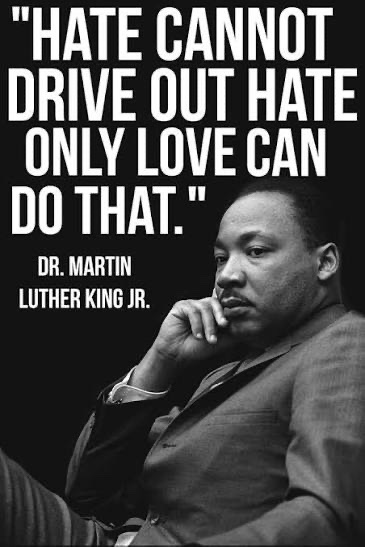
Today we invoke Martin Luther King Jr.—the man who asked a nation to do something radical and apparently still controversial: judge one another by the content of our character, not the color of our skin. The I Have a Dream guy. The preacher who believed equality wasn’t a slogan, but a moral obligation.
It’s worth remembering that King was not celebrated in his own time. In the 1960s he was surveilled, smeared, harassed, jailed, and ultimately murdered—not because he was violent or dangerous, but because his ideas threatened a comfortable status quo. He insisted that dignity was not conditional, that justice applied to everyone, and that laws without morality were just another form of oppression.
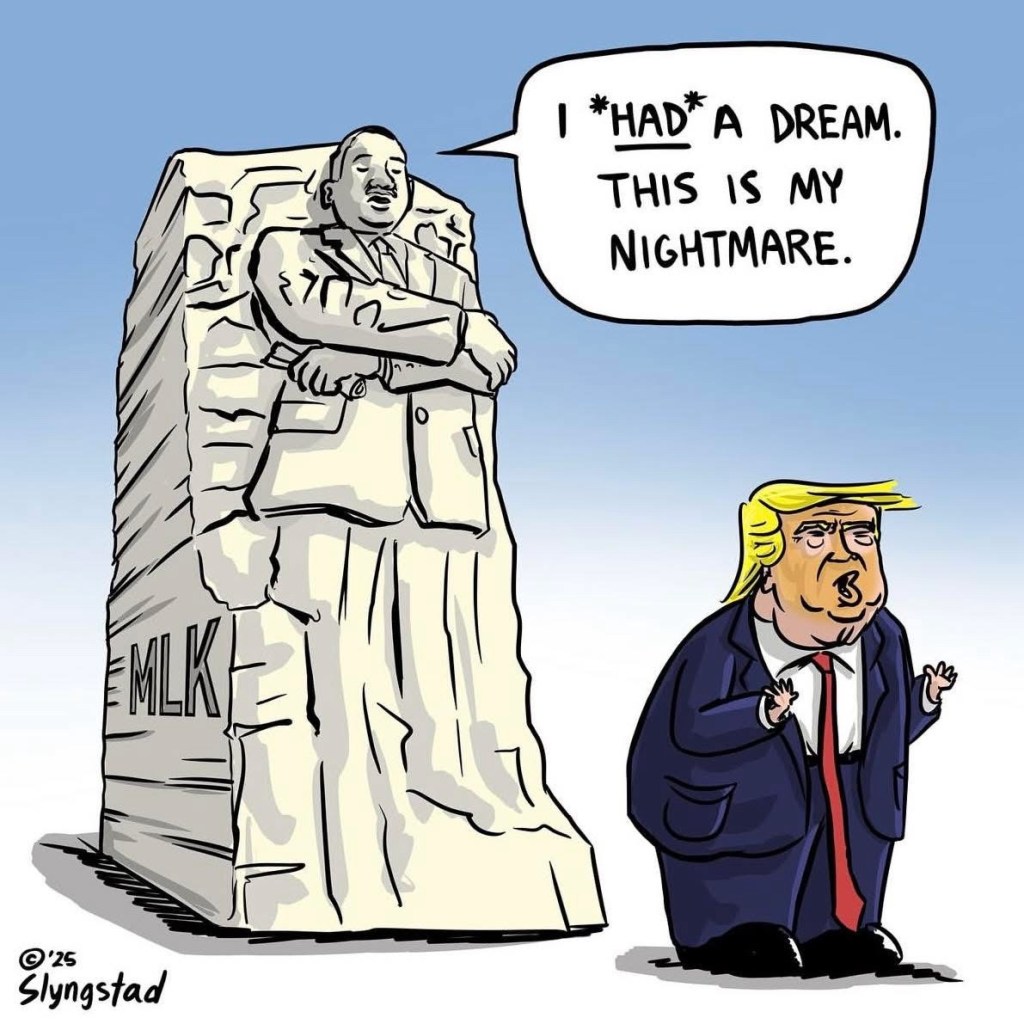
That history matters, because it exposes a painful irony. The values King preached—fairness, equal treatment, protection of the vulnerable—are still treated by those in power as disruptive, suspicious, or subversive. If King were alive today, or if anyone spoke with his moral clarity and insistence on universal human worth, there’s little reason to believe he would be welcomed. More likely, he’d be labeled a troublemaker, an agitator, a threat to “order.” He’d be watched. Targeted. Maybe even flagged as someone to be silenced or removed—not for breaking laws, but for challenging injustice.
King’s legacy isn’t meant to be a safe quote trotted out once a year. It’s meant to be uncomfortable. It asks whether we actually believe everyone deserves equal treatment—or only when it’s convenient. And it forces us to confront a sobering truth: a society that claims to honor Martin Luther King Jr. while punishing the principles he lived and died for hasn’t learned his lesson at all.
 Esoteric Meandering Shouting Into the Void