Dwain Northey (Gen X)
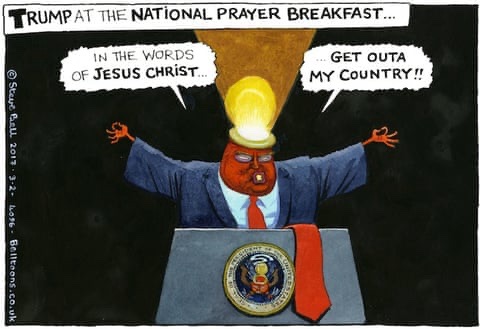
Ah yes, the sacred National Prayer Breakfast—America’s annual reminder that nothing says humble devotion quite like catered eggs, televised piety, and a guest list curated with the spiritual discernment of a campaign donor spreadsheet.
Enter Dear Donald, patron saint of the upside-down Bible photo op, now recast as a man of profound and deeply convenient faith. This is, of course, the same Donald whose first-term flirtation with Scripture involved gripping it like a rental prop outside a church he did not attend, holding it in a manner suggesting he believed the Beatitudes were printed on the back cover next to the barcode. Yet time, like public memory, is mercifully short. And so here we are again—watching a man who treats the Ten Commandments less as moral guidance and more as optional user settings suddenly draped in the warm glow of righteousness.
The honorees, we are told, are men of strength. Men of conviction. Men doing things that, if described in the New Testament, would almost certainly appear in the chapter right after “And Jesus said, please don’t do that.” But details, details. Christianity, in this ceremonial context, is less about loving one’s neighbor and more about ensuring the neighbor has proper documentation, quiet obedience, and preferably no legal representation.
One might imagine Christ at this breakfast—sandals dusty, sermon notes in hand—gently asking why the poor are missing, why the prisoners are mistreated, why mercy has been replaced with press releases. He would probably not be invited back. Seating is limited, and compassion does terrible things to the optics.
Still, Dear Donald seems comfortable in this new theological wardrobe. Not quite declaring himself divine—there are branding considerations—but certainly hovering in the general vicinity of sacred endorsement. If humility is the hallmark of faith, then he has achieved a remarkable innovation: humility without any visible trace of being humble. A kind of spiritual invisibility cloak, woven entirely from applause.
And of course, the message is clear. Welcoming the stranger is nice in theory—very poetic, very first-century Galilee—but in practice it is apparently a misguided thought, best replaced with something sturdier, like razor wire and a well-lit podium. After all, nothing captures the radical love of the Gospel quite like ensuring the least among us remain safely out of frame.
So the breakfast concludes as it always does: prayers offered, cameras satisfied, conscience gently postponed until next year’s menu is finalized. The kingdom of heaven may belong to the meek, but the ballroom, it seems, is reserved for the well-connected.
Amen—and please pass the hypocrisy.
 Esoteric Meandering Shouting Into the Void