Dwain northey (Gen X)
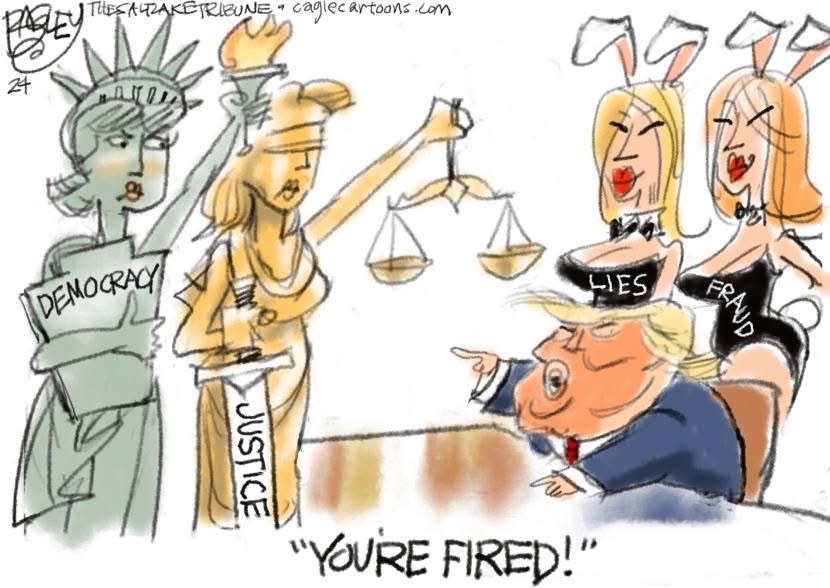
We must, at long last, accept the obvious: we are living in Republican Bizarro World, a strange parallel universe where the laws of logic are gently suggested rather than followed, and consistency is treated like a suspicious foreign import that must be heavily tariffed.
In this world, the Second Amendment is not merely a constitutional provision—it is a sacred hymn, a lifestyle brand, a decorative throw pillow stitched with the words shall not be infringed in tasteful patriotic cursive. It is invoked at breakfast, defended at lunch, and wrapped in the flag at dinner. Everyone, we are told with solemn reverence, has an absolute, unquestionable, God-adjacent right to own a firearm. Any hesitation about this principle is clearly the first step down a slippery slope that ends with tyranny, confiscation, and—most horrifying of all—background checks.
And yet, in this same universe, when a Black man legally owns a gun, carries it without brandishing it, and is then killed, the conversation performs an Olympic-level gymnastics routine. Suddenly the sacred clarity of the Second Amendment becomes… interpretive. Contextual. Nuanced. Perhaps even optional.
Because in Bizarro World, the right to bear arms is universal in the way that “all animals are equal” was universal on Animal Farm—some are simply more equal than others.
And then Bizarro World delivers its masterpiece of contrast.
In one reality, a teenager carries a rifle that was not legally his and kills two people, yet emerges as a symbol of constitutional heroism—a living proof, we are told, that the Second Amendment protects freedom in its purest form.
In another reality, a lawful adult gun owner with a permit to carry, who never visibly brandishes his weapon, is shot and killed by authorities—and somehow becomes the greater perceived threat.
So let’s review the Bizarro arithmetic:
Carry a weapon illegally, kill two people → symbol of liberty.
Carry a weapon legally, never visibly threaten anyone → dead at the hands of the state.
And we are told—calmly, confidently, with great patriotic sincerity—that the second man was the greater danger.
Not the one who actually pulled the trigger.
Not the one whose bullets actually took lives.
No, the real threat, apparently, is the lawful gun owner whose weapon never even appears in his hands.
This is where Bizarro World stops even pretending to follow its own rules. Because if the Second Amendment truly means what its loudest defenders claim, then legality should matter. Restraint should matter. Actual violence should matter.
Instead, meaning seems to depend on something far less constitutional and far more… selective.
It’s a remarkable feat of ideological multitasking:
Guns are always protection.
Except when they aren’t.
Rights are absolute.
Except when they’re inconvenient.
The Constitution is sacred.
Except for the fine print that includes everyone.
One almost has to admire the efficiency. Why bother changing laws when you can simply change the narrative in real time? It’s far more flexible. Much like reality itself in Bizarro World, where principles are sturdy enough to win elections but somehow too fragile to survive contact with an actual human being.
Of course, none of this is supposed to be noticed. We are meant to nod along, grateful for the consistency that clearly exists somewhere just out of frame. We are meant to believe that the contradiction is not a contradiction, that the double standard is merely a trick of the lighting, that the moral math still adds up if we promise not to use a calculator.
But every so often, reality intrudes. And when it does, the question becomes unavoidable:
If the Second Amendment is truly for everyone, why does it sometimes look like it comes with an asterisk?
Bizarro World never answers directly. It simply adjusts the script, dims the lights, and hopes we won’t remember what was said five minutes earlier.
Fortunately—or inconveniently, depending on your view—memory exists outside the parallel universe. And the rest of us are still here, watching the laws of logic bend in ways physics never intended, waiting to see whether consistency might someday make a surprise cameo appearance in this very strange place we’re apparently calling normal.
 Esoteric Meandering Shouting Into the Void