Dwain Northey (Gen X)
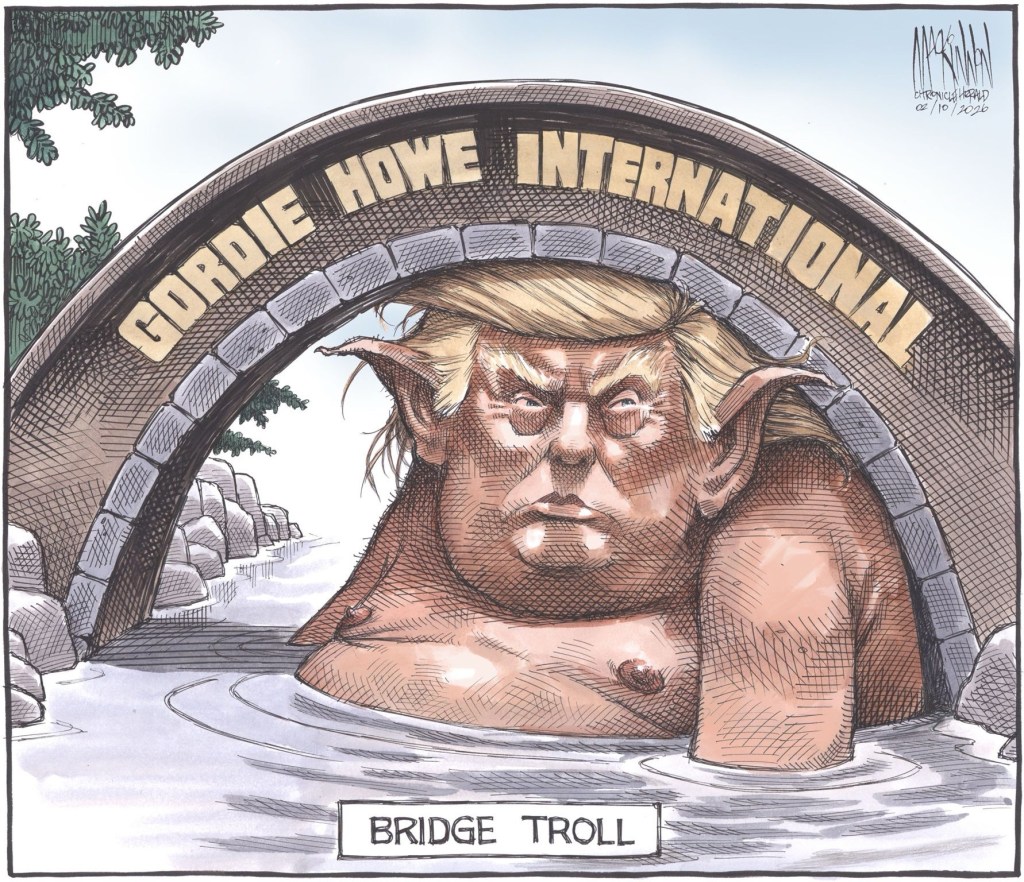
The poetry of modern politics, we’re told, is about building bridges, not walls—a sentiment so universally applauded it practically comes with its own inspirational background music. And yet, in a feat of rhetorical gymnastics that would make an Olympic judge blush, we arrive at the curious spectacle of Donald Trump championing a towering wall at the southern border while simultaneously obstructing the opening of the Gordie Howe International Bridge, an actual, literal bridge connecting two friendly nations that already agree on hockey, maple syrup, and politely apologizing for things that aren’t their fault.
If symbolism matters—and politics insists it does—then this is less metaphor and more performance art. The wall promises protection from imagined chaos to the south, while the bridge, inconveniently, represents cooperation, commerce, and the radical notion that neighbors might benefit from being connected. One structure is celebrated precisely because it divides; the other is resisted precisely because it unites. It’s architectural irony poured in reinforced concrete.
Of course, consistency has never been the point. The modern political narrative thrives not on coherence but on spectacle—on the emotional satisfaction of barriers raised high enough to be seen from orbit, even as practical connections gather dust behind ribbon-cutting ceremonies that never quite happen. In this world, the phrase “building bridges” works best as a slogan printed on a podium, safely distant from any bridge that might actually open.
And so we’re left with a tidy moral for the age: walls are visionary, bridges are suspicious, and metaphors are most useful when they don’t accidentally connect anyone to anything at all.
 Esoteric Meandering Shouting Into the Void