Dwain Northey (Gen X)
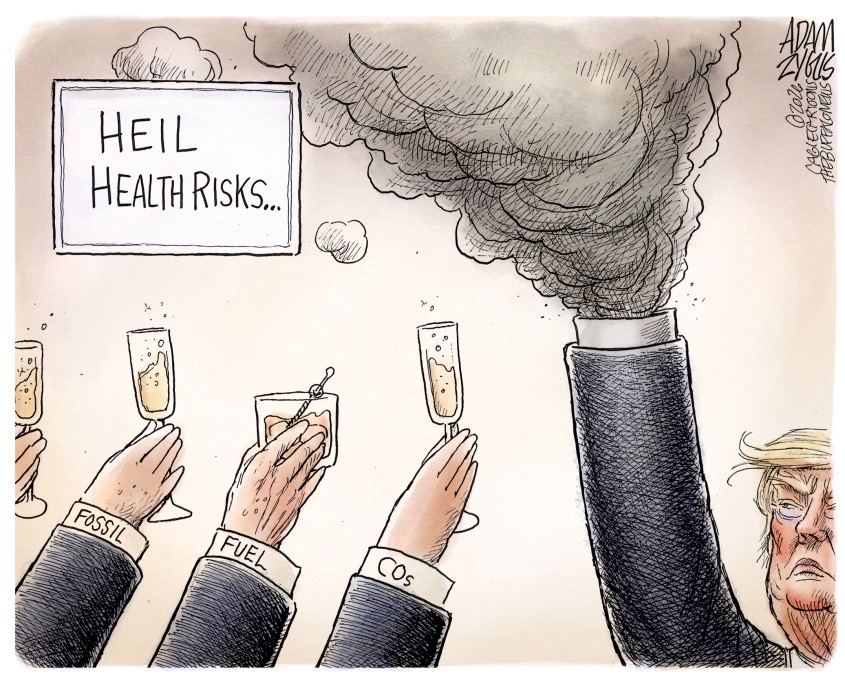
There is something almost theological about the way we worship money in this country. Not respect it. Not use it. Worship it. We bow to quarterly earnings like medieval peasants bowed to relics. We defend billionaires with the zeal once reserved for saints. And when forced to choose between sustaining life and sustaining luxury, we somehow keep choosing the marble countertops.
Look at what’s happening with the dismantling of environmental protections. Agencies like the Environmental Protection Agency were created for a simple reason: rivers catching fire was bad for business—specifically, the business of breathing. The point wasn’t ideological. It was survival. Clean air. Clean water. Basic planetary maintenance.
Yet here we are again, watching regulations get stripped away because certain industries find them inconvenient. Polluting is cheaper. Waste disposal cuts into margins. Safeguards slow growth. And growth, we are told, is sacred. Growth must continue. Growth is the altar.
The irony, of course, is breathtaking. The same executives who fight climate rules live in coastal mansions, invest in water futures, and build bunkers in places like New Zealand. They seem to believe that money is an atmospheric filter. That cash can substitute for oxygen. That a portfolio can stabilize a collapsing ecosystem.
Spoiler: it can’t.
We’ve seen this movie before. The cigarette industry didn’t just suspect that smoking was harmful; it knew. Internal memos revealed that companies like Philip Morris understood the link between smoking and cancer decades before the public did. And yet they funded doubt. They hired scientists to blur conclusions. They sold addiction with a smile and a slogan. Because the revenue was enormous. Because shareholders needed reassurance. Because profit margins apparently mattered more than lungs.
How many funerals did that buy?
This is the recurring pattern: when evidence threatens wealth, wealth fights back. When science suggests limits, money demands exceptions. The fossil fuel industry has mirrored the tobacco playbook almost line for line—delay, deny, distort, deflect. Meanwhile, storms intensify, droughts expand, wildfires turn entire regions into tinderboxes. But the quarterly reports still look good, so the machine hums along.
The moral equation has somehow flipped. Protecting life is framed as “anti-business.” Regulating toxins is called “job-killing.” Preserving ecosystems is portrayed as extremist. And asking corporations not to poison shared resources is considered radical.
At what point do we ask the obvious question: what exactly is the economy for?
An economy is not a deity. It is not a living being that must be fed sacrifices of asthma rates and cancer clusters. It is a tool. A human invention meant to support human life. If the tool begins undermining the life it was designed to serve, then the tool—not the life—needs to change.
But we’ve blurred the hierarchy. Wealth has become the objective instead of the instrument. Luxury has become more sacred than longevity. We treat environmental collapse like an accounting inconvenience instead of an existential threat.
There’s also a brutal inequality in the gamble. The wealthy can insulate themselves longer. Air purifiers. Private healthcare. Relocation options. Investment hedges. The poorest communities live closest to refineries, highways, toxic runoff. They don’t have escape hatches. They absorb the externalities.
And still we’re told deregulation is “freedom.”
Freedom for whom?
The deeper issue isn’t left versus right. It’s whether we believe human life—collectively, globally, long-term—has intrinsic value beyond its economic output. If the answer is yes, then clean air and stable climates are non-negotiable foundations. If the answer is no, then we are simply investors riding the market until the planet liquidates.
History is littered with civilizations that extracted their environments beyond repair. None of them were saved by having the highest GDP of their era.
So the real question isn’t whether wealth is bad. Wealth can fund research, innovation, medicine, education. It can build resilient infrastructure. It can accelerate clean energy. But only if it is subordinated to life rather than elevated above it.
At what point do we realize that sustaining life is more important than sustaining wealth?
Probably the moment sustaining life becomes impossible.
The tragedy is that by then, the money won’t matter.
 Esoteric Meandering Shouting Into the Void