Dwain Northey (Gen X)
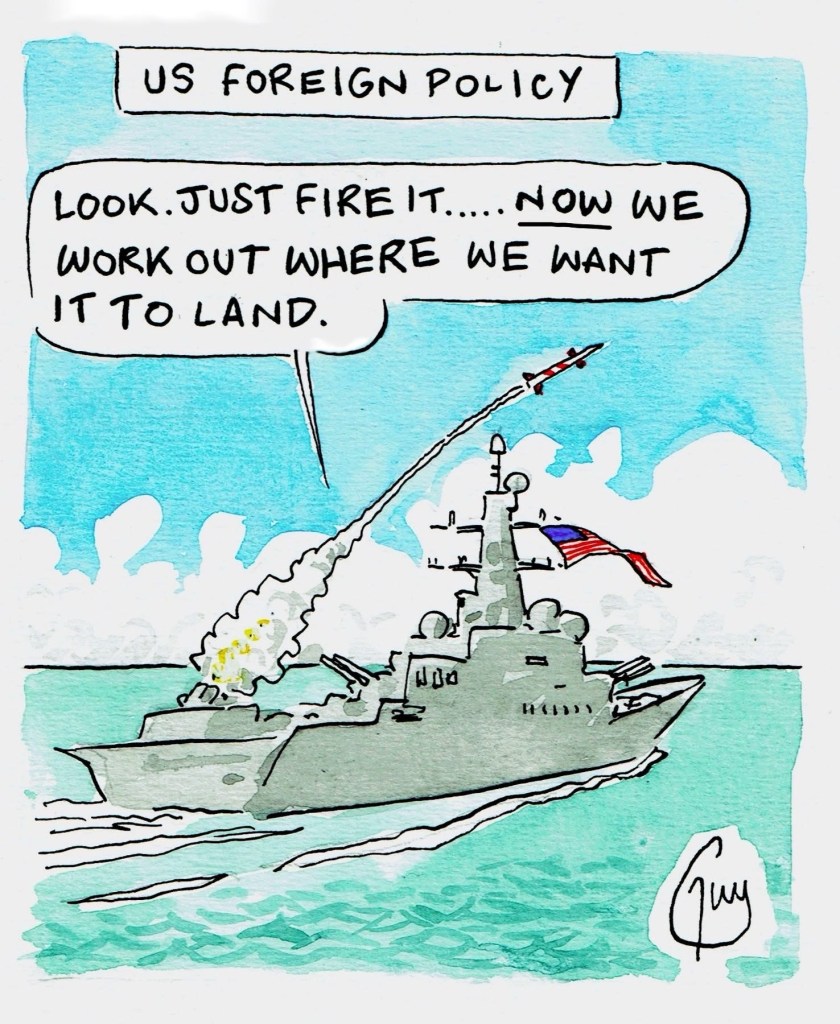
After the industrial-scale slaughter of World War I and the even more catastrophic devastation of World War II, the world’s nations came to a stunning realization: perhaps there should be rules about how wars are fought. Radical idea, apparently. When millions of civilians die and entire cities are flattened, people tend to conclude that maybe warfare shouldn’t operate like an unmoderated comment section.
So the international community created a framework of laws designed to put at least some guardrails on human brutality. These rules were codified in agreements such as the Geneva Conventions and their later protocols. The basic principles were not complicated:
Don’t intentionally target civilians. Don’t bomb hospitals, schools, or aid workers. Treat prisoners humanely. Distinguish between military targets and civilian populations. Use proportional force.
In short: if you’re going to fight wars, at least pretend you’re not trying to wipe out innocent people.
These rules weren’t created because nations suddenly became compassionate. They were created because history showed something painfully obvious: when civilians are targeted and populations are terrorized, the violence does not end. It multiplies. Children who watch their families die under bombs rarely grow up thinking, “Well, that seemed reasonable.”
Instead, they grow up angry. And anger has a long memory.
Which brings us to the current moment and the apparent “rules optional” strategy being embraced by figures like Donald Trump and his defense leadership, including Pete Hegseth.
The post-WWII rules of engagement were designed precisely to avoid the cycle of retaliation that fuels insurgencies and terrorism. When those rules are ignored—when bombs hit schools, civilian infrastructure, or densely populated areas without clear military necessity—the immediate tactical gain often creates a long-term strategic disaster.
Military historians have watched this pattern repeat for decades:
Civilian casualties rise. Local resentment grows. Extremist groups recruit from that resentment. Violence spreads far beyond the battlefield.
It’s not a new theory. It’s practically a case study.
During conflicts in places like Iraq and Afghanistan, even accidental civilian deaths often became powerful propaganda tools for extremist organizations. Every destroyed home, every grieving family member, became a recruiting poster.
This is precisely why modern militaries—at least on paper—invest heavily in rules of engagement, legal oversight, and targeting review. The goal is not just moral; it’s strategic. Limiting civilian harm reduces the number of people who might later decide that attacking Americans is a perfectly reasonable career path.
Ignore those rules, however, and the equation changes.
If the world perceives that the United States no longer cares about the very laws it helped create after WWII, two dangerous things happen simultaneously:
First, America loses moral credibility. The country that once championed the rules now looks like it’s treating them as optional guidelines.
Second—and far more dangerous—other actors start playing by the same logic. If rules don’t apply to powerful countries, then why should anyone else follow them?
That’s when conflicts become less like wars and more like vendettas.
And vendettas have a nasty habit of traveling. What begins as a bombing campaign in a distant region can, years later, end up as radicalized individuals deciding that revenge should be delivered closer to home.
This is the lesson military strategists have repeated since WWII: brutality against civilians rarely ends conflicts—it plants the seeds for the next one.
So the postwar architects of international law tried to build something resembling a firewall. The Geneva Conventions weren’t perfect, but they were a collective attempt to say: we’ve seen where unlimited war leads, and maybe we shouldn’t go there again.
Ignoring those lessons doesn’t make the world safer. It simply rewinds history to the era before those rules existed—when total war was normal and civilian suffering was considered just another tactical variable.
And if that experiment is repeated, history suggests the outcome won’t be stability or security.
It will be exactly what those post-WWII rules were designed to prevent: a world where violence breeds more violence, and where the consequences eventually reach far beyond the original battlefield. 🌍⚖️💣
 Esoteric Meandering Shouting Into the Void