Dwain Northey (Gen X)
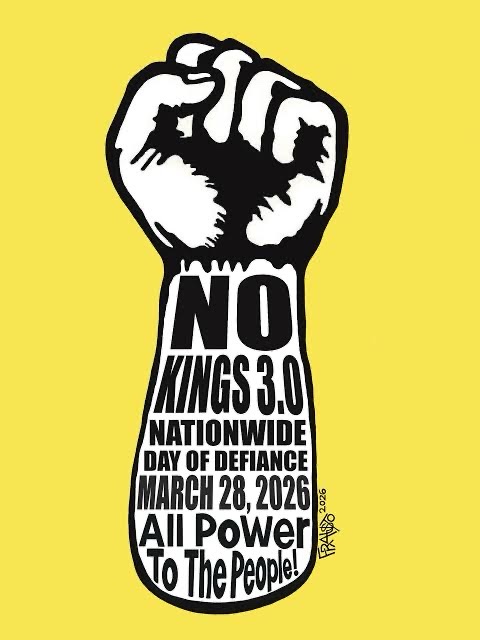
There’s something almost quaint about calling it “No Kings Three,” as if by the third installment we’re still pretending this is a one-off moment instead of what it clearly has become: a tradition of collective refusal. Not a holiday exactly—those tend to come with sales and themed cupcakes—but something closer to a civic ritual, where people show up in numbers so large they make aerial photography feel like a necessity rather than an artistic choice.
Each time it happens, the same chorus emerges: this is historic. And to be fair, it is—again. That’s the inconvenient pattern. The first time, skeptics called it a fluke. The second time, they blamed momentum, novelty, maybe even good weather. By the third, the excuses start to sound like someone trying to explain away a tidal wave as an unusually enthusiastic ripple.
Because the crowds don’t just return—they grow. Not incrementally, not politely, but in that uncomfortable, undeniable way that suggests something deeper is happening. Streets fill earlier. Signs get sharper. The tone shifts from curious participation to something more grounded, more resolved. People aren’t there just to witness anymore; they’re there because not showing up would feel like saying something they don’t believe.
And what’s remarkable isn’t just the size—it’s the consistency. In an era where attention spans are allegedly shorter than a loading screen, here are hundreds of thousands—sometimes millions—of people repeating the same message, louder each time, as if testing whether sheer persistence can bend reality back toward something resembling accountability.
Of course, there are always those who downplay it. The crowd estimates are questioned, the motivations dissected, the participants neatly categorized and dismissed. It’s the usual playbook: if you can’t ignore it, minimize it; if you can’t minimize it, redefine it. But numbers have a stubborn way of existing regardless of narrative preferences. When the same event keeps producing “historic” turnout, eventually the adjective stops being hype and starts looking like a baseline.
“No Kings Three” isn’t just about rejecting a single figure or moment—it’s about the increasingly unfashionable idea that power should have limits, and that those limits are not self-enforcing. The crowds seem to understand this instinctively. They’re not waiting for permission, nor are they particularly interested in whether their presence is considered convenient.
So yes, once again, it’s historic. Not because anyone planned it that way, but because people keep deciding—independently, repeatedly, and in ever-larger numbers—that it matters. And at some point, the real story isn’t that the crowds are historic.
It’s that they won’t stop being historic.
 Esoteric Meandering Shouting Into the Void