Dwain Northey (Gen X)
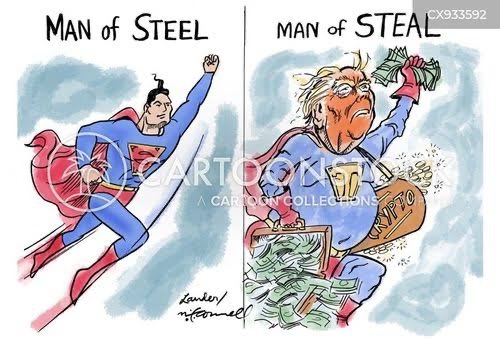
For much of the 20th century, the United States cast itself—and was often cast by others—as the protagonist in the global story. In the grand narrative arc shaped by two world wars, the Cold War, and the spread of globalization, America played the role of the flawed but determined hero: stepping into conflicts late but decisively, positioning itself as a defender of democracy, and promoting an international order built on alliances, trade, and (at least rhetorically) shared values.
Hollywood reinforced this identity. American films told stories where the U.S. saved the world from existential threats—Nazism, nuclear annihilation, rogue states, asteroids, aliens. Even when the country stumbled, the narrative often resolved with redemption. The hero might be bruised, even morally conflicted, but ultimately chose the right path. The world, in these stories, depended on America—and America, despite its imperfections, delivered.
This self-image extended into the early 21st century, even as cracks began to show. The wars in Iraq and Afghanistan complicated the narrative. Global audiences became more skeptical. Yet even then, the dominant storyline—especially within the U.S.—remained that of a nation trying, however imperfectly, to do good or at least maintain order in a chaotic world.
What’s changed in the 2020s is not just policy, but perception—and perception is what stories are made of.
With the presidency of Donald Trump, America’s role in the global narrative has shifted in ways that feel almost cinematic in their symbolism. The language of alliances gave way to the language of transactions. Longstanding partnerships were questioned or strained. International institutions were dismissed or undermined. Decisions that once would have been framed as collective became unilateral, sometimes abrupt, often unpredictable.
In storytelling terms, unpredictability is a trait more commonly assigned to antagonists than protagonists.
The modern villain in global narratives is rarely defined by pure evil. Instead, they are powerful, self-interested, dismissive of norms, and willing to destabilize systems for their own ends. Increasingly, critics argue that this is how the United States is being written into the world’s story: not as the stabilizing force, but as the disruptive one.
You can already see this shift emerging in media and cultural commentary. In international films, novels, and even journalism, the U.S. is more frequently portrayed as a chaotic superpower—volatile, inward-looking, and at times indifferent to the consequences of its actions abroad. The archetype is changing. The “hero who saves the day” is being replaced by the “former hero who has lost its way.”
This transformation is not just about one leader, but about what that leadership represents. When a country appears to abandon the principles it once championed—cooperation, rule of law, democratic norms—it creates a narrative vacuum. And in storytelling, vacuums don’t stay empty; they are filled. Other nations step into the role of stabilizers. Meanwhile, the former hero risks becoming the cautionary tale.
There’s also a deeper psychological shift at play. For decades, the idea of America as the “good guy” was not just exported—it was internalized globally. Undoing that perception doesn’t happen overnight, but once doubt sets in, it spreads quickly. In narrative terms, the audience begins to question the protagonist’s motives. And once the audience no longer trusts the hero, the story changes fundamentally.
None of this means the transformation is permanent. Stories evolve. Characters fall and redeem themselves all the time. The United States still has immense cultural, economic, and political influence, and its identity on the global stage is not fixed. But the 2020s may well be remembered as the moment when the script flipped—when the country that once defined itself as the central hero of the global order began to be seen, in some corners of the world, as its antagonist.
And if future filmmakers and writers look back on this era, they may not tell stories of America rushing in to save the day. They may tell stories of a world reacting to an America that had become unpredictable, powerful, and—at least for a time—something closer to the villain than the hero.
 Esoteric Meandering Shouting Into the Void