Dwain Northey (Gen X)
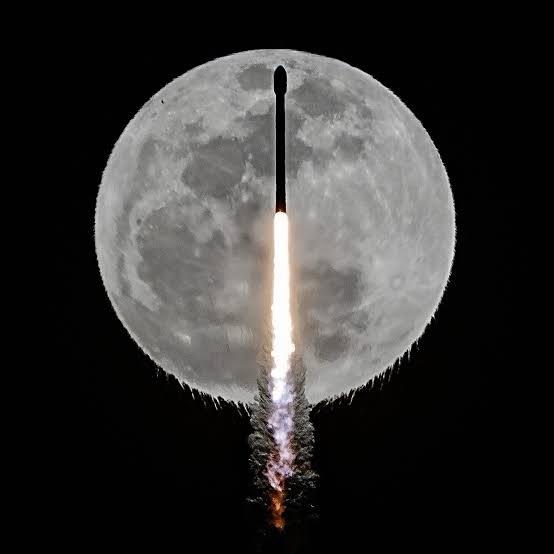
The Argus moon launch slipped into the world yesterday with all the thunderous cultural impact of a new McDonald’s value meal—briefly noticed, vaguely processed, and immediately overshadowed by whatever outrage, scandal, or geopolitical fever dream happened to be trending ten minutes later. Somewhere, a rocket pierced the sky, centuries of human curiosity strapped to its back, and the collective response was essentially, “Oh, neat… anyway.”
And, just to be clear—this wasn’t some slick, logo-heavy, venture-capital-powered spectacle. This was a launch by NASA. You know, the same government agency that once made the Moon feel like the center of the universe. Not a corporate livestream with a countdown sponsored by a cryptocurrency exchange, not a billionaire’s side quest—good old-fashioned public science, funded by taxpayers, executed by engineers who probably still think in slide rules and orbital mechanics instead of brand partnerships.
Sixty years ago, when humanity first decided to lob itself at the Moon, it was the event. Not an event—the event. Streets emptied, televisions glowed like sacred altars, and people gathered in hushed awe to watch a grainy broadcast that felt like science fiction clawing its way into reality. It wasn’t just a technological achievement; it was a statement. A declaration that we, as a species, could transcend gravity, politics, and perhaps even our own worst instincts—at least for a moment.
Now? We multitask through it. A rocket launches, and we scroll past it on our phones while arguing about something else entirely. The Moon, once the ultimate destination, has become just another checkbox on humanity’s increasingly crowded to-do list—somewhere between “fix the economy” and “figure out what’s going on with that one app everyone suddenly hates.”
Of course, it’s not entirely fair. The world today is a bit… noisy. Between economic uncertainty, political theater, and the general sense that everything everywhere is happening all at once, a moon launch struggles to compete. It’s hard to feel wonder when your attention span has been trained to refresh itself every six seconds. The Moon isn’t new anymore. It’s just… there. Waiting patiently while we rediscover it for the fifth or sixth time like a tourist who insists they’ve “found” Paris.
And yet, beneath the collective shrug, something quietly extraordinary still occurred. Engineers, scientists, and dreamers—working under the banner of a public agency, not a corporate brand—spent years making that launch possible. Thousands of tiny, precise decisions stacked on top of one another until, at exactly the right moment, fire met fuel and gravity lost another argument. The miracle didn’t go away; we just got used to it.
But let’s not pretend the story ends there. Because somewhere, inevitably, the narrative gears are already turning. It’s only a matter of time before the launch is retroactively claimed as the inevitable result of someone’s “tremendous leadership,” whether or not they could identify the rocket’s pointy end without assistance. The script practically writes itself: bold vision, unmatched foresight, possibly the greatest moon launch anyone has ever seen—people are saying it, many people.
And that may be the strangest part of all. We’ve gone from a world where the Moon unified us, however briefly, to one where even a journey beyond Earth’s atmosphere risks becoming just another talking point in an endless, terrestrial argument. The stars are still there, indifferent and vast, but we insist on dragging them into our orbit.
So the Argus launch came and went. A marvel of human ingenuity—public ingenuity—greeted with a collective nod and a quick return to whatever chaos was already in progress. Maybe that says less about the launch and more about us—about how wonder hasn’t disappeared so much as it’s been buried under everything else we’ve decided to care about.
The rocket didn’t fail to inspire. We just forgot to look up.
 Esoteric Meandering Shouting Into the Void