Dwain Northey
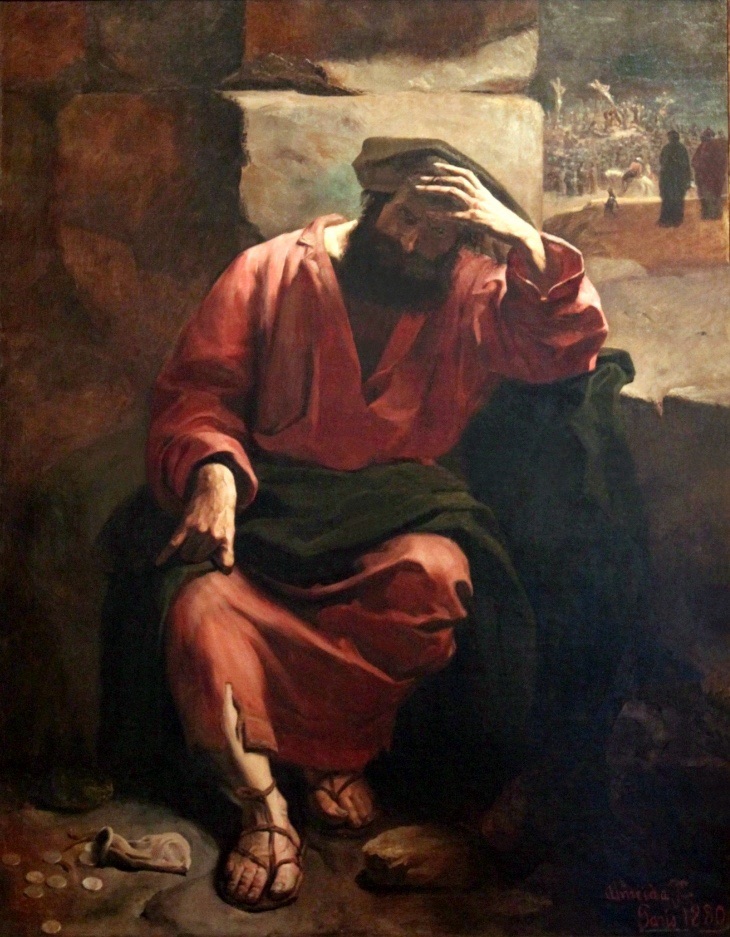
Every year around Easter, the story is retold with familiar roles neatly assigned: the savior, the faithful followers, the doubters, and, of course, the villain. And in that last role, history has cast Judas Iscariot as the eternal traitor—the man whose name has become synonymous with betrayal itself. But what if that interpretation is not only incomplete, but fundamentally unfair?
Because if you step back from centuries of tradition and look at the narrative with fresh eyes, a different possibility emerges: Judas not as the villain, but as the only disciple willing to do what the others could not.
According to the Gospels, Jesus Christ repeatedly foretold his own fate. He spoke of suffering, of betrayal, of death, and ultimately, of resurrection. This was not a surprise ending sprung on an unsuspecting cast—it was the plan. A necessary sequence of events that would culminate in the fulfillment of his mission. And if that’s true, then someone had to play the part of the betrayer. Prophecy, by its very nature, requires participation.
So the uncomfortable question becomes: if the outcome was divinely ordained, was Judas choosing evil—or accepting a role that had to be played?
The other disciples, for all their devotion, consistently misunderstood or resisted the idea of sacrifice. They argued over status, denied knowing him when fear took hold, and scattered when events turned dark. Even Peter the Apostle—arguably the most outspoken of the group—famously denied Jesus three times. Their loyalty, while genuine, faltered under pressure.
Judas, on the other hand, did not falter. He followed through.
That follow-through has been interpreted as greed or malice—thirty pieces of silver as the price of treachery. But that explanation feels almost too small for the enormity of what unfolds. If Judas were simply a petty opportunist, then the entire arc of salvation hinges on something as trivial as a cash transaction. That seems less like divine orchestration and more like cosmic coincidence.
Instead, consider the possibility that Judas understood what the others could not—or would not accept. That the mission required not just belief, but action. Painful, irreversible action. The kind that ensures you will never be remembered kindly.
In that light, Judas becomes something closer to a tragic figure. Not a hero in the traditional sense, but a necessary participant in a story that demanded sacrifice from more than just one man. Jesus Christ sacrificed his life, yes—but Judas sacrificed his legacy, his name, his place in history. One died for the salvation of humanity; the other lived on as its most reviled symbol.
And that’s where the comparison becomes strikingly human. It’s easy to admire martyrdom when it comes with reverence and eventual glorification. It’s much harder to accept the kind of role that guarantees permanent condemnation. Judas doesn’t get redemption arcs or triumphant return scenes. He gets infamy.
Which brings us, oddly enough, to a line often associated with Star Trek: “the needs of the many outweigh the needs of the one.” It’s a philosophy of sacrifice—but not just physical sacrifice. Moral sacrifice. Reputational sacrifice. The willingness to be misunderstood, even hated, if it serves a greater purpose.
If the story of Easter is truly about fulfillment—about a plan coming to pass exactly as foretold—then Judas is not an anomaly in the narrative. He is integral to it. Remove him, and the chain of events collapses. No betrayal, no arrest. No arrest, no crucifixion. No crucifixion, no resurrection.
In other words, no Easter.
None of this is to claim certainty. Theology is, by nature, an arena of interpretation and belief. But it is worth questioning why one figure alone bears the full weight of moral condemnation in a story where every participant, in some way, contributes to the outcome.
Perhaps Judas is not the embodiment of evil, but the embodiment of an uncomfortable truth: that sometimes the roles that matter most are the ones no one else is willing to play.
And if that’s the case, then on this Easter Sunday, it may be worth reconsidering whether history has mistaken its villain for something far more complicated—and far more tragic.
 Esoteric Meandering Shouting Into the Void