Dwain Northey (Gen X)
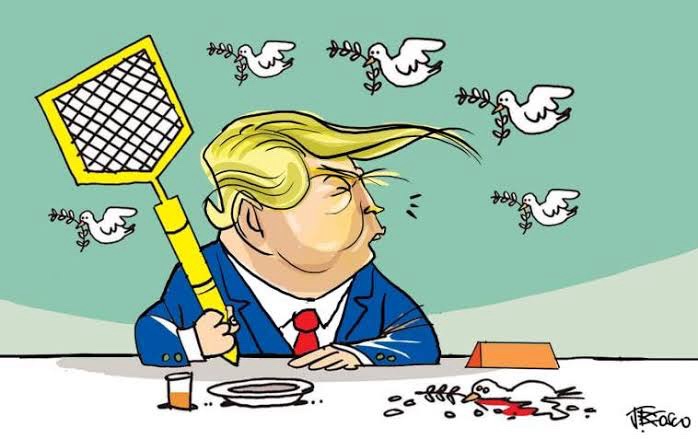
There’s something almost poetic about Donald Trump declaring himself the “prince of peace” while simultaneously rolling out a budget that looks like it was drafted by the ghost of the Cold War on a double espresso. A peace-time president, we are told—just one with a proposed military budget of $1.5 trillion, a number so large it stops sounding like policy and starts sounding like a high score.
It raises a simple, uncomfortable question: what exactly does “peace” mean in this context? Because historically, when nations bulk up their military to dwarf the rest of the world combined, it’s not because they’re planning a group hug. The United States already spends more on defense than the next several countries combined, many of them actual geopolitical rivals. At some point, increasing that number doesn’t signal strength—it signals intent, or at least the appearance of it.
And that’s where the contradiction becomes less amusing and more concerning. Is this the posture of a nation content to defend itself, or one quietly preparing to project power wherever it pleases? Empires, after all, rarely announce themselves as such. They just keep expanding their capabilities “for security reasons” until suddenly security requires a presence everywhere.
And now, as if the contrast needed to be any sharper, comes the other half of the argument: we “can’t afford” social programs because we need a military to protect ourselves. It’s a remarkably convenient bit of math—there’s always money for defense, but somehow never enough for healthcare, education, housing, or anything that might actually improve the daily lives of the people being “protected.”
This is where the philosophy starts to peek through, and it’s not subtle. It’s the long-running GOP small-government ideal taken to its logical extreme: a government that does almost nothing—except wage war, prepare for war, and remind you it’s keeping you safe while doing so. Roads? Maybe. Schools? If there’s room in the budget. But a trillion-and-a-half-dollar military? Absolutely essential.
It’s a worldview that quietly redefines what government is for. Not a provider of stability or opportunity, but a permanent security apparatus with a flag attached. Citizens become something closer to spectators—watching the might of their country expand while being told that basic social investments are luxuries we simply can’t afford.
And that’s the paradox at the heart of it all. If your policies consistently raise global anxiety, strain alliances, and make adversaries more defensive, are you actually making your country safer? Or are you building a fortress so imposing that everyone else starts stockpiling ladders?
It’s hard to know what’s more troubling—the idea that this is a deliberate strategy, or the possibility that it isn’t. Because if this is intentional, then we’re looking at a vision of America that leans heavily toward dominance rather than stability. And if it’s not, then we’re watching enormous decisions with global consequences being made without fully grappling with their impact.
Either way, the branding doesn’t quite match the product. A “peace-time president” presiding over the largest military expansion in modern history—while arguing that the richest country in the world can’t afford to take care of its own people—isn’t just a contradiction. It’s the whole story.
 Esoteric Meandering Shouting Into the Void