Dwain Northey (Gen X)
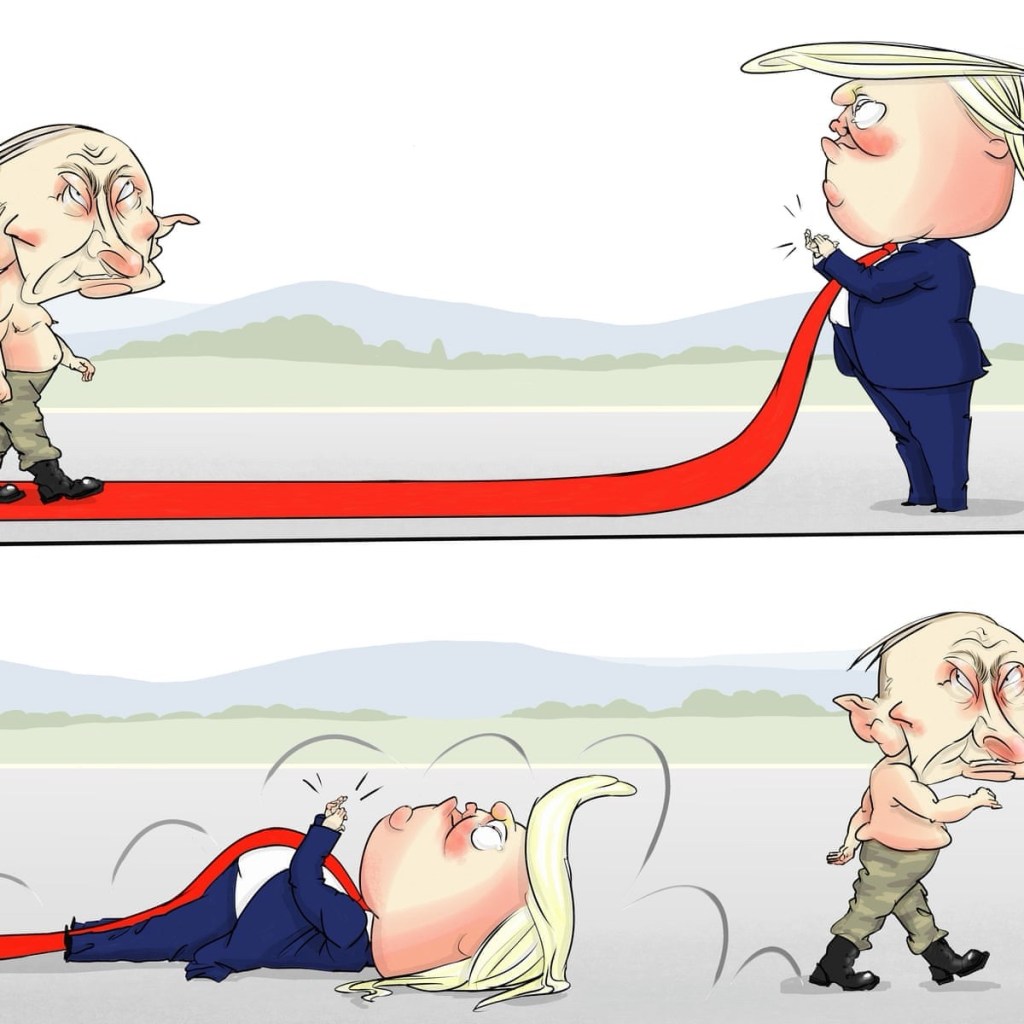
It’s a funny thing, living in a world where the guy who lights the match also hands you a fire extinguisher—at a price, of course—and then expects a thank-you note for his restraint.
Lately I’ve been watching Donald Trump posture toward Iran, and I swear I’ve seen this movie before. Not in a theater, mind you—more like on a 24-hour news loop starring Vladimir Putin and his ongoing obsession with Ukraine.
Because the script feels awfully familiar.
Step one: create or escalate a conflict. Step two: loom menacingly over the situation like a cartoon thundercloud. Step three: offer a deal that sounds suspiciously like, “It would be a shame if something happened to your entire country… unless you do exactly what I say.” And step four—this is the important part—declare yourself the reasonable one in the room.
I mean, I must have missed the day in history class where the aggressor got to rebrand themselves as the victim-slash-peacemaker. That must have been right after lunch, when everyone was half-asleep and the teacher just said, “You know what, sure, let’s let the arsonist run the fire department.”
With Putin and Ukraine, the logic has always been breathtaking in its audacity: invade a sovereign nation, flatten cities, and then solemnly insist that peace will be achieved just as soon as the people you invaded stop resisting. “Why are you making this so difficult?” he seems to ask, while actively making it impossible.
And now here comes Trump, apparently flipping through that same well-worn playbook like it’s a self-help guide titled Winning Friends and Influencing Countries You’re Actively Threatening. The message to Iran boils down to: “We don’t want conflict… but we’re absolutely prepared to bring overwhelming force unless you comply.” Which, translated into plain English, sounds a lot like, “I’m not hitting you—you’re making me hit you.”
It’s this upside-down moral geometry that really gets me. Somehow, the country with the bigger military, the louder threats, and the first move gets to claim it’s acting defensively. Meanwhile, the country being threatened is expected to politely de-escalate by… what, exactly? Preemptively surrendering? Sending a thank-you basket?
And I get it—international politics has never exactly been a kindergarten sharing circle. But there used to be at least a thin veneer of consistency, a polite fiction we all agreed to maintain. Now it feels like we’ve dropped even that, and we’re just openly workshopping justifications in real time.
What fascinates me—if that’s the word for it—is how this framing demands that everyone else play along. We’re supposed to nod thoughtfully and say, “Yes, clearly the path to peace is for the threatened party to give in to the threats.” As if that’s not the geopolitical equivalent of rewarding bad behavior and then acting surprised when it continues.
I keep thinking about how absurd it would sound in any other context. Imagine someone breaking into your house, kicking in the door, and then offering you a deal: “Look, I don’t want to wreck the place—but I will unless you sign over the deed. Let’s keep this civilized.” And then your neighbors gather around to debate whether you’re being unreasonable for hesitating.
That’s what this all feels like—just scaled up to nations instead of living rooms, with far higher stakes and far less accountability.
And the truly dizzying part is how quickly this logic becomes normalized. Say it enough times, wrap it in enough flags and speeches, and suddenly the narrative shifts. The aggressor becomes “strong.” The threatened become “provocative.” Reality itself starts to feel negotiable.
So here I am, watching this bizarre rerun unfold, trying to figure out when exactly we all agreed to pretend that coercion is diplomacy and threats are peace offerings. Because from where I’m sitting, it looks less like strategy and more like a global game of chicken where one side insists they’re the cautious driver—while flooring the accelerator.
But sure, let’s call that restraint. That seems reasonable. Right?
 Esoteric Meandering Shouting Into the Void