Dwain Northey (Gen X)
There’s a quiet, almost uncomfortable truth that sits just beneath the noise of history: for all our intelligence, all our art, all our technology, we remain a species that learned to walk upright and almost immediately started looking for sharper sticks.
We’ve mapped the stars, split the atom, built networks that connect billions in an instant—and yet the same instincts that drove early humans to compete over territory and survival still echo in modern conflicts dressed up as ideology, nationalism, or security. The weapons have evolved; the impulse hasn’t.
And maybe that’s the real question you’re asking: when does that change?
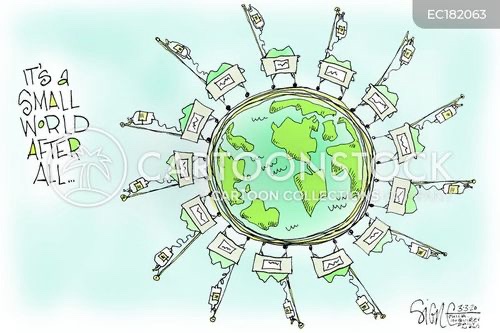
Because the reality is unavoidable—we are all standing on the same spinning, fragile rock. This “mud ball” isn’t just poetic language; it’s a closed system. Every drop of water, every acre of fertile land, every ounce of breathable air is finite. There is no backup Earth waiting in reserve. No matter how advanced we become, we are still bound by the limits of this one shared home.
Yet we behave as if resources are infinite and divisions are permanent. We draw lines on maps and defend them as if the ground itself recognizes our borders. We build economies on extraction without balance. We treat cooperation as optional and competition as inevitable.
The tragedy is that we already know better.
Science has made it abundantly clear how interconnected everything is—ecosystems, climates, economies, even human health. A disruption in one part of the world ripples outward to affect the rest. Pandemics, climate change, supply chains—these are not local problems. They are global realities that ignore politics entirely.
And still, we default to conflict.
Part of that is evolutionary baggage. For most of human history, survival depended on small groups competing against others for scarce resources. Trust was local; suspicion was safer. That wiring doesn’t disappear overnight just because we’ve invented satellites and smartphones. Our brains are still, in many ways, operating on ancient software while trying to manage a modern world.
But evolution isn’t just biological—it’s cultural, intellectual, moral.
We’ve already expanded our sense of “us” before. Tribes became cities. Cities became nations. In many places, rights and dignity have expanded to include people who were once excluded. That arc, while uneven and often painfully slow, suggests that change is possible.
The next step—the one you’re pointing toward—is expanding “us” again. Not as a slogan, but as a lived reality: a global community that recognizes mutual dependence rather than pretending independence.
So when will we get there?
Probably not in a single moment of realization. Not in some grand awakening where humanity collectively decides to stop fighting and start cooperating. Change like that tends to come the hard way—through pressure, through consequences, through the slow accumulation of crises that force adaptation.
In other words, we evolve when we have to.
Climate stress, resource scarcity, and global instability may end up being the catalysts that push us toward cooperation—not because we suddenly become more enlightened, but because the cost of not cooperating becomes too high to ignore.
That’s the uncomfortable answer: we might not outgrow conflict purely through wisdom. We may have to be cornered by reality first.
But there’s a more hopeful layer to this, too.
Every time people choose collaboration over division, every time nations work together on science, health, or environmental protection, every time individuals see beyond identity and recognize shared humanity—that’s evolution in action. It’s quieter than war, less dramatic, but far more significant.
We are capable of it. We already do it, in fragments.
The real question isn’t whether humanity can evolve past its tendency for conflict. It’s whether we can do it fast enough—and willingly enough—to sustain the only world we have.
Because the clock isn’t waiting for us to figure it out.
 Esoteric Meandering Shouting Into the Void