Dwain Northey (Gen X)
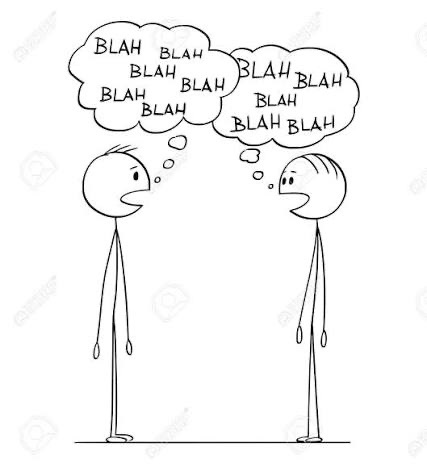
I’ve started to suspect that somewhere along the line—maybe between dial-up internet and whatever algorithm is currently deciding what I’m allowed to be outraged about—we collectively misplaced the ability to have a normal conversation. Not a debate. Not a performative TED Talk. Just… talking. You know, the ancient, analog practice of opening your mouth and saying something imperfect while another human being waits their turn instead of drafting a rebuttal like it’s closing arguments in a murder trial.
I’m in my late 50s, which means I come from a time when if you said something dumb, someone would just look at you, pause, and say, “Well, that’s dumb,” and then we’d keep going. No hashtags. No digital exile. No immediate psychological autopsy conducted by twelve strangers and a guy with a podcast. You survived it. You learned. Or you didn’t. Either way, the conversation moved on like a normal, functioning organism.
Now? Now every conversation feels like defusing a bomb where every word is the red wire.
I find myself doing mental gymnastics before I even open my mouth. “Is this joke acceptable?” “Is this opinion going to get me socially waterboarded?” “Is breathing still allowed, or did that get reclassified as problematic while I was asleep?” And the irony is, half the time I’m not even talking to a person anymore—I’m talking to their entire invisible audience. Because nobody’s just listening; they’re curating, clipping, and preparing your sentence for trial in the court of public opinion, population: everyone with Wi-Fi.
Maybe it’s social media. Actually, scratch that—of course it’s social media. We handed everyone a megaphone, a highlight reel, and a scoreboard for human interaction and then acted surprised when conversations turned into competitive blood sports. It’s not enough to talk; you have to win. You have to dunk. You have to emerge from a casual exchange looking like you just intellectually body-slammed your opponent while a chorus of strangers throws digital confetti at your feet.
And the internet didn’t just speed things up—it flattened everything. Tone? Gone. Nuance? Buried. Context? Optional, at best. So now when you say something mildly sarcastic, someone on the other side of the country reads it like you just declared war on their entire identity. And instead of asking, “Hey, what did you mean by that?” we go straight to DEFCON 1.
Was it COVID? Maybe. We spent a couple years talking to screens, yelling at each other about masks, vaccines, freedom, science, conspiracy theories, and whose cousin’s friend’s barber “knew a guy.” That probably didn’t help. It’s hard to come back from a period where every conversation carried the emotional weight of a geopolitical summit mixed with a family Thanksgiving argument.
But I think the bigger problem is this: nobody practices talking anymore. We curate. We post. We react. But actual conversation—the messy, unscripted, occasionally awkward back-and-forth—that takes patience. It takes listening. It takes the radical notion that you might not immediately understand someone, and instead of assuming the worst, you ask a question.
We used to have to do that. There was no “unfollow” button in real life. If someone annoyed you, congratulations—you still had to sit next to them, work with them, or see them at the grocery store. So you learned how to navigate differences. You learned how to let things slide. You learned that not every disagreement was a moral emergency requiring immediate escalation.
Now, if someone says something you don’t like, you don’t lean in—you log off, block, screenshot, and assemble your digital firing squad. Conversation over. Case closed. No appeal.
And the wild part? Everyone thinks they’re the reasonable one. Everyone thinks they’re the last sane person in a world full of lunatics who just “can’t have a conversation anymore.” Meanwhile, we’re all out here treating casual dialogue like it’s a high-stakes hostage negotiation.
I miss when conversations could just… exist. When not every sentence needed a disclaimer, a footnote, and a legal team. When you could change your mind without it being treated like a betrayal of your entire identity. When listening wasn’t just the brief pause before you reload.
Maybe I’m just nostalgic. Maybe this is what every generation says when the world changes faster than their comfort level. But I don’t think so. I don’t remember conversation ever feeling this fragile—like one wrong word and the whole thing shatters into a thousand offended pieces.
So now I find myself doing something that feels almost rebellious: I try to actually talk to people. In person. Out loud. No audience. No scoreboard. Just two flawed humans fumbling through thoughts in real time.
It’s awkward. It’s imperfect. Sometimes it’s even—brace yourself—offensive.
And somehow, miraculously, it still works.
 Esoteric Meandering Shouting Into the Void