Dwain Northey (Gen X)
https://www.cbsnews.com/news/naacp-travel-advisory-florida-says-state-hostile-to-black-americans/
Remember the good old days when there were only travel advisories and or ban for, what some would call, third word countries? Well now because of the vile vitriol of one Governor Ron DeSantis the state of Florida, a vacation destination, has received a travel advisory by the NAACP.
The wannabe future President has made the climate so venomous in Florida the anyone who is a part of any minority group does not feel safe in the state. Black, Brown, LGTBQ+, these are all groups that are under attack in the Sunshine State. The majority Republican legislature and their fearful leader has passed laws that make almost everything a jailable offence and the fact that the state has very loose gun laws and a stand your ground law makes it more dangerous than being a blonde female in central America.
Florida residents are able to carry concealed guns without a permit under a bill signed into law by Republican Gov. Ron DeSantis. The law, which goes into effect on July 1, means that anyone who can legally own a gun in Florida can carry a concealed gun in public without any training or background check. This with their ridiculous stand your ground law, ‘Florida’s “Stand-Your-Ground” law was passed in 2005. The law allows those who feel a reasonable threat of death or bodily injury to “meet force with force” rather than retreat. Similar “Castle Doctrine” laws assert that a person does not need to retreat if their home is attacked.’ Makes it really sketchy to go there.
This in top of the don’t say gay rule and the new trans ruling that just passed.
“Florida lawmakers have no shame. This discriminatory bill is extraordinarily desperate and extreme in a year full of extreme, discriminatory legislation. It is a cruel effort to stigmatize, marginalize and erase the LGBTQ+ community, particularly transgender youth. Let me be clear: gender-affirming care saves lives. Every mainstream American medical and mental health organization – representing millions of providers in the United States – call for age-appropriate, gender-affirming care for transgender and non-binary people.
“These politicians have no place inserting themselves in conversations between doctors, parents, and transgender youth about gender-affirming care. And at the same time that Florida lawmakers crow about protecting parental rights they make an extra-constitutional attempt to strip parents of – you guessed it! – their parental rights. The Human Rights Campaign strongly condemns this bill and will continue to fight for LGBTQ+ youth and their families who deserve better from their elected leaders.”
This law makes it possible for anyone to just accuse someone of gender affirming care to have their child taken from them this would include someone traveling from out of state. This alone justifies a travel ban to the Magic Kingdom for families.
Oh, and I haven’t even mentioned DeSantis holy war with Disney, the largest employer in the state. I really hope the Mouse eats this ass holes lunch.
Well that’s enough bitching, thanks again for suffering though my rant.
-
American?
Dwain Northey (Gen X)

What Do People Mean When They Say “I’m American”?
Whenever I hear someone pound their chest and declare, “I’m American,” I find myself wondering what exactly they think they’re saying.
Seriously. What does that mean?
If your ancestors arrived from England, Germany, Ireland, Italy, Poland, China, Mexico, India, Nigeria, or anywhere else on the planet sometime in the last few centuries, then “American” isn’t really an ethnicity. It isn’t a tribe. It isn’t a bloodline. It’s a passport.
The only people who can honestly claim their ancestors originated on this continent are Native Americans. Everyone else, including my family and probably yours, came from somewhere else. Some arrived willingly. Some were dragged here in chains. Some came seeking opportunity. Some came because famine, war, persecution, or poverty left them no choice.
America is not a single people. America is all the peoples.
That’s what makes this whole conversation so strange. The same folks who insist they are “real Americans” are often standing in a country that exists because wave after wave of immigrants showed up and mixed their cultures together.
Look at our food.
People love to talk about “American food,” but what is it?
Pizza? Italian.
Tacos? Mexican.
Hot dogs? German.
Hamburgers? German.
Barbecue? Influenced by Native, African, and European traditions.
Apple pie? The apples aren’t native here, and neither is the recipe.
Chinese food became Chinese-American. Mexican food became Tex-Mex. Italian food became New York pizza and Chicago deep dish. Every culture that arrived brought ingredients, techniques, and traditions, and America threw them all into a giant culinary blender.
Our national cuisine is basically a potluck.
The same thing applies to language. We speak English filled with words borrowed from French, German, Spanish, Native languages, African influences, and countless others. Even the place names around us are a patchwork. Arizona, Massachusetts, Chicago, Milwaukee, Los Angeles, San Francisco, Detroit, and hundreds of others tell the story of different peoples leaving their fingerprints on the map.
Our music is a fusion.
Our architecture is a fusion.
Our holidays are a fusion.
Our traditions are a fusion.
America isn’t a pure culture. America is what happens when cultures collide, cooperate, argue, borrow from each other, and eventually create something new.
So when someone says, “I’m American,” perhaps what they mean is that they share a commitment to the ideals of the country—democracy, liberty, equal protection under the law, civic participation, and a belief that people from different backgrounds can coexist under a common set of rules.
That’s a definition I can understand.
But when the phrase is used as a way to separate “real Americans” from everyone else, the logic falls apart. The country itself is a mashup. The culture is a mashup. The people are a mashup.
The United States is the world’s largest ongoing group project.
That’s the whole point.
You can trace your roots to Ireland, Mexico, China, Italy, Nigeria, India, Germany, Lebanon, Vietnam, or a hundred other places and still be fully American. In fact, that’s the most American thing imaginable.
Maybe that’s what frustrates me about the chest-thumping version of patriotism. It often pretends America is one thing when history shows it’s the exact opposite. America has never been one people. It has never been one culture. It has never been one cuisine, one language, one religion, or one ancestry.
America is the experiment.
America is the mixture.
America is the argument.
And maybe being American isn’t about where your ancestors came from at all. Maybe it’s about accepting that none of us got here the same way, none of us share exactly the same story, and yet somehow we’re all trying to build a future together anyway.
That’s not weakness.
That’s the entire American story.
-
Old game new rules
Dwain Northey (Gen X)

For decades, Democrats have been trapped in a political cycle that looks an awful lot like bringing a strongly worded memo to a bar fight. Republicans gain power and immediately begin advancing their agenda. They don’t ask permission. They don’t hold endless listening sessions. They don’t spend months worrying whether the opposition will approve. They simply govern according to their priorities.
Then Democrats finally win an election and immediately start talking about healing, restoring norms, reaching across the aisle, and finding common ground with people who have spent years proving they have no interest in meeting in the middle.
At some point, we have to ask: How’s that working out?
If Democrats retake the House in 2027, and especially if they reclaim the Senate and eventually the White House, they cannot afford another round of political amnesia. They cannot pretend the last decade never happened. They cannot spend precious political capital trying to win the approval of people who are determined to oppose them regardless of what they do.
In fact, Democrats need to remember their own history.
When Franklin Delano Roosevelt entered the White House in 1933, the country was on its knees. Banks were collapsing. Unemployment was staggering. Families were losing farms, homes, and hope. FDR didn’t respond by forming a bipartisan commission to study the possibility of maybe considering solutions sometime in the future.
He acted.
The first hundred days of his administration fundamentally reshaped the relationship between government and the American people. Banking reforms. Public works programs. Jobs programs. Rural electrification. Labor protections. Financial regulations. Social Security. The alphabet soup of New Deal agencies that helped drag the nation out of economic catastrophe.
Roosevelt understood something modern Democrats often forget: when voters give you power, they expect you to use it.
Did everyone agree with him? Of course not.
The wealthy hated him.
Corporate interests hated him.
Conservatives accused him of destroying America.
And when parts of the Supreme Court began striking down New Deal programs, Roosevelt didn’t politely wring his hands and surrender. He openly proposed expanding the Court, making it clear that if unelected judges intended to stand in the way of solving a national crisis, he was prepared to fight back.
Whether one agrees with the court-packing proposal or not, the point is that FDR understood leverage. He understood that governing sometimes requires pressure. He understood that elections have consequences.
Most importantly, he understood that the purpose of power is not to possess it. The purpose of power is to use it.
Somewhere along the way, Democrats became terrified of being accused of exercising authority. Every policy proposal comes wrapped in apologies, caveats, and negotiations before the first vote is even cast. Republicans start at their destination. Democrats start by compromising with themselves.
That has to end.
If Democrats regain power, they should govern with the same sense of urgency that Roosevelt brought to the Great Depression.
If abortion rights can be codified into federal law, do it.
If voting rights protections can be strengthened, do it.
If labor protections can be expanded, do it.
If healthcare can be protected and improved, do it.
If the Equal Rights Amendment can finally be recognized after nearly a century of delay, do it.
If reforms to the federal judiciary are necessary to restore public confidence, then have that fight.
The response from Republicans will be predictable. They’ll call it radical. They’ll call it socialism. They’ll call it an assault on democracy.
They called FDR all those things too.
History doesn’t remember the people who complained about Social Security. History remembers the people who created it.
History doesn’t remember the people who opposed rural electrification. History remembers the people who brought electricity to millions.
History doesn’t remember the defenders of the status quo. History remembers those who improved the lives of ordinary Americans.
The irony is that many Republican voters would benefit from these policies every bit as much as Democratic voters. Better healthcare doesn’t care who you voted for. Better wages don’t check party registration. Better infrastructure doesn’t ask whether your truck has a bumper sticker.
The people who would be threatened are not ordinary Americans. The people who would be threatened are the donors, lobbyists, and corporate interests that have enjoyed writing the rules for far too long.
Democrats don’t need to become Republicans.
But they do need to rediscover what made Roosevelt’s Democratic Party successful. Courage. Urgency. Confidence. The willingness to act. The willingness to fight. The willingness to say, “This is what we’re doing because it’s what the country needs.”
FDR didn’t ask history for permission.
He made history.
It’s time for Democrats to remember that.
-
Father’s Day
Dwain Northey ( Gen X)

One of my favorite movie lines comes from Keanu Reeves in Parenthood. He’s talking about life and points out the absurdity that you need a license to drive a car. You need permits to hunt, fish, build a deck, or cut down a tree. Yet any sperm-flinging idiot can become a father.
As funny as the line is, there’s a lot of truth packed into it.
Father’s Day isn’t really about biology. It’s not about who showed up for the conception. It’s about who showed up afterward. It’s about the men who got up in the middle of the night, worked long hours, attended school plays, coached little league games, gave advice that was ignored, and worried constantly about whether they were getting it right.
Being a father is easy. Being a dad takes effort.
So on this Father’s Day, I want to applaud the men who were present in their children’s lives. The men who helped raise decent human beings. The men who sacrificed, taught, encouraged, disciplined, loved, and stayed when it would have been easier to walk away.
As a single parent who raised my son, I know firsthand that there are no instruction manuals and no guarantees. Most of us were making it up as we went along, hoping we were doing more right than wrong. But we kept showing up.
To all the dads who were there for their kids, who put in the time, the energy, and the love—congratulations, gentlemen. You did good.
And in a world full of people who can become fathers by accident, never underestimate the value of the men who chose every day to be dads.
-
Call a Plumber
Dwain Northey (Gen X)
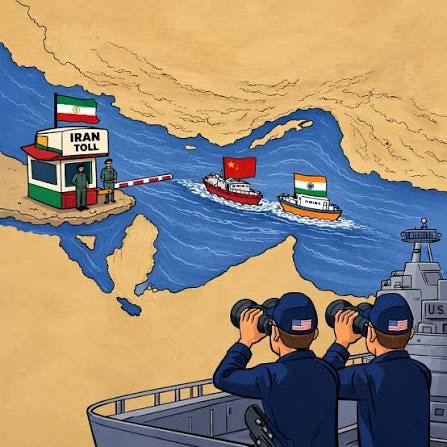
The Strait of Hormuz Is Not a Toilet Drain
Listening to Donald Trump and his supporters talk about the Strait of Hormuz, you’d think global commerce operates like the plumbing under a kitchen sink. In their version of reality, all you have to do is announce that the strait is open, wave a memorandum of understanding around, declare victory, and suddenly oil tankers, cargo ships, insurance companies, ports, and commodity markets all snap back to normal.
That’s not how any of this works.
An aerial view of the Strait of Hormuz looks a little like the pipe coming out of your toilet. But unlike your bathroom plumbing, the global economy doesn’t respond instantly when a blockage is removed. If a plumber clears a clog, water flows immediately. If a major shipping lane has been threatened, restricted, mined, attacked, or subjected to military brinkmanship, the consequences ripple through an entire global system.
Ships don’t magically teleport back into position.
Insurance companies don’t immediately lower risk premiums.
Shipping schedules don’t instantly normalize.
Ports don’t suddenly erase weeks of congestion.
Commodity traders don’t immediately forget the uncertainty that drove prices upward.
Even if the strait were completely secure today—which remains a very big “if”—it could take thirty, sixty, ninety days or more before supply chains begin looking anything like normal. The disruptions create a backlog that has to work its way through the system. Every delayed tanker affects refineries. Every delayed refinery shipment affects distributors. Every distributor delay affects consumers.
That’s the reality of global logistics.
Yet the sales pitch from the White House is always the same. A press release becomes a victory. A memorandum becomes a treaty. A temporary pause becomes permanent peace. A photo opportunity becomes a historic achievement.
We’re told that Iran has agreed to some form of arrangement that allows passage through the strait for ninety days before restrictions could potentially be revisited. Ninety days sounds impressive in a headline. In reality, ninety days may simply be enough time to begin addressing the backlog that already exists. It may not even be enough for markets to regain confidence that the route will remain stable.
Because confidence is the real currency here.
Shipping companies make decisions based on expectations. Insurers make decisions based on risk. Investors make decisions based on stability. None of those groups are known for taking politicians at their word—especially politicians who have spent years announcing victories that later turned out to be temporary, exaggerated, or entirely imaginary.
The global economy doesn’t care about campaign slogans.
It doesn’t care about Truth Social posts.
It doesn’t care how many times someone declares that they alone have solved the problem.
The economy responds to facts on the ground, ships in the water, contracts being honored, and risks being reduced over time.
And that is where the concern lies.
Because we’ve seen how this administration operates. Every challenge becomes an opportunity for self-congratulation. Every crisis becomes a stage. Every temporary development becomes proof of genius. The announcement is often treated as more important than the outcome.
But the outcome is what matters.
If tankers are moving safely six months from now, that’s success.
If energy prices stabilize six months from now, that’s success.
If shipping costs return to normal six months from now, that’s success.
Not the press conference. Not the memorandum. Not the headline.
The actual results.
Unfortunately, Americans have learned to be skeptical. We have watched too many grand declarations dissolve into excuses. Too many promises become moving goalposts. Too many “historic victories” require endless explanations afterward.
So when we’re told that the Strait of Hormuz is open and everything is fine, the proper response isn’t celebration.
It’s patience.
Let’s see the ships move.
Let’s see the markets stabilize.
Let’s see the prices fall.
Let’s see ninety days turn into six months and six months turn into a year.
Then we’ll know whether this was a genuine solution or just another episode in a reality show that happens to be filmed from the Oval Office.
-
One more misstep, blamed on someone else
Dwain Northey (Gen X)
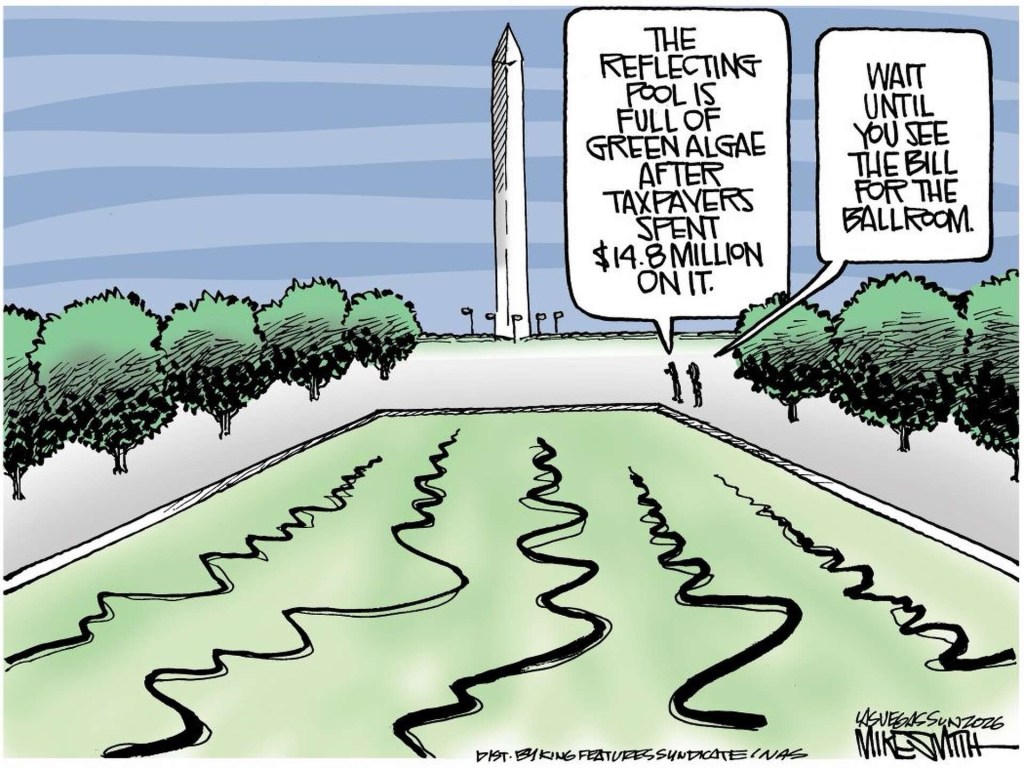
The Reflecting Pool of Accountability
One of the most remarkable talents Donald Trump has displayed over the course of his public life is the ability to identify a problem and then immediately search for someone else to blame for it. It is never the contractor. It is never the consultant. It is never the manager. It is certainly never Donald himself. Somewhere, somehow, there is always a saboteur lurking in the shadows, waiting to take the fall for whatever went wrong.
The latest episode in this long-running reality show involves the reflecting pool, which has apparently developed peeling surfaces, persistent algae, and enough maintenance problems to make a backyard pond owner cringe. Rather than accepting the possibility that the work was poorly executed, that corners were cut, or that an overpriced contractor delivered a bargain-basement result, the instinctive response has once again been to suggest that somebody must have damaged it.
Of course.
Because concrete never cracks.
Waterproofing never fails.
Construction projects are never rushed.
And contractors who win work because of political connections have never, in the history of humanity, delivered substandard results.
No, it must be sabotage.
This explanation follows a familiar pattern. If the economy stumbles, blame a predecessor. If a policy fails, blame bureaucrats. If a deal falls apart, blame foreign governments. If a contractor produces work that starts peeling faster than a cheap paint job in the Arizona sun, blame mysterious enemies.
The irony is that Trump built an entire public persona around being the master builder, the construction genius, the guy who supposedly knew how to hire the best people and negotiate the best deals. We were told repeatedly that he could spot incompetence from a mile away. We were assured that only the finest contractors, the greatest workers, and the most talented professionals surrounded him.
Yet somehow, whenever one of these “best people” produces a disaster, responsibility evaporates faster than water in the Sonoran Desert.
If the reflecting pool is peeling, if algae is flourishing, if repairs are already needed, there is a far simpler explanation than an elaborate sabotage conspiracy. Maybe the job was done poorly. Maybe maintenance was neglected. Maybe the contractor charged premium prices and delivered discount quality.
Anyone who has ever owned a home knows this scenario. You hire someone. They promise perfection. They cash the check. Six months later you’re staring at bubbling paint, crooked tile, or a leaking pipe wondering where all that money went.
The difference is that most homeowners eventually admit they hired the wrong person.
Trump’s version is to insist that invisible villains snuck into the night and sabotaged the work.
At some point, the reflecting pool becomes a metaphor for the entire administration. Things go wrong. Problems appear. Costs rise. Quality declines. The evidence is sitting right there in plain sight. Yet instead of acknowledging mistakes and fixing them, energy is spent constructing increasingly elaborate explanations for why someone else is responsible.
The pool reflects more than the buildings around it. It reflects a philosophy of leadership in which accountability is always for other people.
And if the algae keeps growing, perhaps it is because blame, unlike chlorine, has never been particularly effective at cleaning things up.
-
Obama Center
Dwain Northey (Gen X)

We Can Still Have Nice Things
In the middle of the daily chaos, the manufactured outrage, the all-caps social media meltdowns, the lawsuits, the investigations, the tariff threats, the revenge tours, and whatever fresh absurdity tumbles out of Washington before breakfast, something remarkable happened.
The Obama Presidential Library opened.
And for a brief moment, America remembered that politics doesn’t always have to feel like a cage match between conspiracy theories and cable news ratings.
There was joy.
Not outrage. Not grievance. Not anger.
Joy.
The images coming out of the opening weren’t of people screaming at each other. They weren’t crowds wearing matching hats and demanding retribution against their fellow citizens. They weren’t politicians trying to sell fear as a governing philosophy.
Instead, there were families. Children. Former staffers. Historians. People remembering a period of time when the biggest scandal in Washington seemed to involve a tan suit or the type of mustard someone put on a hamburger.
Think about that for a second.
A presidential library is, at its core, a monument to history. It is a statement that says, “This happened. These records matter. This presidency is now part of the American story.”
And that story drives Donald Trump absolutely crazy.
Because libraries are about legacy.
Trump is obsessed with attention.
Obama is obsessed with legacy.
Those are not the same thing.
One seeks applause today.
The other seeks relevance fifty years from now.
The opening of the library was a reminder that history eventually gets written by archivists, scholars, and citizens—not by social media algorithms.
What made the event particularly delightful was that speaker after speaker managed to draw contrasts with the current political climate without ever uttering Trump’s name.
Not once.
No need.
They talked about decency.
They talked about public service.
They talked about empathy.
They talked about the Constitution.
They talked about democracy.
And every sentence landed like a dart.
No names required.
It was the political equivalent of saying, “If the shoe fits,” and watching someone across the room frantically try to hide their feet.
The audience understood.
America understood.
The contrast was obvious.
One side was celebrating books, education, public service, and historical preservation.
The other side spends an alarming amount of time trying to ban books, attack universities, rewrite history, and convince people that expertise is somehow elitist.
You don’t have to mention the name.
Everyone gets the joke.
That’s what probably stung the most.
Trump thrives on being the center of attention. Every criticism is supposed to become a battle. Every disagreement becomes a feud. Every event is supposed to orbit around him like planets around the sun.
Yet here was an entire national event that wasn’t about him.
Not remotely.
Thousands of people celebrating another president’s accomplishments.
Thousands of people remembering hope instead of grievance.
Thousands of people gathering around an idea bigger than one man’s ego.
For a narcissist, being ignored is worse than being criticized.
And the opening of the Obama Library was, in many ways, the ultimate act of indifference.
Nobody needed to say Trump’s name.
Nobody needed to argue with him.
Nobody needed to respond to whatever he posted that morning.
They simply celebrated something positive.
Something constructive.
Something lasting.
A library.
Imagine that.
A building dedicated to preserving knowledge in an era when ignorance is increasingly marketed as authenticity.
A monument to facts in an age of alternative facts.
A celebration of learning in a political culture that sometimes seems openly hostile to education.
There is a certain poetic beauty in that.
Because long after the social media posts are forgotten, long after the scandals fade, long after the cable news panels move on to the next manufactured crisis, the library will still be there.
Students will walk through it.
Researchers will study in it.
Families will visit it.
History will live in it.
And that’s the thing about real legacies.
They don’t need to shout.
They don’t need to trend.
They don’t need to insult anyone at three o’clock in the morning.
They simply endure.
The opening of the Obama Presidential Library was a reminder that despite all the noise, all the division, all the endless outrage machine that dominates modern politics, America can still create something hopeful.
We can still have nice things.
And judging by the smiles on the faces of the people attending, that’s exactly what made the moment so powerful.
Not because it was political.
But because, for a few hours, it felt bigger than politics.
It felt like history.
And history, unlike social media, has a very long memory.
-
June 19, 1865
Dwain Northey (Gen X
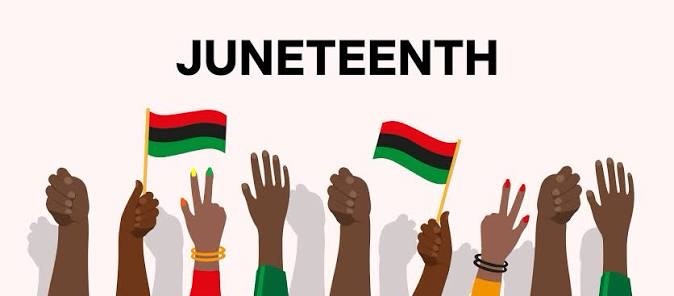
Juneteenth and the History We Didn’t Learn
Juneteenth is one of those holidays that perfectly illustrates America’s complicated relationship with its own history.
For those who somehow made it through decades of American education without hearing about it—like I did—Juneteenth commemorates June 19, 1865, the day Union troops arrived in Galveston, Texas, and informed enslaved people that they were free. The Civil War was effectively over. The Confederacy had collapsed. More importantly, Abraham Lincoln had issued the Emancipation Proclamation two and a half years earlier.
Two and a half years.
Think about that for a moment.
The people who were still being held in bondage in Texas in June of 1865 had technically been free since January of 1863. Somewhere along the line, slave owners either ignored the law, hid the truth, or simply continued the practice because there was nobody around with enough authority to stop them.
The cruel irony is that some of those last enslaved Americans may very well have heard rumors about Lincoln’s assassination before they heard they were free.
Lincoln was killed in April of 1865. Juneteenth didn’t arrive until two months later.
Imagine learning that the man who supposedly freed you was dead before anyone bothered to tell you that you had actually been freed.
That fact alone should tell us something about the realities of slavery and the realities of power.
Yet when I was growing up in the 1970s and 1980s, Juneteenth wasn’t part of the curriculum. Not in elementary school. Not in junior high. Not in high school. We learned about George Washington crossing the Delaware. We learned about the Boston Tea Party. We learned about Paul Revere’s ride, whether he actually made it alone or not.
But Juneteenth?
Nothing.
The final chapter of slavery in America was treated like a footnote.
Part of that is because America has always preferred its history polished and inspirational. We like stories where the good guys win, the credits roll, and everybody lives happily ever after.
Slavery doesn’t fit neatly into that narrative.
The Civil War doesn’t fit neatly into that narrative.
The fact that freedom had to be delivered at the point of a Union bayonet doesn’t fit neatly into that narrative.
And the fact that some Americans continued to be enslaved long after the law said they were free is deeply uncomfortable.
Juneteenth forces us to confront a truth that many people would rather avoid: America was built on extraordinary ideals and extraordinary contradictions. The same nation that proclaimed that all men are created equal also created a system where human beings could be bought and sold. The same country that celebrates liberty every Fourth of July spent centuries denying that liberty to millions of people.
Recognizing Juneteenth isn’t about assigning guilt to people alive today. It’s about recognizing reality.
History isn’t a Hallmark card.
It’s messy. It’s tragic. It’s complicated. Sometimes it’s heroic and shameful at the same time.
Juneteenth reminds us that freedom isn’t just about what gets written on paper. It’s about whether that freedom actually reaches people. A proclamation in Washington meant very little to someone working a plantation hundreds of miles away if nobody enforced it.
In many ways, Juneteenth is the perfect American holiday because it captures both our highest aspirations and our deepest failures. It celebrates freedom while reminding us how long it took for freedom to arrive. It celebrates progress while forcing us to acknowledge the suffering that made that progress necessary.
Most importantly, it reminds us that history isn’t supposed to make us comfortable.
It’s supposed to make us understand.
The fact that I never heard about Juneteenth in school says as much about America as Juneteenth itself. We were taught the parts of the story that made us feel proud. We skipped over the parts that required reflection.
Fortunately, history has a way of resurfacing no matter how hard people try to bury it.
Juneteenth is one of those stories.
And perhaps the best reason to celebrate it is not simply because freedom finally reached those last enslaved Americans in Texas. It’s because remembering the delay reminds us how fragile freedom can be, how easily truth can be withheld, and how important it is to tell the whole story—not just the comfortable parts.
Because a nation that refuses to learn its history eventually ends up repeating it.
-
Change the Game
Dwain Northey (Gen X)
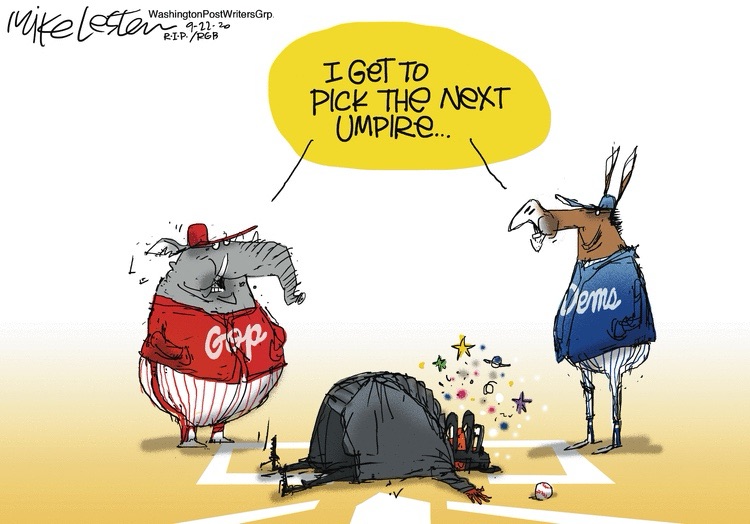
Maybe It’s Time to Reimagine Elections
Every election cycle, we’re told that America has the greatest democracy in the world. Then we spend the next two years watching candidates raise billions of dollars, flood our screens with attack ads, and campaign nonstop for offices they already hold.
At some point, you have to ask whether we’re running a democracy or a never-ending reality show.
I’m not necessarily arguing that we should scrap everything and adopt a parliamentary system. In a country with multiple viable parties and coalition governments, there are certainly things worth admiring. More viewpoints get represented. More parties get a seat at the table. But that’s not the country we have. We have a two-party system that behaves like two rival sports franchises, and our election system should at least acknowledge reality.
What we have now is madness.
Take California’s jungle primary. The idea was to encourage moderation and give voters more choices. Instead, you sometimes end up with two candidates from the same party advancing while millions of voters feel like they have no meaningful option in the general election. It solves some problems and creates others.
Ranked-choice voting, however, is something that deserves serious consideration. Instead of forcing voters into a binary choice between Candidate A and Candidate B, voters can rank their preferences. If their first choice doesn’t have enough support, their vote isn’t simply thrown away. It moves to their next preference. The result is often candidates who appeal to a broader range of voters instead of just the loudest faction of their party.
Then there’s the giant elephant sitting in every campaign headquarters: money.
No matter which party you support, it is difficult to argue that the current system makes any sense. Candidates spend staggering amounts of time fundraising. Members of Congress practically start dialing for dollars the day after they’re sworn into office. We elect people to write legislation, oversee government agencies, and solve problems. Instead, many spend a significant portion of their careers chasing campaign contributions.
Imagine hiring a plumber to fix your pipes and then discovering he spends half his workday asking for tips so he can afford to come back next year.
That’s essentially our system.
Campaigns should be publicly funded or funded through small individual donations with strict limits. Corporate money, Super PAC money, dark money, billionaire money—whatever label we want to put on it—has become so intertwined with politics that it’s difficult for ordinary citizens to believe their voices carry the same weight.
And while we’re at it, let’s shorten campaign seasons.
Most modern democracies somehow manage to conduct elections in a matter of weeks or months. In America, presidential campaigns feel like they last longer than some wars.
Limit federal campaigns to 180 days. Six months. That’s it.
If you can’t explain your vision for the country in half a year, maybe the problem isn’t the campaign calendar.
Think about how much governing could actually get done if legislators weren’t permanently running for reelection. Members of the House begin fundraising almost immediately after taking office because the next election is always around the corner. Senators get a little more breathing room, but even they spend years positioning themselves for the next campaign.
We’ve created incentives that reward fundraising, outrage, and constant self-promotion. Then we act surprised when politics becomes a circus.
Maybe democracy isn’t supposed to feel like a never-ending marketing campaign.
Maybe elected officials should spend more time governing than fundraising.
Maybe voters should have more choices than two candidates screaming at each other through television ads.
And maybe, just maybe, a healthy democracy is one where ideas compete more than bank accounts.
That’s not a radical idea. It’s just a recognition that a system designed for the 18th century might need a tune-up before we head deeper into the 21st.
Because if Congress spends all its time campaigning, who’s actually doing the job we hired them to do?
-
MOU
Dwain Northey (Gen X)
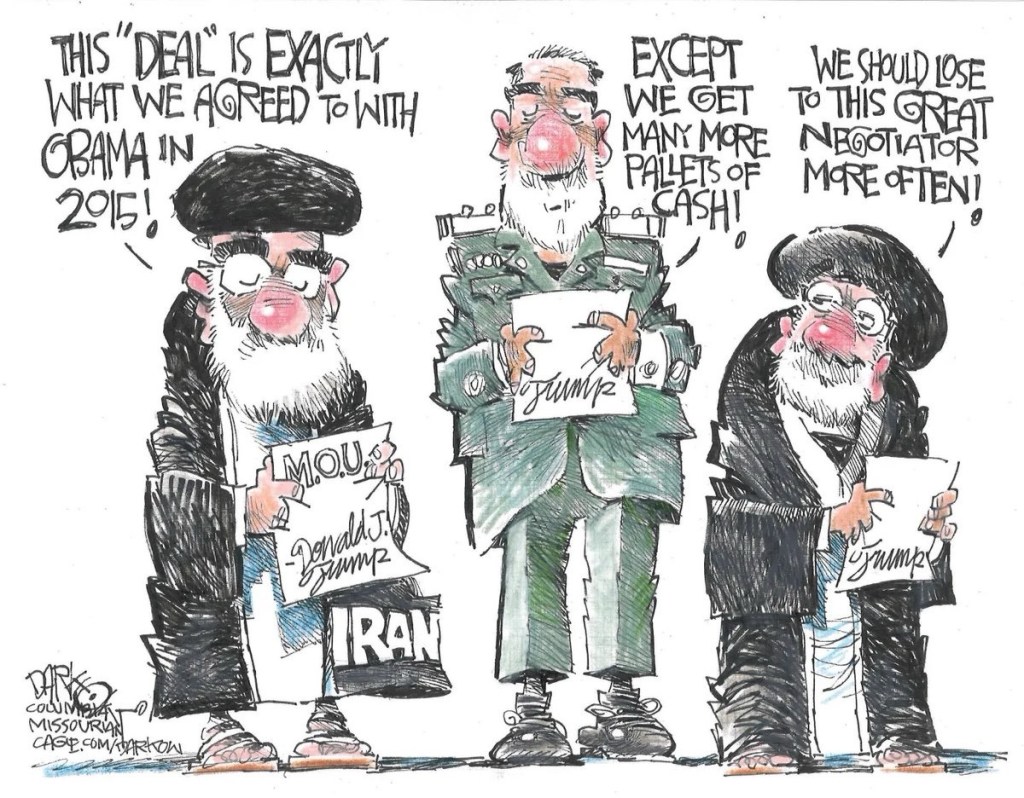
The Art of the Deal, the Memorandum of Understanding, and Other Fairy Tales
Donald Trump loves to tell us he’s a master negotiator. The Art of the Deal. The ultimate dealmaker. The guy who can walk into a room, stare down world leaders, and emerge victorious carrying a signed agreement and a photo op.
The problem is that many of these so-called deals increasingly resemble something less like diplomacy and more like an abusive husband standing in the kitchen saying, “Look, sweetheart, I won’t punch you in the face this week if you just remember to do the dishes.”
That’s not a deal.
That’s extortion with better branding.
The latest Memorandum of Understanding, or MOU, being hailed as some great diplomatic achievement appears to follow the same basic formula. We agree not to do something harmful that we shouldn’t be doing in the first place, and in return the other party agrees to make concessions. Then everyone gathers around and applauds because civilization has apparently reached the point where basic decency is now considered a negotiating tactic.
Imagine your neighbor standing on your lawn holding a gas can.
“Nice house you’ve got there. Sign this memorandum and I probably won’t set it on fire.”
You wouldn’t call that a successful negotiation. You’d call the police.
Yet somehow when it happens between governments, corporations, or powerful individuals, we’re supposed to marvel at the strategic genius involved.
Of course, this approach shouldn’t surprise anyone familiar with Trump’s business history. Contractors have been telling versions of the same story for decades.
“Do the work.”
“Will I get paid?”
“Maybe.”
“Do you have a contract?”
“Sure.”
“Will you honor it?”
“We’ll see.”
For countless small businesses, plumbers, painters, electricians, and construction companies, that was reportedly the Trump version of an MOU. You perform the work, then spend months or years fighting to get compensated. If you’re lucky, you settle for pennies on the dollar because you can’t afford an army of lawyers.
That’s not the Art of the Deal.
That’s the Art of Being Bigger Than the Other Guy.
And now we see the same playbook elevated to international politics. Threaten tariffs. Threaten sanctions. Threaten retaliation. Threaten economic pain. Then offer to temporarily stop threatening people if they give you something in return.
The headlines call it leverage.
Most normal people would call it bullying.
The truly absurd part is that supporters often point to the existence of the agreement itself as proof of success. Never mind what’s actually in it. Never mind whether it solves anything. Never mind whether both parties walk away equally satisfied.
There’s paper.
There are signatures.
There are cameras.
Mission accomplished.
It’s the diplomatic equivalent of putting a “Mission Accomplished” banner over a leaky roof.
The older I get, the more I realize that genuine negotiation usually involves compromise. Both sides give a little. Both sides get a little. Nobody gets everything they want.
But that’s not flashy enough for reality television politics.
Reality television requires winners and losers.
Heroes and villains.
Deals that can be marketed like steak knives at two in the morning.
So every MOU becomes the greatest agreement ever signed. Every handshake becomes a historic victory. Every temporary ceasefire in hostilities becomes evidence of unparalleled genius.
And yet somehow we’re constantly back at the negotiating table, facing the same problems that were supposedly solved by the last historic agreement.
Maybe that’s because a real deal creates stability.
A shakedown creates compliance—at least until the other party gets tired of being shaken down.
The Art of the Deal was always sold as a blueprint for success. Increasingly it looks more like a manual for turning every relationship into a protection racket.
“Nice economy you’ve got there.”
“Nice trade agreement.”
“Nice alliance.”
“Be a shame if something happened to it.”
And somehow we’re supposed to applaud the guy who threatened the damage when he agrees not to cause it for another six months.
-
Trillion Dollar Man
Dwain Northey (Gen X)
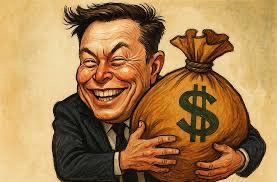
The Trillionaire and the Taxpayer
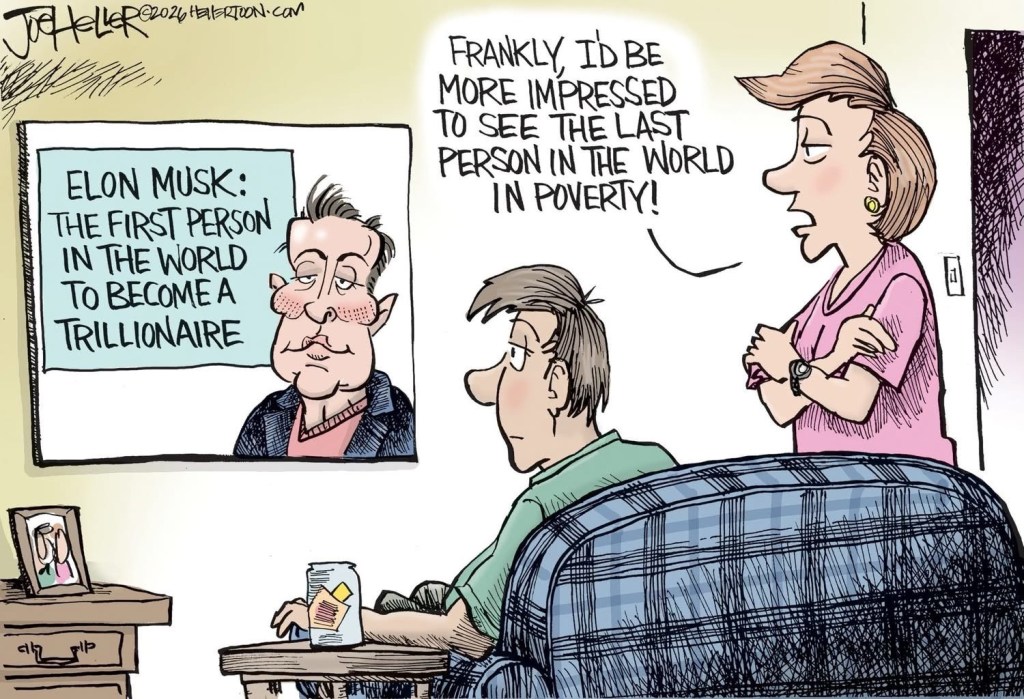
When I was growing up in the 1970s and 1980s, a billion dollars was cartoon-villain money. A billionaire was someone who lived in a mansion on top of a mountain, probably had a secret lair, and appeared in movies as the guy trying to buy a country. Most of us couldn’t even comprehend a billion dollars. It was simply too much money to fit into a normal human brain.
Now we have a trillionaire.
Not a country. Not a government. Not an empire.
One guy.
A trillion dollars.
That’s a number so absurd that our grandparents didn’t even use it in everyday conversation. A million seconds is about eleven days. A billion seconds is over thirty-one years. A trillion seconds is nearly thirty-two thousand years. Human civilization wasn’t even writing things down thirty-two thousand years ago.
Yet somehow we’ve reached a point where one person can accumulate that much wealth and half the country shrugs and says, “Good for him.”
The latest milestone comes as Elon Musk’s fortune explodes thanks to SpaceX’s valuation and public trading. SpaceX is undoubtedly an impressive company. Reusable rockets are remarkable engineering. But let’s stop pretending this was some lone genius building rockets in a garage with spare parts and a dream.
SpaceX has received billions upon billions in government contracts. NASA contracts. Department of Defense contracts. Launch agreements funded by taxpayers. The company was nurtured and sustained by public money from its early years. The same taxpayers who are told there’s no money for affordable housing, no money for healthcare, no money for student debt relief, no money for infrastructure, and certainly no money to make sure kids don’t go hungry.
Funny how money always appears when corporations need it.
Tesla tells a similar story. Federal tax credits. State incentives. Subsidies. Regulatory credits worth billions. Public investment helped create the environment where Tesla could flourish.
Again, none of this means the companies aren’t innovative. They are.
But let’s not rewrite history into some fairy tale about rugged individualism. The American taxpayer was an investor whether they wanted to be or not. The difference is taxpayers don’t get stock options.
They get potholes.
They get higher grocery bills.
They get lectures about fiscal responsibility.
And they get to watch the richest man in history become even richer.
The truly staggering part isn’t that Elon Musk has a trillion dollars. It’s that we’ve somehow normalized it. We live in a society where people struggle to afford rent, where working families juggle two or three jobs, where seniors choose between prescriptions and groceries, and where homelessness exists in virtually every major city.
Meanwhile, one man’s net worth exceeds the economic output of many nations.
Think about that for a second.
A trillion dollars isn’t wealth. It’s power.
It’s the ability to influence markets, media, politics, technology, and public discourse on a scale previously reserved for governments.
Could one person solve world hunger? Not permanently. The problem is more complicated than writing a check.
Could one person dramatically reduce homelessness, fund medical research, transform education, provide clean water, build infrastructure, and improve millions of lives?
Absolutely.
Instead, we’ve built a culture that treats extreme wealth as if it’s an Olympic sport. Every new billionaire is celebrated. Every new hundred billion is applauded. Every new record becomes proof that the system works.
But if one person can accumulate a trillion dollars while millions struggle to survive, maybe that’s not evidence the system is working.
Maybe it’s evidence the system is working exactly as designed.
The billionaire era was already difficult to justify. The trillionaire era is something else entirely. It’s a flashing neon sign announcing that wealth has become detached from any reasonable human scale.
And the irony is impossible to ignore.
The taxpayers helped build the launchpad.
The taxpayers funded the contracts.
The taxpayers absorbed the risk.
Then the profits blasted into orbit.
And now we’re supposed to stand on the ground, looking up, and cheer while a trillionaire waves from space.


You must be logged in to post a comment.