Dwain Northey (Gen X)
https://www.cbsnews.com/news/naacp-travel-advisory-florida-says-state-hostile-to-black-americans/
Remember the good old days when there were only travel advisories and or ban for, what some would call, third word countries? Well now because of the vile vitriol of one Governor Ron DeSantis the state of Florida, a vacation destination, has received a travel advisory by the NAACP.
The wannabe future President has made the climate so venomous in Florida the anyone who is a part of any minority group does not feel safe in the state. Black, Brown, LGTBQ+, these are all groups that are under attack in the Sunshine State. The majority Republican legislature and their fearful leader has passed laws that make almost everything a jailable offence and the fact that the state has very loose gun laws and a stand your ground law makes it more dangerous than being a blonde female in central America.
Florida residents are able to carry concealed guns without a permit under a bill signed into law by Republican Gov. Ron DeSantis. The law, which goes into effect on July 1, means that anyone who can legally own a gun in Florida can carry a concealed gun in public without any training or background check. This with their ridiculous stand your ground law, ‘Florida’s “Stand-Your-Ground” law was passed in 2005. The law allows those who feel a reasonable threat of death or bodily injury to “meet force with force” rather than retreat. Similar “Castle Doctrine” laws assert that a person does not need to retreat if their home is attacked.’ Makes it really sketchy to go there.
This in top of the don’t say gay rule and the new trans ruling that just passed.
“Florida lawmakers have no shame. This discriminatory bill is extraordinarily desperate and extreme in a year full of extreme, discriminatory legislation. It is a cruel effort to stigmatize, marginalize and erase the LGBTQ+ community, particularly transgender youth. Let me be clear: gender-affirming care saves lives. Every mainstream American medical and mental health organization – representing millions of providers in the United States – call for age-appropriate, gender-affirming care for transgender and non-binary people.
“These politicians have no place inserting themselves in conversations between doctors, parents, and transgender youth about gender-affirming care. And at the same time that Florida lawmakers crow about protecting parental rights they make an extra-constitutional attempt to strip parents of – you guessed it! – their parental rights. The Human Rights Campaign strongly condemns this bill and will continue to fight for LGBTQ+ youth and their families who deserve better from their elected leaders.”
This law makes it possible for anyone to just accuse someone of gender affirming care to have their child taken from them this would include someone traveling from out of state. This alone justifies a travel ban to the Magic Kingdom for families.
Oh, and I haven’t even mentioned DeSantis holy war with Disney, the largest employer in the state. I really hope the Mouse eats this ass holes lunch.
Well that’s enough bitching, thanks again for suffering though my rant.
-
N.I.C.E.
Dwain Northey (Gen X)

Oh yes, because nothing says “serious governance” quite like solving complex, decades-old policy debates with… a vowel.
Apparently, Donald Trump has decided that the issue with U.S. Immigration and Customs Enforcement isn’t policy, oversight, accountability, or those inconvenient headlines—it’s branding. Just branding. A rebrand. A little linguistic makeover.
ICE? Too cold. Too harsh. Too… on the nose.
But NICE? Now that’s the ticket. Warm. Friendly. Reassuring. Like a customer service rep who just denied your claim but thanked you for your patience and invited you to have a wonderful day.
And the brilliance of it all? If you rename it “National Immigration and Customs Enforcement,” suddenly the acronym becomes NICE, and the media is “forced” to say “NICE agents” all day long. Problem solved. Public perception: fixed. Decades of controversy: gone. All it took was the strategic deployment of a single consonant swap.
That’s it. That’s the plan. Madison and Hamilton are somewhere asking if this was really the endgame.
Because clearly, if something sounds pleasant, it is pleasant. That’s just common sense. Next up, we’ll be renaming root canals to “Happy Tooth Journeys” and hurricanes to “Aggressive Breezes.” Maybe we can call traffic jams “spontaneous parking opportunities” while we’re at it.
And honestly, it’s not even surprising. This is entirely consistent with a worldview where reality is negotiable as long as the branding is strong enough. After all, this is the same orbit of thinking that has flirted with calling the United States Department of Defense the “Department of War”—because why settle for measured, diplomatic language when you can sound like the title card of an action movie?
Think about that contrast for a second. One agency gets softened into something that sounds like it hands out cookies. Another gets hardened into something that sounds like it hands out ultimatums. It’s like federal agencies are just emotional support labels now—adjust the tone depending on what reaction you want that day.
And threading through all of this is the small, almost charming detail that there’s still an apparent desire for a Nobel Peace Prize. Yes, the same mindset that thinks “Department of War” really pops is also eyeing one of the world’s highest honors for peace.
It’s a kind of conceptual multitasking that’s hard not to admire. Why choose between sounding tough and sounding benevolent when you can just rename things until you’re somehow both?
Of course, there’s the minor inconvenience that renaming federal agencies isn’t like updating your Wi-Fi password. It involves laws, bureaucracy, Congress—all those pesky details that don’t fit neatly into a branding exercise. But why let reality interrupt a perfectly good naming brainstorm?
Because that’s what this really is: government by rebrand. Policy by vibes. If something feels controversial, soften the name. If something feels weak, toughen it up. If people are concerned, just give the concern a nicer label and hope it goes away.
And the underlying assumption is almost endearing in its simplicity—that Americans are just one clever acronym away from completely rethinking complicated institutions. As if decades of debate can be undone by the linguistic equivalent of putting a smiley face sticker on it.
At this rate, we’re not far from a full rollout:
Deficit? “Surprise Savings Gap.”
Recession? “Economic Nap.”
War? “Extended Peacekeeping Opportunity.”Problem solved. Everything is NICE now.
-
Correspondence dinner 2026
Dwain Northey (Gen X)
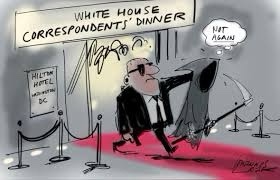
There’s a certain kind of outrage that only shows up when the threat gets close enough to brush against tuxedos and evening gowns. Suddenly, everyone remembers what fear feels like. Suddenly, security lapses are intolerable. Suddenly, it’s a national scandal.
At the White House Correspondents’ Dinner, an incident involving a shooter—who, thankfully, never even made it inside the ballroom—has sparked exactly that kind of reaction. And to be clear, it’s a good thing it didn’t escalate. No one with a functioning brain is rooting for violence. The relief is real.
But so is the whiplash.
Because the same voices now clutching pearls hard enough to leave fingerprints have spent years treating school shootings like inconvenient weather patterns. Tragic, yes—but also somehow inevitable, unfixable, and definitely not urgent enough to disrupt the political comfort zone. Kids run active shooter drills like they’re preparing for a pop quiz, and the national response is a shrug wrapped in “thoughts and prayers.”
Yet let a threat drift within proximity of powerful people and well-dressed journalists, and suddenly it’s DEFCON 1 for the national conscience.
Now, predictably, here comes Donald Trump, stepping up to the microphone to declare that security is terrible—just terrible—and that this is exactly why, obviously, we’ve needed a new, more secure ballroom for the past 150 years or so. Because nothing says “serious policy solution” like a construction project that conveniently aligns with long-standing wish lists.
It’s almost impressive how quickly a near-miss turns into a real estate pitch.
And that’s where it starts to feel… off. Not staged, not fake—but opportunistic in that very familiar way. A scary moment becomes a talking point. A talking point becomes justification. And justification becomes funding, contracts, headlines, and a fresh round of political theater.
Meanwhile, back in the real world, actual children still sit in classrooms where “what do we do if someone starts shooting?” is part of the curriculum. No ballroom upgrades. No sweeping security overhauls announced with urgency. No sudden, unified outrage that demands immediate action.
Just normalization.
So yes, it’s good that nothing happened at the dinner. It’s good that security, flawed as it may have been, ultimately held. But the reaction—the sheer intensity of it—reveals a hierarchy of concern that’s hard to ignore.
When danger hovers near power, it’s a crisis.
When it stalks everyday life, it’s a statistic.And that contrast? That’s the part that really sticks.
-
Playing with House $$
Dwain Northey (Gen X)
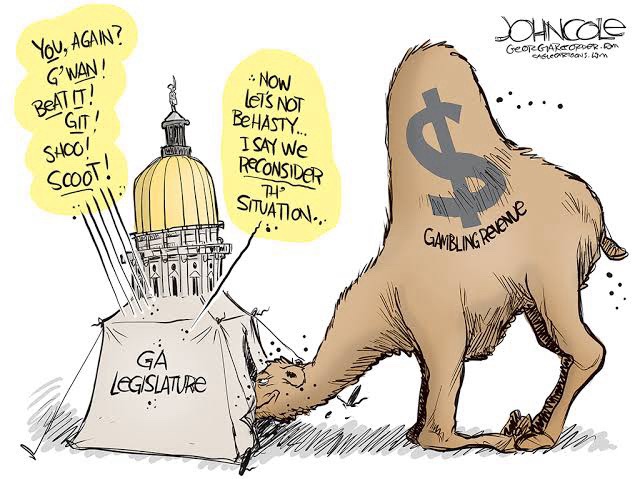
At some point in the early 20th century, the United States looked around at a handful of men quietly controlling entire industries and said, “You know what? Maybe this whole ‘one company owns everything’ thing isn’t great for anyone who isn’t that one company.” That realization didn’t come from abstract theory—it came from lived experience with monopolies that didn’t just dominate markets, they rigged them.
So along came laws like the Sherman Antitrust Act and later the Clayton Antitrust Act, and eventually high-profile trust-busting under figures like Theodore Roosevelt. The idea wasn’t complicated: markets only “work” if there’s actual competition. If one company controls everything—or if a few giant firms quietly agree not to compete—then the “free market” becomes more of a suggestion than a reality.
That’s why Standard Oil got broken up in 1911. It wasn’t because people suddenly developed a philosophical objection to oil. It was because Standard Oil had mastered the art of eliminating competition—buying it, crushing it, or undercutting it until it disappeared. Once that happens, prices stop being a result of competition and start being whatever the dominant player says they are.
Fast forward to today, and we hear a constant refrain: “Let the market decide.” It’s a nice slogan. Clean. Efficient. Almost comforting. The problem is that it assumes there is a market to decide anything.
Take airlines. Over the past few decades, mergers have turned what used to be a crowded field into a tight club dominated by a few major players like Delta Air Lines, American Airlines, and United Airlines. On paper, that’s still “competition.” In practice, it often looks like a synchronized dance of pricing, fees, and shrinking seat sizes. Consumers don’t really choose between fundamentally different options—they choose between variations of the same experience at nearly the same price.
Or consider media. A handful of conglomerates like Comcast and The Walt Disney Company control vast swaths of what people watch, read, and listen to. When ownership consolidates at that scale, diversity of viewpoints and pricing competition tend to narrow. It’s not that consumers suddenly lost interest in variety—it’s that the system stopped offering it.
And then there’s oil, where giants like ExxonMobil and Chevron Corporation dominate production and refining. Again, technically there’s more than one company, but if a market shrinks to a small handful of massive players, the difference between “competition” and “coordination” can get uncomfortably thin.
This is where the contradiction starts to show. You can’t champion the purity of the free market while ignoring the conditions that make a market free in the first place. Competition isn’t some natural state that magically persists on its own—it requires rules, enforcement, and sometimes intervention. That was the entire lesson of the antitrust era.
Because here’s the uncomfortable truth: if two or three companies control an industry, consumers don’t have meaningful choice. They have the illusion of choice. And an illusion isn’t something you can “let decide” anything.
Price fixing doesn’t even have to happen in smoke-filled rooms anymore. It can emerge through parallel behavior, algorithmic pricing, or simply the mutual understanding that aggressive competition would hurt everyone involved. When the incentives line up, companies don’t need to conspire—they just need to recognize what’s profitable.
So when someone says, “Let the market decide,” the obvious follow-up question is: which market? The one we had in 1910 that required breaking up monopolies? Or the one we’re drifting toward now, where consolidation quietly rebuilds them under a different name?
The early 20th century wasn’t anti-business—it was anti-unaccountable power. It recognized that capitalism without competition isn’t really capitalism. It’s something closer to a controlled system where outcomes are determined by a few dominant players.
And that’s the irony. The same country that once aggressively dismantled monopolies in the name of protecting markets now often defends consolidation in the name of preserving them. Somewhere along the way, “free market” stopped meaning “many competitors” and started meaning “whatever large corporations happen to be doing at the moment.”
If history had a sense of humor, it would probably point out that we already ran this experiment once. We know how it ends.
-
Just the Tip
Dwain Northey (Gen X)
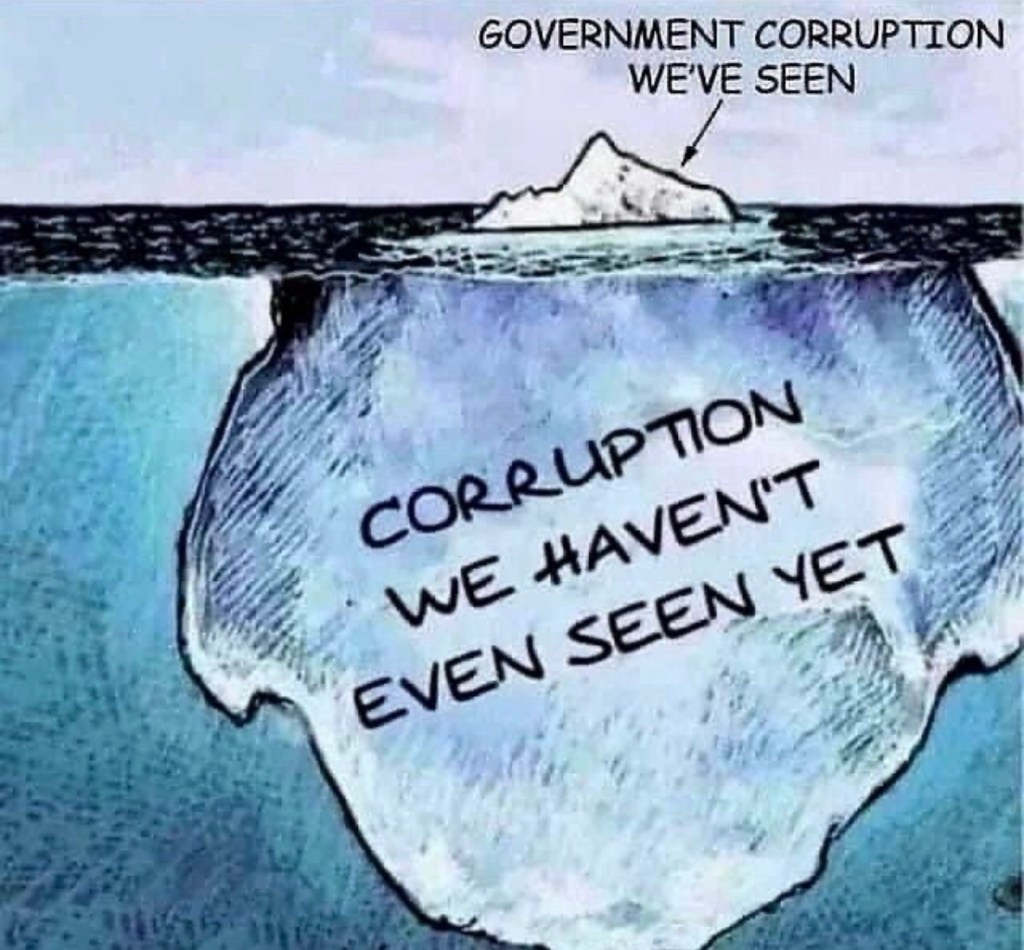
I’ll admit it: I’m absolutely terrified. Not of what we’re seeing right now—no, that would be too easy—but of what we aren’t seeing yet. Because if this is the “transparent,” “nothing to hide,” totally normal version of events, then whatever’s lurking beneath the surface must look like a deleted scene from a disaster movie that was deemed too unrealistic to include.
We’re getting these little drips of information, these carefully worded press statements, these accidental “oops” moments where something slips out that definitely wasn’t supposed to—and every single time, I find myself thinking: that’s it? That’s what they’re willing to admit out loud? Which naturally leads to the much more comforting thought: what in the world are they not admitting?
It’s like being on the Titanic, except instead of a lookout yelling “Iceberg ahead!” we’ve got officials calmly assuring us that what we’re seeing is just a bit of floating ice, totally normal, happens all the time, nothing to worry about—while quietly locking the binoculars in a drawer labeled “classified.” And I’m standing there, watching the water get colder, thinking, I’m pretty sure icebergs don’t usually come with this many nondisclosure agreements.
And the best part—truly, chef’s kiss—is the confidence. The absolute, unwavering confidence. The kind that says, “Trust us,” with the same energy as someone insisting the smoke in the kitchen is just “extra seasoning.” Meanwhile, the alarms are going off, the floor is tilting, and someone in the corner is still explaining that technically, according to the rules they just rewrote, everything is completely fine.
What really keeps me up at night isn’t the corruption we can point to. It’s the scale of what must exist if this is the sanitized version. Because history has a funny way of revealing that the first layer of scandal is usually just the appetizer. The main course comes later, when the documents get unsealed, the insiders start talking, and suddenly everyone collectively pretends they’re shocked—shocked!—to discover things that were practically glowing in the dark the whole time.
And I can already see it coming: years from now, there will be reports, investigations, maybe even a documentary series with ominous music and dramatic pauses. People will shake their heads and say, “How did no one know?” And I’ll be sitting there thinking, Oh, we knew. We just didn’t know how much.
So yes, I’m terrified. Not in a panicked, run-for-the-hills way—more in that slow, sinking realization that we’re cruising along, full speed ahead, while the people steering insist the map is optional and the iceberg is a conspiracy theory. And maybe, just maybe, it would be nice if someone—anyone—considered tapping the brakes before we all become a very expensive lesson in hindsight.
-
National Parks
Dwain Northey (Gen X)
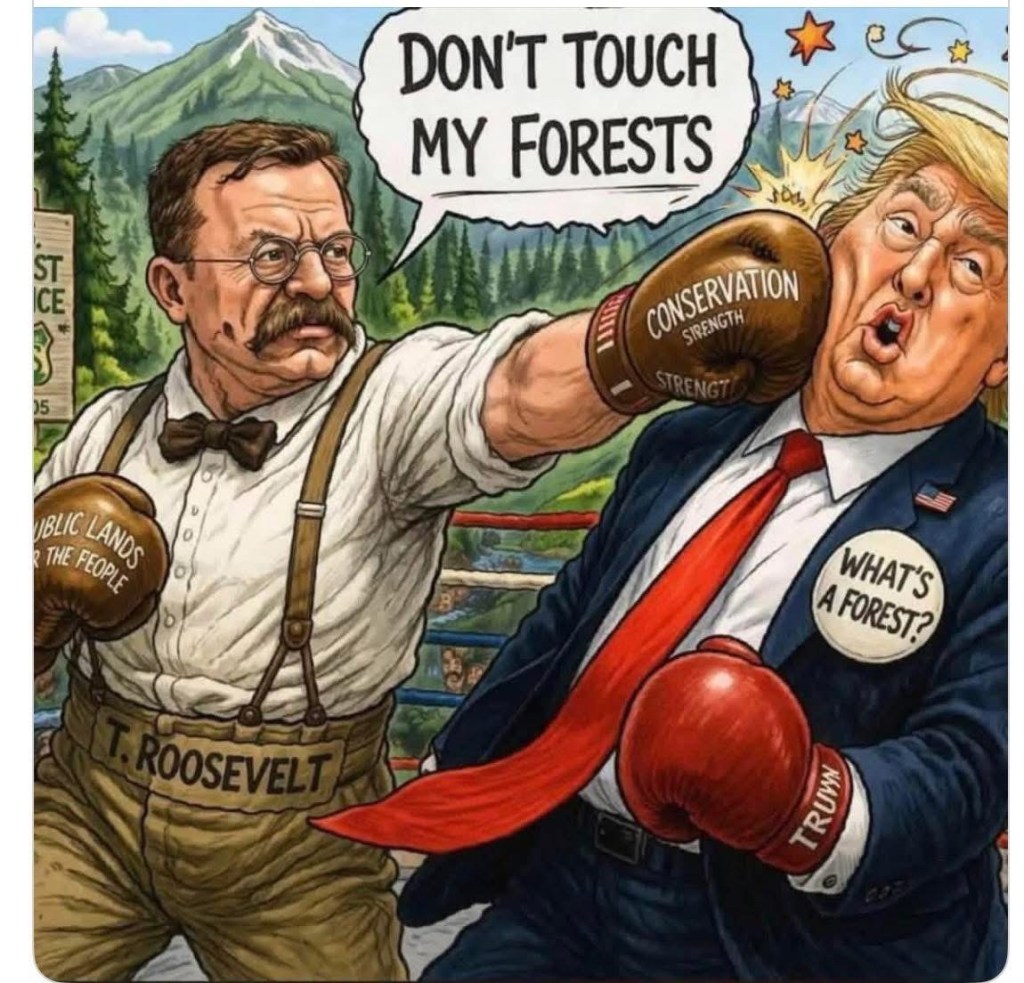
There was a time when American leadership could be summed up in one elegant line from Theodore Roosevelt: “Speak softly and carry a big stick.” It implied restraint, competence, and the quiet confidence of someone who didn’t need to scream into a microphone to feel important. Roosevelt wasn’t perfect—no president is—but he managed the remarkable trick of both projecting strength and understanding that some things are worth protecting simply because they exist. Forests, rivers, canyons—those inconvenient stretches of land that can’t be turned into quarterly profits.
In fact, Roosevelt helped establish what became the National Park Service, preserving millions of acres of wilderness so future generations could experience something other than strip malls and billboards. He looked at places like Yellowstone National Park and thought, “Maybe we shouldn’t bulldoze this.” A radical concept, apparently.
Fast forward to today, and the contrast feels less like history and more like satire that wrote itself and then gave up out of exhaustion. Enter Donald Trump—a man who has taken Roosevelt’s philosophy and flipped it into something like: “Speak loudly, carry nothing, and sell the stick for parts.” The volume is turned up to eleven, the substance is somewhere under the couch cushions, and the “big stick” has been replaced with a clearance sale sign slapped across public land.
Where Roosevelt saw irreplaceable natural heritage, the modern approach seems to see “unused real estate.” Why preserve a canyon when it could be a mining pit? Why protect wildlife when you could lease the land to the highest bidder and let them figure out how many endangered species fit in a quarterly earnings report? It’s as if the entire concept of conservation has been rebranded as “missed opportunity.”
And let’s be clear: this isn’t just a policy disagreement—it’s an identity crisis. The same country that once decided to safeguard vast landscapes for no immediate profit is now flirting with the idea that everything must justify itself in dollars per acre. Roosevelt’s America asked, “What should we protect?” Today’s version too often asks, “What can we sell?”
The irony would be funny if it weren’t so bleak. The party that loves to wrap itself in patriotic imagery now treats some of the most uniquely American treasures—the national parks—as disposable assets. Because nothing says “love of country” like auctioning off its most iconic landscapes to whoever promises the quickest return.
Roosevelt didn’t need to shout. The parks speak for him. The forests, the mountains, the open skies—they are the “big stick,” a lasting demonstration of foresight and restraint. Meanwhile, all the noise in the world can’t drown out the uncomfortable truth: once those places are gone, they’re not coming back. You don’t get to un-mine a canyon or un-drill a wilderness. There’s no “undo” button on ecological damage, no matter how loudly someone insists otherwise.
So here we are, comparing a president who quietly protected the country’s natural inheritance with one whose legacy, at least in this arena, risks being measured in how efficiently it can be dismantled. It’s not just a difference in style—it’s a difference in whether leadership means stewardship or liquidation.
And if that isn’t embarrassing, it’s only because we’ve apparently decided embarrassment, like national parks, is just another thing we can afford to lose.
-
Gerrymandering
Dwain Northey (Gen X)
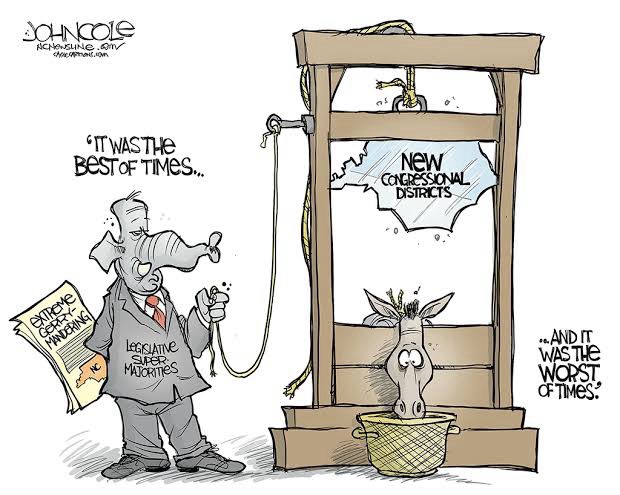
Ah yes, the ancient and sacred principle of American democracy: gerrymandering is perfectly fine—as long as we’re the ones doing it.
For years, the ritual has been straightforward. States like Texas redraw their maps with the artistic flair of a toddler with a crayon and a political agenda, carefully curving districts around inconvenient voters like they’re avoiding potholes. And when critics raise an eyebrow, the response is always the same: “This is just how the system works.” A shrug, a wink, maybe a quiet high-five.
Enter Donald Trump, who at one point encouraged mid-decade redistricting like it was a limited-time sale—“Why wait for the census when you can redraw the map right now?” And lo and behold, states complied. Democracy, but make it improv theater.
But then something truly shocking happened. States like California and Virginia decided to… also redraw districts. Through votes. With public input. You know, those inconvenient little things often marketed as “democracy.”
And suddenly, outrage.
Apparently, when Democrats engage in redistricting—especially when voters themselves approve it—it becomes a grave constitutional crisis. Cable news panels clutch pearls. Politicians gasp as though someone just suggested counting votes twice. “This is unfair!” they cry, as if fairness had ever been invited to the gerrymandering party in the first place.
Now, to make the outrage even more theatrical, let’s rewind to For the People Act of 2021—also known as H.R. 1. Among its many provisions was a proposal to curb partisan gerrymandering nationwide by requiring independent redistricting commissions. In other words, a radical, dangerous idea: maybe politicians shouldn’t be allowed to pick their own voters like they’re assembling a fantasy football team.
And how did Republicans respond to this horrifying concept of neutral map-drawing? With unanimous opposition. Every single one said “no thanks” to the idea of banning partisan gerrymandering at the federal level.
Which makes today’s outrage feel less like a principled stand and more like a plot twist nobody bothered to proofread.
The argument now seems to be: “We absolutely oppose banning gerrymandering… but also, how dare you gerrymander.” It’s a bold strategy—simultaneously defending the practice and condemning it, depending entirely on who’s holding the pen.
It’s a bit like a football team rewriting the rulebook mid-game, then throwing a tantrum when the other team reads it.
Of course, none of this is actually about principle. If it were, we’d have seen consistent outrage when districts started resembling abstract art installations. No, this is about control—about who gets to tilt the board and by how much. And for a long time, one side had a comfortable lead in that particular game.
Now that the other side has picked up the same tools, suddenly the tools themselves are the problem.
Curious how that works.
So here we are, watching a political class argue that democracy is only legitimate when it produces the “correct” outcomes, and that voters having a say in redistricting is somehow more suspicious than politicians drawing their own favorable maps behind closed doors.
It would be funny if it weren’t so surprising—except, of course, it isn’t surprising at all.
But at least we can all agree on one thing: gerrymandering is a terrible, undemocratic practice that must be stopped immediately… right after we finish using it one last time.
-
Americanism… Always on its own page
Dwain Northey (Gen X)
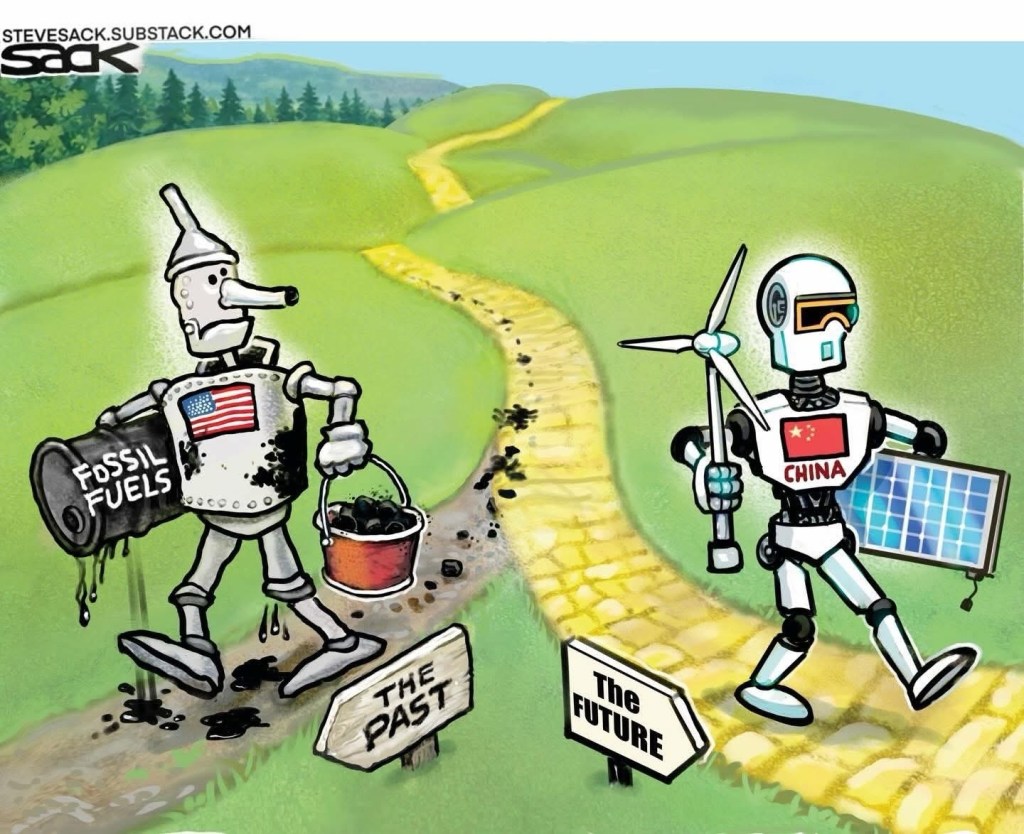
Ah yes, the proud American tradition: if the rest of the world is doing something logical, efficient, and forward-looking, we simply… don’t. Not out of inability, of course—no, no—out of principle. We didn’t spend decades putting a man on the moon just to be told by Europe that a kilometer makes more sense than a mile. A thousand meters in a kilometer? Clean, divisible, rational? Absolutely not. Give us 5,280 feet in a mile or give us confusion.
It’s really a beautiful consistency when you think about it. We’ve mastered the art of selective stubbornness. The metric system? Too modern, too global, too… cooperative. But abandoning long-term planning on energy, infrastructure, and climate? Now that’s innovation. That’s the kind of bold, trailblazing decision-making that really sets a nation apart—preferably behind everyone else.
While much of the world is out there installing wind farms, covering deserts in solar panels, and talking about “sustainability” like it’s not some kind of exotic hobby, we’ve taken a more nostalgic approach. Why move forward when you can double down on the past? Fossil fuels built this country, and by God, they’ll clog its lungs on the way out too. Progress is overrated anyway—who needs clean energy when you’ve got a perfectly good 20th-century playbook?
Meanwhile, other nations are treating renewable energy like the next industrial revolution, investing in it like it might actually matter in, say, the next 50 years. But here, we’ve cracked the code: just assume the future will sort itself out. It’s a strategy that pairs nicely with our measurement system—both rooted firmly in the idea that change is suspicious and inconvenience builds character.
And there’s something almost poetic about it. We’re watching the global race toward cleaner energy and saying, “You go ahead, we’ll catch up later.” Because if there’s one thing history has taught us, it’s that playing catch-up always works out great for global superpowers. No risks there at all.
So yes, while the rest of the world measures in meters and plans in decades, we’ll stick to feet and think in election cycles. It’s not that we can’t adapt—it’s just that we’ve chosen a different path. A slower one. A smokier one. A proudly inefficient one.
After all, leadership is overrated. Why be first when you can be… nostalgically committed to not finishing the race at all?
-
Biblically Confused
Dwain Northey (Gen X)
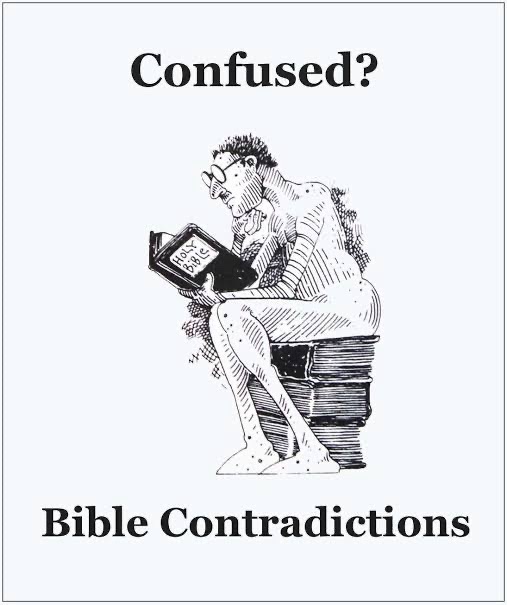
There’s something almost endearingly on-the-nose about the Ten Commandments—a divine list that reads less like a soaring moral vision and more like a cosmic babysitter crouching down to eye level: Don’t hit. Don’t take what isn’t yours. Don’t lie. And seriously, stop eyeing your neighbor’s spouse like that. It’s less “aspire to greatness” and more “let’s first make sure you’re not actively setting the village on fire.”
And to be fair, when Moses came down the mountain with those tablets, humanity wasn’t exactly crushing it on the “basic decency” front. The bar was somewhere below “don’t murder each other,” so the rules had to meet people where they were—which was apparently one bad afternoon away from chaos. The old law is reactive, corrective, a divine “no, stop that” repeated ten different ways. It’s moral guardrails for a species that keeps trying to drive off cliffs.
Then along comes Jesus Christ, and instead of adding more “don’ts” to the list—because clearly humanity hadn’t quite mastered those yet—he flips the whole framework. Suddenly it’s not about restraining your worst impulses like you’re a toddler with a fork near an outlet. It’s about actively choosing better ones. Turn the other cheek. Love your neighbor. Care for the poor. Forgive people who absolutely do not deserve it.
That’s not behavioral correction—that’s a complete reorientation.
The old covenant says: “Don’t be awful.”
The new covenant says: “Be good.”And those are not the same assignment.
One is about avoiding wrongdoing, the moral equivalent of keeping your hands to yourself because someone’s watching. The other is about intention, about generosity, about doing something positive in a world where doing nothing is often easier. It’s the difference between not stealing your neighbor’s bread and actually making sure they have something to eat.
Which, frankly, is a much harder ask.
Because “don’t kill” is pretty straightforward for most people on most days. “Love your enemies”? That’s where things get inconvenient. That’s where the philosophy stops being a checklist and starts being work. You can technically follow every commandment and still be a deeply unpleasant human being. You can refrain from theft, murder, and adultery and still treat everyone around you like they’re disposable.
Jesus’s version removes that loophole.
It’s not enough to avoid being the villain. You’re supposed to show up as something closer to the hero—or at least a decent supporting character. It demands empathy instead of mere restraint, action instead of avoidance. It’s less “don’t do bad things” and more “do good things, even when it costs you.”
And here’s where the irony creeps in. Plenty of people loudly champion the stone tablets—big fans of the “don’t do this” model—while quietly side-stepping the “love thy neighbor” part like it’s an optional add-on. The easier standard wins, because it’s far less intrusive. It doesn’t ask you to change your heart, just your behavior enough to stay within the lines.
But the shift from Old Covenant to New Covenant isn’t subtle. It’s not a sequel that repeats the original plot—it’s a genre change. From law enforcement to moral aspiration. From “stop being terrible” to “start being better.”
And if we’re being honest, humanity still seems pretty attached to the training wheels version.
Because it’s one thing to avoid slapping the toddler’s hand. It’s another thing entirely to teach the toddler how to be kind.
-
So this is your guy!?
Dwain Northey (Gen X)
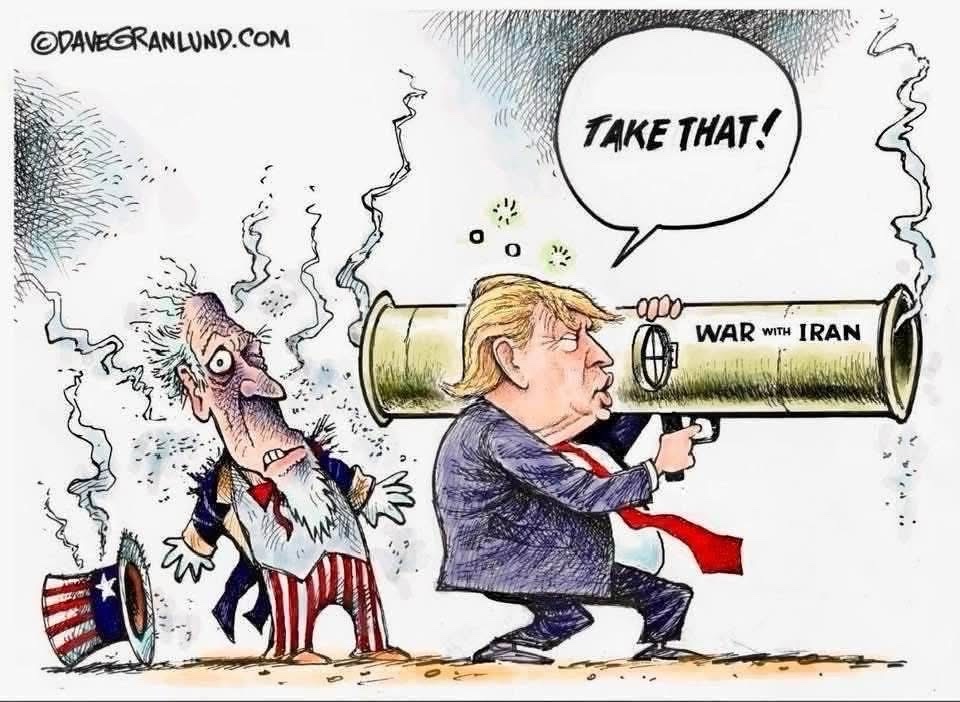
If you’re going to revive a theory that conveniently inflates presidential power, you’d think you’d at least be picky about who gets the crown.
Because let’s be honest: the Unitary Executive Theory didn’t just appear out of thin air last Tuesday. Republicans have been flirting with it since at least the Ronald Reagan era—nurturing it, polishing it, bringing it out whenever Congress got a little too… involved. Back then, it was framed as efficiency. Strength. Decisiveness. The executive branch as a finely tuned machine.
And now? Now that same machine has apparently been handed over to what can only be described as the political equivalent of a gas station snack aisle—specifically, the bag of trans fats you regret five minutes after opening.
That’s the part that really lands. It’s not just the quiet drift toward something that looks suspiciously like monarchy-lite; it’s the enthusiastic decision about who gets to embody it. Of all the potential stewards of expanded executive authority, the choice landed on Donald Trump—a man whose relationship with restraint, nuance, or constitutional guardrails has always been… interpretive at best.
But here’s where the logic really starts doing Olympic-level gymnastics.
Because the same voices championing a muscular, unconstrained executive suddenly rediscover their deep and abiding love for limits, guardrails, and strict constitutional interpretation the moment the Oval Office is occupied by a Democrat. When it’s Barack Obama, or Joe Biden, or Bill Clinton, the unitary executive theory doesn’t disappear—it just… takes a nap. A long one. Possibly medicated.
Suddenly, executive orders are tyranny. Agency authority is overreach. Any hint of unilateral action becomes a five-alarm constitutional fire. The very people who argued for decades that the presidency should be powerful enough to act decisively now insist it should be carefully restrained, thoroughly checked, and preferably tied down with procedural rope and a few well-placed court challenges.
It’s less a consistent philosophy and more a toggle switch: expansive power when “our guy” is in charge, strict limitations when he’s not. The theory isn’t abandoned—it’s selectively applied, like sunscreen in winter.
So the long game finally arrives. Decades of arguing for a stronger presidency. Decades of pushing the idea that one branch should have broader authority. And when the moment comes, the principle doesn’t hold—it flexes. A lot. Enough to make the United States Constitution feel less like a guiding framework and more like a prop that gets rearranged depending on who’s standing at the podium.
Meanwhile, the “No More Kings” crowds keep growing, clinging to the outdated notion that maybe power should be constrained regardless of party. That maybe the warnings of King George III weren’t meant to be taken as a “what if we tried this again, but domestically?” experiment.
At this point, the irony isn’t subtle anymore. It’s not even trying to hide. It’s standing in the town square, wearing a crown, holding a pocket Constitution in one hand—and a very selective memory in the other.
-
Earth Day
Dwain Northey (Gen X)
Earth Day began not as a feel-good celebration, but as a response to a very visible problem: the environment in the United States was in rough shape by the late 1960s. Rivers were polluted, cities were choked with smog, and industrial waste was often dumped with little regulation. One particularly shocking moment came with the 1969 Santa Barbara oil spill, which coated miles of coastline in crude oil and helped galvanize public outrage.
In this context, U.S. Senator Gaylord Nelson of Wisconsin proposed a nationwide “teach-in” on environmental issues. Inspired by the anti-war protests of the time, he wanted to channel that same grassroots energy toward protecting the planet. On April 22, 1970, the first Earth Day was held, and it drew an estimated 20 million Americans—an enormous turnout that crossed political and social lines.
The impact was immediate and lasting. Earth Day helped push environmental concerns into the mainstream and directly contributed to the creation of the United States Environmental Protection Agency and landmark legislation like the Clean Air Act and the Clean Water Act. What started as a national movement quickly grew into a global one; today, Earth Day is observed in more than 190 countries.
Its importance lies in both awareness and accountability. Earth Day serves as a reminder that environmental protection isn’t automatic—it requires public pressure, political will, and individual action. It also highlights how interconnected issues like climate change, pollution, and biodiversity loss affect daily life, from the air we breathe to the water we drink.
In short, Earth Day matters because it turned environmentalism from a fringe concern into a shared responsibility—and it continues to remind us that caring for the planet isn’t a one-day event, but an ongoing obligation.


You must be logged in to post a comment.