Dwain Northey (Gen X)
https://www.cbsnews.com/news/naacp-travel-advisory-florida-says-state-hostile-to-black-americans/
Remember the good old days when there were only travel advisories and or ban for, what some would call, third word countries? Well now because of the vile vitriol of one Governor Ron DeSantis the state of Florida, a vacation destination, has received a travel advisory by the NAACP.
The wannabe future President has made the climate so venomous in Florida the anyone who is a part of any minority group does not feel safe in the state. Black, Brown, LGTBQ+, these are all groups that are under attack in the Sunshine State. The majority Republican legislature and their fearful leader has passed laws that make almost everything a jailable offence and the fact that the state has very loose gun laws and a stand your ground law makes it more dangerous than being a blonde female in central America.
Florida residents are able to carry concealed guns without a permit under a bill signed into law by Republican Gov. Ron DeSantis. The law, which goes into effect on July 1, means that anyone who can legally own a gun in Florida can carry a concealed gun in public without any training or background check. This with their ridiculous stand your ground law, ‘Florida’s “Stand-Your-Ground” law was passed in 2005. The law allows those who feel a reasonable threat of death or bodily injury to “meet force with force” rather than retreat. Similar “Castle Doctrine” laws assert that a person does not need to retreat if their home is attacked.’ Makes it really sketchy to go there.
This in top of the don’t say gay rule and the new trans ruling that just passed.
“Florida lawmakers have no shame. This discriminatory bill is extraordinarily desperate and extreme in a year full of extreme, discriminatory legislation. It is a cruel effort to stigmatize, marginalize and erase the LGBTQ+ community, particularly transgender youth. Let me be clear: gender-affirming care saves lives. Every mainstream American medical and mental health organization – representing millions of providers in the United States – call for age-appropriate, gender-affirming care for transgender and non-binary people.
“These politicians have no place inserting themselves in conversations between doctors, parents, and transgender youth about gender-affirming care. And at the same time that Florida lawmakers crow about protecting parental rights they make an extra-constitutional attempt to strip parents of – you guessed it! – their parental rights. The Human Rights Campaign strongly condemns this bill and will continue to fight for LGBTQ+ youth and their families who deserve better from their elected leaders.”
This law makes it possible for anyone to just accuse someone of gender affirming care to have their child taken from them this would include someone traveling from out of state. This alone justifies a travel ban to the Magic Kingdom for families.
Oh, and I haven’t even mentioned DeSantis holy war with Disney, the largest employer in the state. I really hope the Mouse eats this ass holes lunch.
Well that’s enough bitching, thanks again for suffering though my rant.
-
Not It…
Dwain Northey (Gen X)
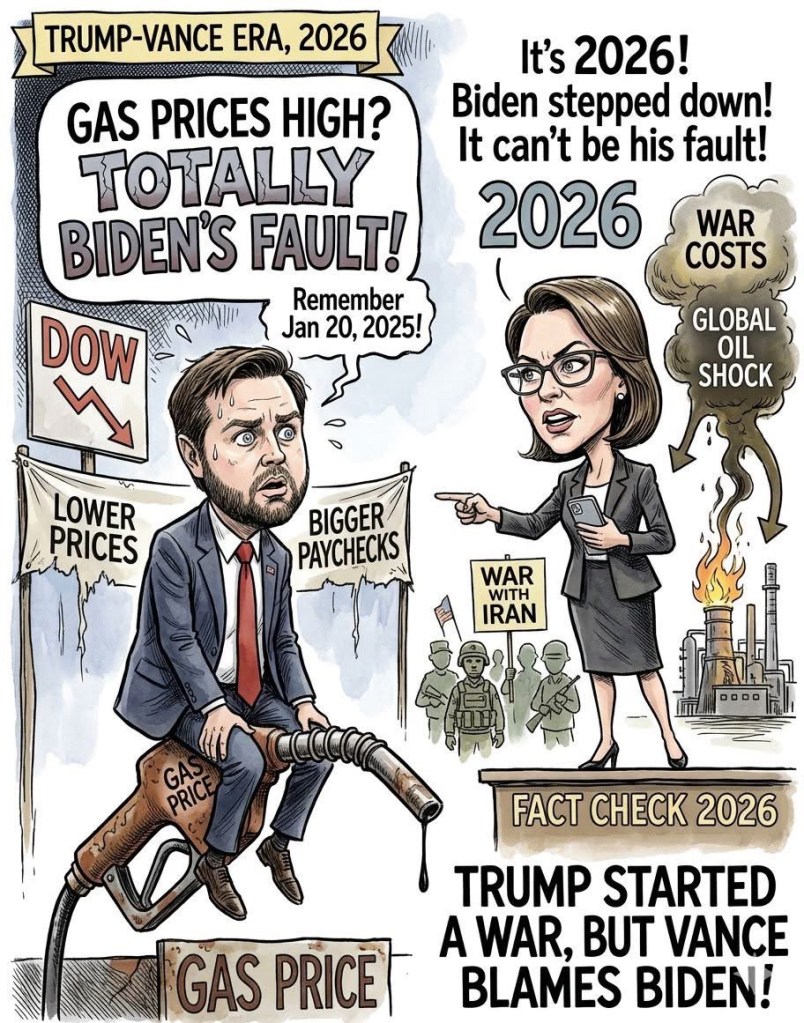
History has many traditions. Some nations have tea ceremonies. Others have royal parades. The modern GOP, however, has perfected a far more flexible ritual: the ceremonial blaming of the nearest Democrat for something that already happened.
Take the current episode starring Vice President J. D. Vance. With gasoline prices climbing thanks to the latest geopolitical fireworks, Vance has heroically stepped forward to explain that the real culprit is… of course… Joe Biden. Never mind that the price spike followed the war initiated by President Donald Trump. In this storytelling method, cause and effect are treated more like loose acquaintances than close relatives.
Apparently, the logic goes something like this: if Biden once lived in the same century as the problem, he is probably responsible for it.
But this creative approach to timelines is not new. The GOP has a proud history of it. After the horrific attacks of September 11 attacks, some particularly imaginative voices eventually managed to work Barack Obama into the blame narrative—even though, at the time, Obama was serving as a state senator in Illinois and was roughly as responsible for global counter-terrorism policy as the guy running the hot-dog stand outside Wrigley Field.
Still, details like chronology can be terribly inconvenient when you’re trying to build a good political ghost story.
The pattern is simple:
Something goes wrong. Someone from the GOP helped cause it. A Democrat—preferably one who was nowhere near the controls—must be located immediately.
It’s less a governing philosophy and more a national game of political hot potato, except the potato is on fire and the same people who lit the match keep yelling, “Why would Biden do this?”
At this point, it almost feels unfair to single out Trump as the first president or GOP leader to blame others for his problems. That would ignore the long, storied tradition of creative historical editing that made the moment possible.
In fact, if gas prices go any higher, we may soon discover that Biden wasn’t the only one responsible. Give it time and someone will probably trace it all the way back to Obama… or Jimmy Carter… or possibly the inventor of gasoline itself.
Because in this particular political universe, responsibility works a lot like inflation: it always seems to drift away from the people currently holding power.
-
Pacify the Toddler
Dwain Northey (Gen X)
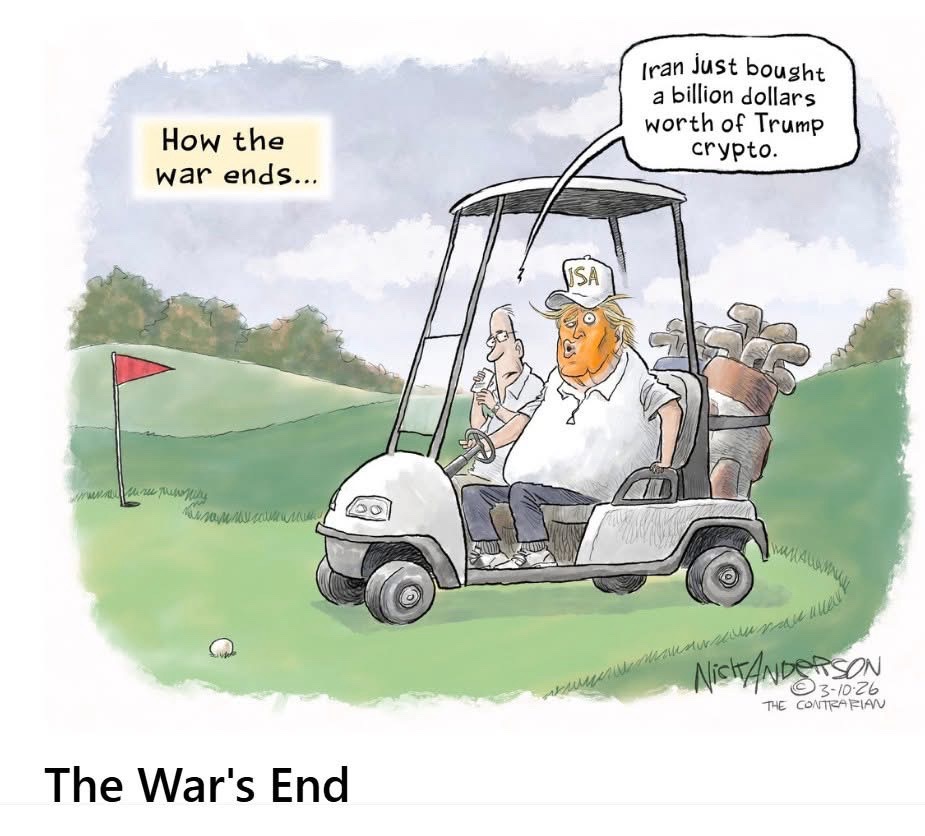
For a planet full of supposedly intelligent life, we’re having a remarkably hard time figuring out how to stop the United States from treating international relations like a toddler’s birthday party where someone else got the bigger slice of cake.
At this point the foreign policy strategy seems pretty straightforward: if you want the bombs to stop falling, just give the Transactional President exactly what he wants. Whatever it is today. Money. Praise. A shiny new deal with his name on it. Maybe a hotel licensing agreement. Possibly a gold-plated statue of himself riding an eagle while the national anthem plays. Who knows? The important thing is that he gets it immediately, because otherwise someone somewhere might get invaded before lunch.
Diplomacy used to involve complicated things like alliances, treaties, international law, and mutual interests. How quaint. Now the system appears much simpler: whoever flatters the loudest and opens their checkbook the widest gets a temporary pause in the “freedom delivery system.” It’s less like global leadership and more like trying to calm a child in the cereal aisle who has decided the world will end unless he gets the marshmallow box.
And the world, understandably, is trying to figure out the rules. Is it tariffs today? Military bases tomorrow? Naming a golf course after him? A loyalty parade? Perhaps if enough leaders pat him on the head and say, “You’re the biggest, strongest president ever,” we can avoid another round of cruise missiles being used as a mood stabilizer.
Because that’s the troubling pattern: the only thing that seems to distract the leader of the most powerful military on Earth from hurting other people is getting exactly what he wants at that exact moment. Not strategy. Not restraint. Not diplomacy. Just gratification.
Which leaves the rest of the planet in the awkward position of trying to manage a superpower the way exhausted parents manage a tantrum in a grocery store: keep your voice calm, hand over the candy, and hope he doesn’t knock over another display on the way out.
It’s an inspiring model for global stability, really.
Who knew that the key to world peace was simply appeasing the loudest kid in the room? 🌍🙄
-
Armageddon
Dwain Northey (Gen X)

Armageddon: Now With Cruise Missiles and Congressional Funding
Well, here we are again. The United States is attacking Iran. Because if there’s one lesson we’ve learned over the past few decades, it’s that military action in the Middle East always works out smoothly, calms everyone down, stabilizes the region, lowers gas prices, and definitely doesn’t spiral into decades-long chaos.
But the real excitement isn’t in the Pentagon or the oil markets.
No, the real enthusiasm is coming from a very special corner of American politics—the religious End-Times crowd—who are practically giddy because apparently bombing Iran might finally kick off Armageddon.
Yes, that Armageddon. The big one. The grand finale from the Book of Revelation. Fire, plagues, cosmic battles, the whole apocalypse starter kit. And if everything goes according to plan, Jesus returns, the righteous get their heavenly upgrade, and paradise begins.
Now most people, when they hear the phrase “Middle East war,” think things like:
“This could destabilize the region.”
“This could kill a lot of innocent people.”
“This could spiral into something far worse.”
But the prophecy crowd hears the same news and thinks:
“FINALLY. We might be getting close to the season finale.”
Because in their view, wars involving Israel and its neighbors aren’t horrifying geopolitical crises—they’re plot developments. Every missile launch is basically another page turning in the biblical screenplay.
Some people watch CNN.
Others are apparently watching Revelation like it’s a sports broadcast.
“Alright folks, if this conflict spreads just a little further north, we may be looking at a full Ezekiel 38 scenario. That’s a bold move, let’s see how it plays out.”
Now let’s examine the theology driving this excitement, because it’s truly something.
The theory goes roughly like this:
War breaks out in the Middle East. Global chaos spreads. Massive destruction occurs. Jesus returns. Believers get eternal paradise.
Now you might notice a tiny logistical detail buried in the middle of that plan.
Steps two and three involve catastrophic suffering and the collapse of civilization.
But apparently that’s just the necessary setup for the heavenly real estate development that comes afterward.
In other words, the sales pitch sounds something like this:
“Yes, millions of people may die and the world may burn… but have you heard about the amenities in eternity?”
It’s a fascinating worldview where war isn’t something to avoid—it’s something to accelerate.
Diplomacy slows down prophecy.
Peace delays the Second Coming.
And if you really believe the apocalypse is the gateway to paradise, then every bomb dropped in the Middle East isn’t a tragedy…
It’s progress.
Which leads to the absolutely surreal position the United States occasionally finds itself in: a nuclear-armed superpower whose foreign policy is being cheered on by people who are actively rooting for the end of the world.
Think about that for a second.
Most civilizations try to prevent Armageddon.
We apparently have a voting bloc that’s trying to schedule it.
Call me crazy, but maybe foreign policy shouldn’t be guided by interpretations of ancient apocalyptic poetry written two thousand years ago during Roman imperial occupation.
Maybe the strategy meetings should involve diplomats, historians, economists, and people who understand the consequences of war.
Not people flipping through Revelation like they’re checking the instruction manual for how to trigger the apocalypse faster.
Because if your geopolitical strategy is literally:
“Let’s see if we can help start the biblical end of the world,”
that’s not really national security.
That’s a doomsday cult with aircraft carriers.
And honestly, if Armageddon is truly part of God’s master plan, I’m fairly certain it doesn’t require help from the Pentagon.
God probably doesn’t need a congressional authorization for the use of force.
And I’m pretty sure the Second Coming isn’t waiting for the United States military to provide air support.
-
Save Act.. Save Who?
Dwain Northey (Gen X)
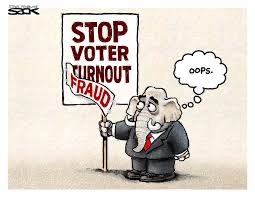
The marketing department in Washington deserves a raise. Not because they’re good at democracy, mind you, but because they’re excellent at naming bills the exact opposite of what they actually do. Which brings us to the charmingly titled Safeguard American Voter Eligibility Act, better known as the SAVE Act.
“Save” is such a warm word. It sounds like rescuing kittens from trees or preserving national parks. In reality, the SAVE Act appears less interested in saving democracy and more interested in carefully trimming the guest list for it.
Because if you read past the title—and lawmakers always hope you won’t—you discover the central idea: make voting harder for a whole bunch of people. Not through dramatic speeches about restricting voting, of course. That would be bad optics. Instead, it’s done through bureaucratic gymnastics like requiring proof of citizenship documents and making sure the name on your voter registration perfectly matches the name on your birth certificate.
Now, on paper that sounds simple enough. But in the real world, millions of Americans—particularly women—change their names when they marry. Suddenly the name on their birth certificate doesn’t match the name on their driver’s license, their voter registration, their bank account, their Costco membership, or the name their dog responds to.
And who, statistically speaking, is more likely to change their name after marriage? Women.
And who, historically speaking, includes a lot of married women who take their husband’s last name? Republican households.
Which means the SAVE Act may turn into the legislative equivalent of stepping on a rake.
This whole strategy actually has a bit of historical precedent. Back in 1980, conservative activist Paul Weyrich, co-founder of the Heritage Foundation, gave a speech that became legendary in political science circles. In it, he explained the electoral strategy with refreshing honesty:
“I don’t want everybody to vote… our leverage in the elections quite candidly goes up as the voting populace goes down.”
There it is. No euphemisms. No marketing. Just the blunt political math.
And that philosophy has hovered around parts of the Republican Party ever since: if expanding the electorate tends to help the Democratic Party, then perhaps the solution is not to attract more voters—but to shrink the pool.
Enter the SAVE Act, stage right, wrapped in a patriotic bow and waving a flag.
Supporters argue it protects elections from non-citizen voting, which sounds terrifying until you remember that documented cases of non-citizens voting are already extremely rare. We’re talking about a problem roughly on the scale of shark attacks in Kansas.
So the solution, naturally, is to create new hurdles for millions of actual citizens.
It’s a fascinating approach to civic participation. Instead of saying, “How do we get more Americans engaged in democracy?” the question becomes, “How do we make the paperwork just annoying enough that some of them give up?”
Because nothing screams confidence in your political ideas quite like hoping fewer people show up.
And yet the most ironic twist may be the name-change requirement. If the bill is applied strictly, a large number of married women—many of them reliable conservative voters—could suddenly discover that their birth certificate says “Susan Johnson,” their driver’s license says “Susan Miller,” and the government says, “Sorry Susan, democracy requires a paperwork scavenger hunt.”
Which means the SAVE Act might accomplish something rare in modern politics: accidentally suppressing the votes of the very coalition it hopes to protect.
In other words, after decades of carefully engineering ways to reduce turnout, someone may have finally designed a system that tells millions of loyal voters:
“Thank you for your support… unfortunately your maiden name is required for entry.”
Democracy saved. Just with fewer participants.
-
Fiscal conservatism questioned
Dwain Northey (Gen X)
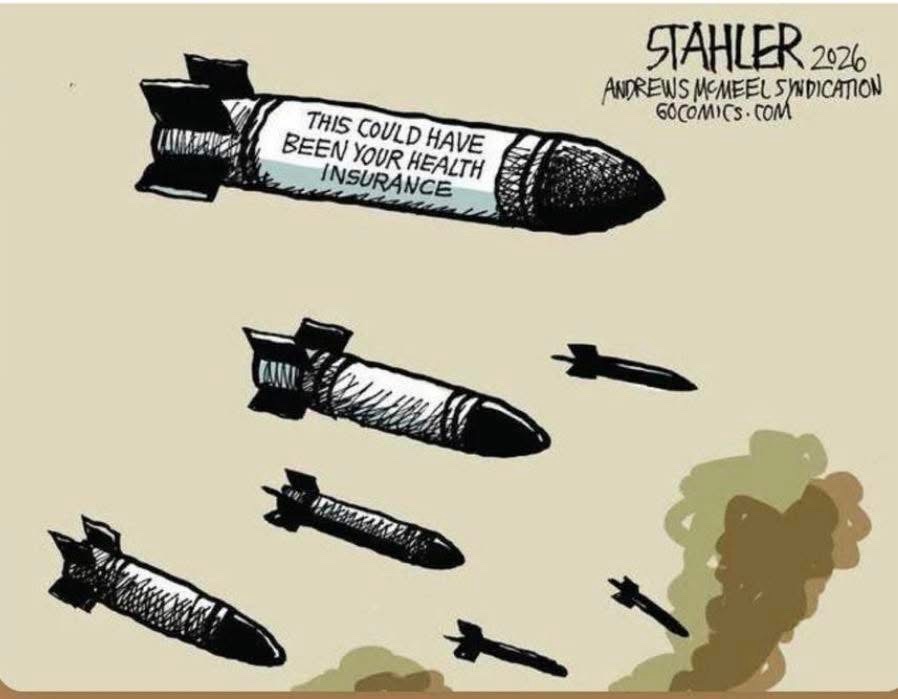
Ah yes, the great mystery of modern governance: the miraculous disappearing act of tax dollars. Every April, Americans dutifully send their hard-earned money to Washington with the naive belief that it might come back to them in the form of something extravagant—like a bridge that doesn’t collapse, a highway without craters the size of bathtubs, or perhaps the radical luxury of affordable healthcare.
But alas, that kind of fiscal recklessness simply isn’t in the budget.
You see, fixing roads is expensive. Repairing bridges costs billions. Expanding healthcare access? Don’t be ridiculous. Where would we ever find that kind of money?
Now, blowing things up on the other side of the planet—that is a sound investment.
Bombs, after all, are the ultimate disposable purchase. You spend millions designing them, millions building them, millions transporting them, and then—poof—they’re gone in a matter of seconds. No resale value, no dividends, no economic return, no infrastructure improvement, no healthier population. Just a very expensive firework show followed by a press conference explaining how freedom has been defended.
It’s really quite efficient if you think about it. A bridge might last 80 years and benefit millions of commuters and businesses every single day. Imagine the irresponsibility of tying up money in something that productive. Much safer to convert billions of dollars into smoke and debris within a few seconds. That way no one expects long-term benefits.
And think of the accounting simplicity. Roads require maintenance. Hospitals require staffing. Schools require teachers. Infrastructure requires planning. But bombs? Once they explode, the paperwork is practically finished. The asset column becomes a crater, and everyone moves on.
Meanwhile, Americans bounce down highways that resemble lunar landscapes, drive across bridges that engineers politely describe as “structurally concerning,” and try to navigate a healthcare system where a routine medical visit costs roughly the same as a used car.
But please understand—priorities must be maintained.
If the government suddenly started pouring trillions into infrastructure, healthcare, and economic stability, people might begin expecting their tax dollars to actually improve their daily lives. That’s a dangerous precedent.
Far better to continue the current system: collect taxes from the public, solemnly explain that fixing domestic problems is unfortunately too expensive, and then immediately authorize another few billion dollars for extremely high-tech objects designed to explode dramatically somewhere far away.
After all, potholes may be annoying, but they don’t make nearly as impressive of a boom. 💣🇺🇸
-
The Commander-in-Chief and the Hat
Dwain Northey (Gen X)
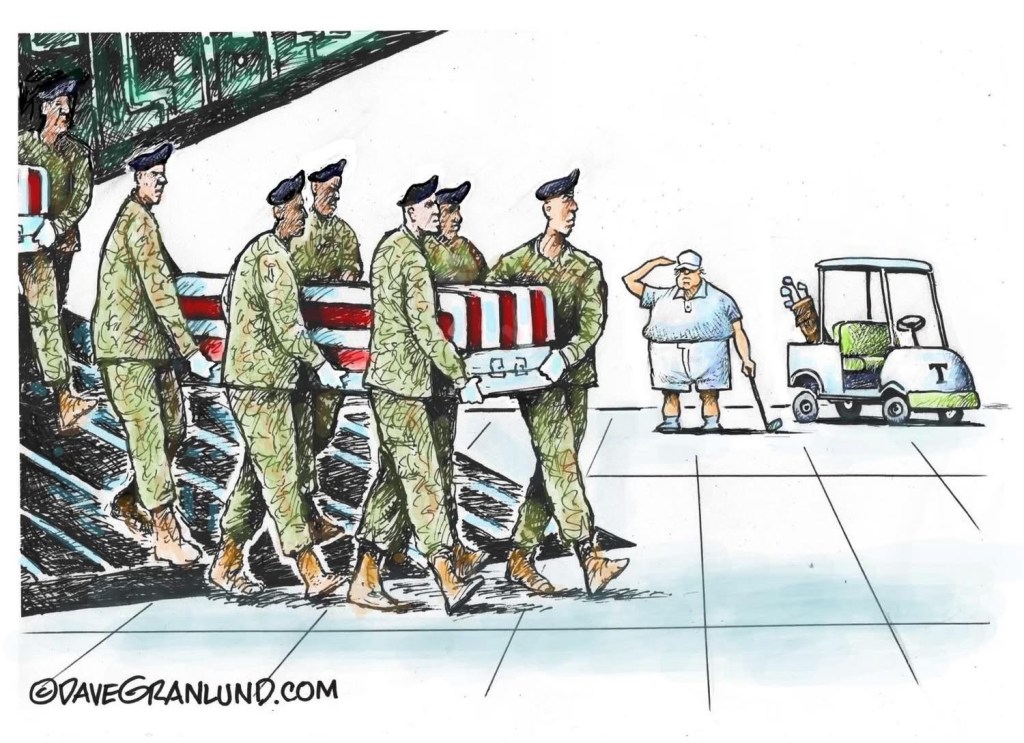
There are many traditions in the United States military. Saluting the flag. Honoring the fallen. And at a dignified transfer ceremony—when the remains of American service members return home at Dover Air Force Base—there is one particularly complicated ritual: you take your hat off.
It’s not difficult. Millions of Americans learned this before they were ten years old. Ball caps come off during the national anthem, during prayer, and certainly when six flag-draped coffins are carried off a military transport plane.
Yet somehow this proved to be an unsolvable puzzle for Donald Trump.
This is the same man who constantly assures us he loves the troops more than anyone. The same man whose supporters wrap themselves in flags, wear “Back the Blue” T-shirts, and treat military worship like a competitive sport. The same crowd that will write a 900-word Facebook post about someone kneeling during the anthem.
But when American soldiers killed in the war with Iran were brought home, the commander-in-chief showed up wearing a white “USA” baseball cap—reportedly even one sold through his own merchandise line—while saluting their coffins. Critics from across the political spectrum immediately pointed out the obvious: at a ceremony literally called a dignified transfer, maybe take the hat off.
Apparently that was asking too much.
And just to make the moment even more surreal, some coverage on Fox News briefly showed older footage of Trump without a hat—accidentally (they say)—which critics noted had the convenient effect of hiding the actual moment from viewers.
So let’s recap the modern definition of “support the troops”:
Start a war. Send young Americans to die in it. Receive their bodies back on American soil. Keep the campaign merch on.
But don’t worry—the red-hat brigade will still insist that they are the true defenders of the military. After all, nothing says reverence for fallen soldiers quite like refusing to remove the hat in front of their coffins.
Because apparently honoring the troops is very important… right up until it interferes with the branding. 🇺🇸🧢
-
Rules of Engagement
Dwain Northey (Gen X)
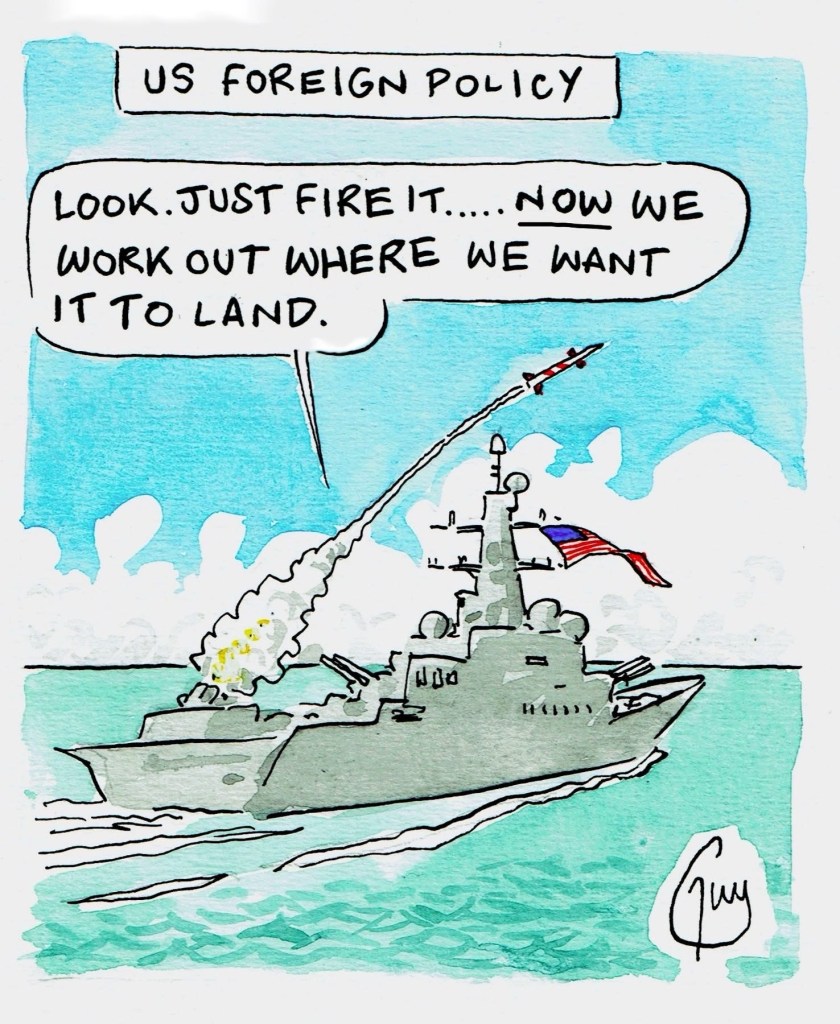
After the industrial-scale slaughter of World War I and the even more catastrophic devastation of World War II, the world’s nations came to a stunning realization: perhaps there should be rules about how wars are fought. Radical idea, apparently. When millions of civilians die and entire cities are flattened, people tend to conclude that maybe warfare shouldn’t operate like an unmoderated comment section.
So the international community created a framework of laws designed to put at least some guardrails on human brutality. These rules were codified in agreements such as the Geneva Conventions and their later protocols. The basic principles were not complicated:
Don’t intentionally target civilians. Don’t bomb hospitals, schools, or aid workers. Treat prisoners humanely. Distinguish between military targets and civilian populations. Use proportional force.
In short: if you’re going to fight wars, at least pretend you’re not trying to wipe out innocent people.
These rules weren’t created because nations suddenly became compassionate. They were created because history showed something painfully obvious: when civilians are targeted and populations are terrorized, the violence does not end. It multiplies. Children who watch their families die under bombs rarely grow up thinking, “Well, that seemed reasonable.”
Instead, they grow up angry. And anger has a long memory.
Which brings us to the current moment and the apparent “rules optional” strategy being embraced by figures like Donald Trump and his defense leadership, including Pete Hegseth.
The post-WWII rules of engagement were designed precisely to avoid the cycle of retaliation that fuels insurgencies and terrorism. When those rules are ignored—when bombs hit schools, civilian infrastructure, or densely populated areas without clear military necessity—the immediate tactical gain often creates a long-term strategic disaster.
Military historians have watched this pattern repeat for decades:
Civilian casualties rise. Local resentment grows. Extremist groups recruit from that resentment. Violence spreads far beyond the battlefield.
It’s not a new theory. It’s practically a case study.
During conflicts in places like Iraq and Afghanistan, even accidental civilian deaths often became powerful propaganda tools for extremist organizations. Every destroyed home, every grieving family member, became a recruiting poster.
This is precisely why modern militaries—at least on paper—invest heavily in rules of engagement, legal oversight, and targeting review. The goal is not just moral; it’s strategic. Limiting civilian harm reduces the number of people who might later decide that attacking Americans is a perfectly reasonable career path.
Ignore those rules, however, and the equation changes.
If the world perceives that the United States no longer cares about the very laws it helped create after WWII, two dangerous things happen simultaneously:
First, America loses moral credibility. The country that once championed the rules now looks like it’s treating them as optional guidelines.
Second—and far more dangerous—other actors start playing by the same logic. If rules don’t apply to powerful countries, then why should anyone else follow them?
That’s when conflicts become less like wars and more like vendettas.
And vendettas have a nasty habit of traveling. What begins as a bombing campaign in a distant region can, years later, end up as radicalized individuals deciding that revenge should be delivered closer to home.
This is the lesson military strategists have repeated since WWII: brutality against civilians rarely ends conflicts—it plants the seeds for the next one.
So the postwar architects of international law tried to build something resembling a firewall. The Geneva Conventions weren’t perfect, but they were a collective attempt to say: we’ve seen where unlimited war leads, and maybe we shouldn’t go there again.
Ignoring those lessons doesn’t make the world safer. It simply rewinds history to the era before those rules existed—when total war was normal and civilian suffering was considered just another tactical variable.
And if that experiment is repeated, history suggests the outcome won’t be stability or security.
It will be exactly what those post-WWII rules were designed to prevent: a world where violence breeds more violence, and where the consequences eventually reach far beyond the original battlefield. 🌍⚖️💣
-
Misplaced Priorities
Dwain Northey (Gen X)

For decades the United States had this dangerously radical idea that sometimes the best way to protect national interests wasn’t with bombs, but with bags of rice, vaccines, and clean water. This reckless philosophy was carried out by the United States Agency for International Development—better known as USAID. Its mission was simple and apparently deeply suspicious: feed starving people, help countries recover from disasters, stop diseases before they spread, and keep struggling nations stable enough that they didn’t collapse into chaos, war, or mass migration.
The truly shocking part of this operation was the cost. USAID ran most of these programs for less than one percent of the U.S. federal budget. In many years it hovered around a few tenths of a percent. That’s right—America was spending pocket change, by federal standards, to prevent famine, reduce global instability, and make the United States look like something other than the world’s heavily armed landlord.
Naturally, something that dangerous had to go.
Because while feeding hungry people costs a fraction of the budget, dropping bombs—now that’s where the real fiscal responsibility comes in.
Modern military operations can burn through billions faster than a hedge fund manager at a yacht convention. Precision missiles cost millions each. Aircraft carriers cost billions to deploy. Drone operations, logistics chains, contractors, intelligence support—before long you’re spending what used to be an entire year of humanitarian aid sometime between breakfast and lunch.
But at least bombs don’t create the awkward side effect of people around the world actually liking the United States.
For decades USAID quietly built something diplomats call “soft power.” When drought hit Africa, American food shipments showed up. When earthquakes leveled cities, American disaster teams arrived. When diseases like malaria or HIV threatened entire regions, American-funded programs delivered treatment and prevention.
This had the unfortunate effect of strengthening alliances, stabilizing fragile countries, and making it harder for hostile governments to paint the United States as some kind of global villain.
Clearly unacceptable.
So now we’re moving toward a far more streamlined foreign policy model. Instead of preventing crises for pennies, we can allow them to spiral into disasters and then respond with aircraft carriers and cruise missiles. It’s a much cleaner system if you think about it. Why spend a few billion stabilizing regions when you can spend hundreds of billions cleaning up the mess later?
And while humanitarian programs shrink or disappear, we still have plenty of energy for the really important geopolitical projects: saber-rattling toward Iran, tough talk about Venezuela, and occasional conversations about whether Greenland might look nice with an American flag planted on it.
This, apparently, is the grand strategy of the modern “peace president.” The plan seems to be: cut the tiny programs that prevent instability, let instability grow, and then deal with the consequences using the most expensive tools in the federal arsenal.
It’s an elegant cycle.
USAID used to prevent wars by addressing the problems that cause them—poverty, famine, disaster, disease, and political collapse. Now we can skip that inefficient step entirely and jump straight to the part where we fire missiles.
And in the process we’ve managed to accomplish something remarkable: dismantle one of America’s most effective diplomatic tools, erase decades of global goodwill, and replace it with the comforting knowledge that if anything goes wrong anywhere on Earth, we’ll be ready—with a very expensive bomb.
All to save less than one percent of the budget.
Fiscal genius. Diplomatic brilliance. And proof once again that nothing says “peace” quite like cutting food aid so we can afford more missiles. 🚀
-
Intimidation or Immigration
Dwain Northey (Gen X)

I must admit I’m still trying to keep up with the plot here. The storyline changes faster than a streaming series that got renewed before the writers finished the script.
For a while we were told that the administration’s tough immigration policy was focused on “the worst of the worst.” You know, hardened criminals, gang leaders, international masterminds—the kind of people who apparently also hold steady landscaping jobs and show up for the 6 a.m. shift at construction sites.
Now Kristen is gone (apparently sacrificed to the political optics gods for making the boss look bad), but the messaging remains: don’t worry, everything is under control because the raids are only targeting the worst criminals imaginable.
Which is fascinating timing, because the Supreme Court of the United States has just told the Internal Revenue Service that handing over immigrant taxpayer address data may have violated the law—hundreds of times, reportedly. The same information then helps U.S. Immigration and Customs Enforcement locate people.
Now I’m not a legal scholar, but I’m trying to follow the logic.
On one hand, we are told these people are dangerous criminals. On the other hand, the government seems to have located many of them by… checking tax records.
Tax records.
Apparently the modern criminal mastermind is someone who wakes up at 5 a.m., goes to work, files a tax return, and dutifully sends money to the federal government every April.
Somewhere along the way we skipped over the part where hardened villains are known for carefully reporting income to the IRS.
It also complicates a classic political stereotype. Remember the old standby: the “lazy immigrant living off welfare”? That image gets a little blurry when the same people are being picked up at their workplaces after paying taxes that help fund the very government arresting them.
So now the narrative requires a bit of mental gymnastics:
They’re lazy freeloaders… who somehow maintain steady jobs… while also paying federal taxes… but are still apparently the “worst of the worst.”
That’s quite a résumé.
In fact, if paying taxes and showing up to work qualifies someone as a top-tier criminal threat, a lot of Americans might want to start checking their own status. Because by that standard, the real danger to the nation appears to be people with W-2 forms.
But don’t worry. The messaging is clear: this is all about law and order.
Except for the part where the court says the law might have been violated.
But other than that, perfectly clear. 👏
-
That’s nice, make me
Dwain Northey (Gen X)
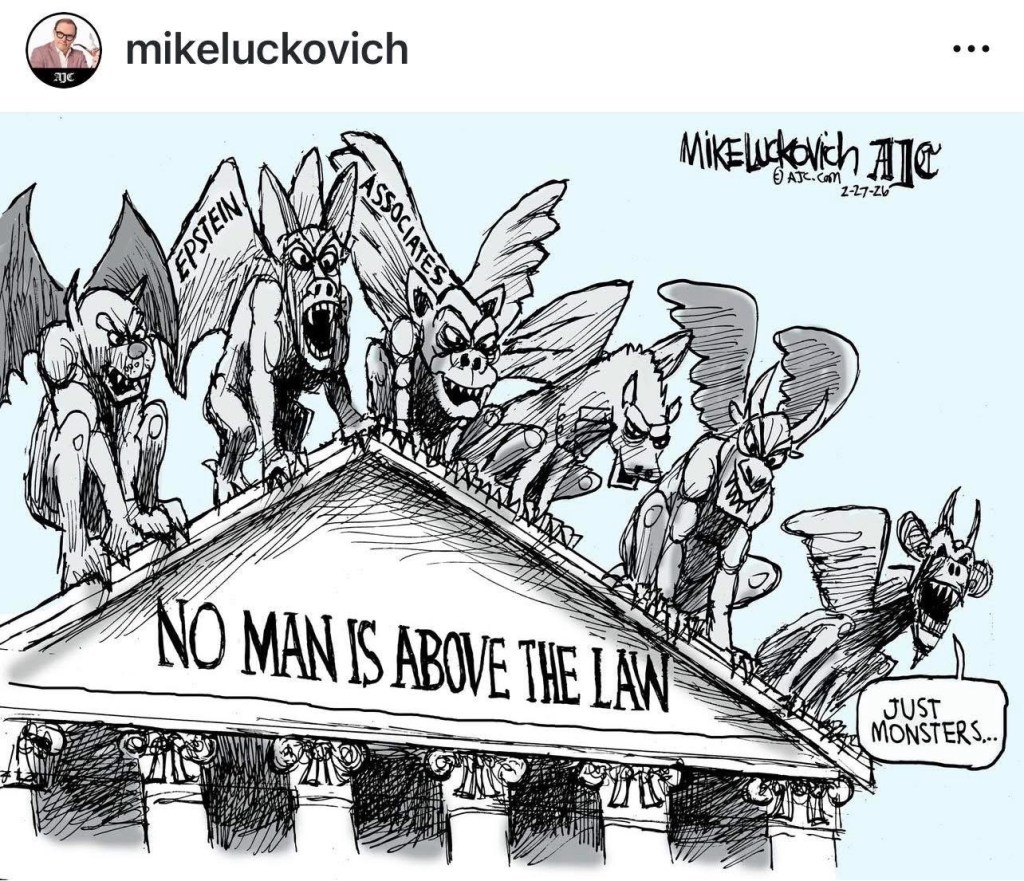
History has a funny way of echoing—sometimes as inspiration, sometimes as a warning label that everyone politely ignores.
Take Andrew Jackson, the seventh president of the United States and patron saint of the political shrug. In 1832 the Supreme Court, under John Marshall, issued a ruling in the case of Worcester v. Georgia. The Court said that the state of Georgia had no authority over Cherokee lands. In other words: the law was the law, the Constitution meant something, and the Cherokee Nation had rights.
Jackson’s reported response—whether perfectly quoted or not—has become legendary: “John Marshall has made his decision; now let him enforce it.”
Translation into modern English: “Neat opinion you’ve got there. Be a shame if someone… ignored it.”
The result was the policy that led to the Trail of Tears, where thousands of Cherokee and other Native Americans were forcibly removed from their homes and marched west. The Supreme Court ruled. Jackson shrugged. History kept the receipts.
Fast forward nearly two centuries to Donald Trump, who has occasionally shown a similar enthusiasm for treating constitutional guardrails like polite suggestions at a buffet. If Jackson’s philosophy was “the Court can rule whatever it likes,” the modern remix sometimes sounds suspiciously like: “Interesting ruling… but what if we just didn’t?”
Consider the perennial debate over elections. The Constitution, inconveniently, places primary authority for running elections with the states. That’s not just a tradition; it’s right there in Article I, Section 4. States decide how voting works—machines, mail-in ballots, early voting, the whole democratic smorgasbord.
But imagine a scenario where a president declares that mail-in ballots are invalid, voting machines are suspect, and elections must suddenly follow a brand-new federal rulebook written somewhere between a campaign rally and a late-night social media post. If the Supreme Court were to say, “Actually, that’s unconstitutional,” the historical question would become: does the executive branch accept the ruling… or channel its inner Jackson?
Because the Jackson playbook is simple:
Do the thing. Get told you can’t do the thing. Respond with a constitutional version of “OK, stop me.”
Of course, America in the 21st century is not the America of the 1830s. Institutions are stronger, the press is louder, and the public has a habit of noticing when democracy starts getting rewritten like a terms-of-service agreement nobody agreed to.
Still, history whispers uncomfortable questions. When leaders talk about changing how elections work after losing faith in the results, when courts become obstacles rather than arbiters, and when constitutional limits are treated like optional upgrades—people start remembering Andrew Jackson.
And that’s not exactly the chapter of American history most presidents should be eager to reenact.
After all, the last time someone used the “make me” approach to the Supreme Court, it didn’t end up as a proud footnote in the civics textbook. It became a tragedy called the Trail of Tears—and a permanent reminder that ignoring the Constitution rarely ages well.


You must be logged in to post a comment.